by Abayomi Azikiwe
During his four years as head of a revolutionary government in Burkina Faso, Captain Thomas Sankara captured the imaginations of Marxists and Pan-Africanists throughout the world. He was assassinated by treacherous comrades in 1987. The exhumation of his body could shed light on the circumstances of Sankara’s death, and breathe new life into his program for African liberation.
Burkina Faso Courts Allow Exhumation of Thomas Sankara Remains
by Abayomi Azikiwe
This article previously appeared in the Pan African News Wire and Pambazuka News.
“His influence extended far beyond Burkina Faso leading to close relations with Libya under Gaddafi and Cuba during the leadership of President Fidel Castro.”
The courts in Burkina Faso have paved the way for a proper identification of the remains of the martyred revolutionary leader who was buried in 1987 without an official ceremony or an explanation of the circumstances of his death. His widow Mariam is demanding a broader inquiry into the assassination of the much-adored revolutionary.
Martyred Burkinabe revolutionary Pan-Africanist and Marxist leader from 1983-1987, Capt. Thomas Sankara, was assassinated in a coup on October 15, 1987. He was only 37 years old.
Sankara came to power during a critical period in the transition to a new phase of imperialist exploitation and oppression of the emerging African states. The role of the International Monetary Fund (IMF), the World Bank and other global financial institutions was generating tremendous social restructuring and consequent political struggle and debate.
Born in 1949, Sankara grew up during the turbulent 1950s and 1960s when independence struggles swept various African states. He joined the Upper Volta military at a young age and was stationed in Madagascar where he witnessed a popular left-leaning uprising that toppled a neo-colonialist regime in 1970.
During the 1970s he rose through the ranks of the military and was made an administrator of a training program for soldiers in the city of Po. In 1972 he went for further military training in France where he was exposed to Marxist ideas advocated by leftist organizations active during the period.
By the 1980s, unrest had reached a boiling point in Upper Volta when trade unions and students engaged in strikes and mass rebellions. A series of military coups took place and Sankara’s uncompromising positions landed him in prison on at least two occasions.
“His government called for cancellation of the debt owed to financial institutions based in the western imperialist states.”
On August 4, 1983, left-wing elements within the military backed by the popular will of the masses liberated Sankara and made him leader of the National Council of the Revolution. The change of power although initiated by the junior army officers drew broad support among the working class, youth and the peasantry.
After coming to power in 1983, Sankara led a movement to change the name of the landlocked West Africa state, a former French colony labeled Upper Volta, to Burkina Faso, the land of the upright people. The program of his government called for the creation of import-substitution industries to curtail the reliance on essential and luxury goods from capitalist countries, the mobilization of youth and women to fight neo-colonialism and the cancellation of the debt owed to financial institutions based in the western imperialist states.
An article published in the Guardian on March 5 says that under Sankara the Burkina Faso government “launched nationalization, land redistribution and grand social programs in one of the world’s poorest countries. During his four-year rule, school attendance leaped from 6% to 22%, some 2.5 million children were vaccinated and thousands of health centers opened. Housing, road and railway building projects got under way and 10 million trees were planted.”
In addition, this same article continues, “Sankara declared war on corruption and embraced personal austerity, paying himself a salary of $450 a month, slashing the wages of his top officials and forbidding the use of chauffeur-driven Mercedes and first class airline tickets by his ministers and senior civil servants. He refused to have his picture displayed in public buildings, still a rare thing in the Africa of 2015, and was staunchly opposed to foreign aid, declaring: ‘He who feeds you, controls you.’”
Also the Sankara government prioritized gender quality, working towards the end of female genital mutilation, forced marriages and polygamy. His influence extended far beyond Burkina Faso leading to close relations with Libya under Gaddafi and Cuba during the leadership of President Fidel Castro.
After a four-year experiment in social revolution, Sankara was overthrown in a military coup led by Blaise Compaore, who was his deputy within the government. After Compaore seized power, the government moved rapidly towards the West, honoring international debts and abolishing the anti-imperialist and Pan-Africanist foreign policy of Sankara.
Blaise Campaore emerged from a meeting where Sankara was assassinated as the head-of-state who remained in power until a mass uprising during late October 2014 toppled his pro-Paris and Washington-allied regime. Compaore immediately fled to neighboring Ivory Coast.
An Investigation into the Assassination and Coup are Required
The courts in Burkina Faso have recently paved the way for the proper identification of the remains of the martyred leader who was buried in 1987 without an official ceremony or an explanation of the circumstances surrounding his death.
However, the widow of Sankara, Mariam, is demanding a broader inquiry into the assassination of the revolutionary leader after his overthrow. Compaore has stated in the past that he had no information on what happened to Sankara.
Yet he was in the meeting where the struggle erupted over the future of the government. Moreover, it was Compaore who emerged as the head-of-state after the murder of Sankara.
Any inquiry would have to look at the role of neighboring Ivory Coast and France in the coup and assassination. The policies of Sankara went radically against the French neo-colonial system so prevalent then and even now in West Africa.
Ivory Coast during the 1980s was still under the leadership of the-then President Felix Houphoet-Boigny, a proponent of the post-colonial system of economic and political integration with Paris. Tensions between Abidjan and Ouagadougou were at an all-time high.
“The policies of Sankara went radically against the French neo-colonial system so prevalent then and even now in West Africa.”
In a promotional article for the documentary film entitled “Thomas Sankara: The Upright Man,” it says that by 1987, “Clandestinely, elements in the Burkinabe leadership forged relationships with Côte d’Ivoire president Félix Houphoet-Boigny, France’s staunchest ally and an outspoken opponent of Sankara’s increasingly influential attacks on neo-colonialism. On October 15th during a staff meeting, a gang of armed soldiers, either led or ordered by Blaise Compaoré, Sankara’s closest friend and most trusted comrade throughout the revolution, assassinated him. His body was dismembered, buried in a make-shift grave and any mention of him was erased from public view.” (October 31, 2014 Facebook posting)
Of course during the uprising that toppled Compaore last October the masses revealed that they had not forgotten Sankara at all. Hundreds of thousands of people took to the streets demanding the ouster of Compaore, many of these demonstrators were youth and workers wearing t-shirts and holding banners displaying Sankara’s image.
Elections will be held later on this year in Burkina Faso and it will remain to be seen how well the parties committed to the ideals of Sankara fair in the process. Sankara’s views on self-reliance and anti-imperialism are essential during a period of escalating French and United States military interventions in Africa.
Abayomi Azikiwe is Editor, Pan-African News Wire.

 The first impeachment process against a city councilor in the 329-year history of Curitiba – the Brazilian city that most cherishes its “European heritage” – is underway, and it has nothing to do…
 Military coups are a CIA tool used to control the Global South and ensure U.S. hegemony in many parts of the world.
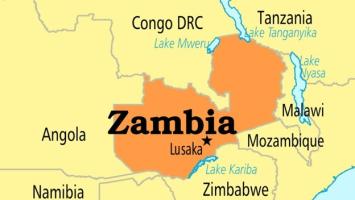 Why Is AFRICOM Expanding in Zambia? Because of Zambia’s Copper and to Thwart the Chinese.
 Black and Palestinian solidarity, the Cuban revolution lives, and say political prisoners' names while they're still alive.
 Asantewaa Nkrumah-Ture is an organizer and dues paying member of Black Alliance for Peace Philadelphia. She recently spoke at the Al Awda conference in New York, to discuss the history of Black and…



