Colonial Chickens Come Home to Roost in the West
In the wake of the Brussels bombing, we hear variations of the same old theme: “They [Muslims] hate us [the ‘West’] because of our freedoms.” However, “the reality is, it’s not who we are, but what we do” – wage war in Muslim lands – “that is the problem. It’s our foreign policy, not our cultural values,” said Arun Kundnani, author of The Muslims are Coming! Islamophobia, Extremism, and the Domestic War on Terror. Kundnani, a British citizen of Indian extraction who lectures at New York University, said polls consistently show that “people in the Middle East do not have any antagonisms to the United States, itself, or its values. What they have antagonisms to is U.S. foreign policy in the region.”
No Slavery Remembrance Day at the White House
The United Nations marked a Day of Remembrance for the Victims of Slavery and the Atlantic Slave Trade, March 25, but there was no sign of the occasion – “no commemoration, not even rhetoric, nothing” – at the White House, said BAR editor and columnist Ajamu Baraka, a co-founder of the U.S. Human Rights Network. Baraka also attended this month’s 15th anniversary of the UN World Conference Against Racial Discrimination, whose ongoing activities are widely known as the Durban Process. Since the genocide of Native Americans and enslavement of Africans “served as the material base for the ascendancy of Europe, then justice demands that some type of repair – reparations – needs to be considered,” said Baraka. However, Europe, the United States and other white settler states have resisted the Durban Process at every turn.
Newark City Council Approves Police Review Board
In a unanimous vote, the city council of Newark, New Jersey, authorized the creation of a Civilian Complaint Review Board, with subpoena powers. The council’s action means the board will not go out of existence when its initiator, Mayor Ras Baraka, leaves office. However, “the implementation will still be stymied because the police unions have vowed to go to court to stop it,” said Larry Hamm, chairman of the People’s Organization for Progress, one of the community groups with a seat on the review board.
CLICK BELOW TO HEAR BLACK AGENDA RADIO
Black Agenda Radio on the Progressive Radio Network is hosted by Glen Ford and Nellie Bailey. A new edition of the program airs every Monday at 11:00am ET on PRN. Length: one hour.

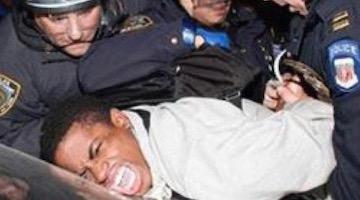 $elections comin’ an’ Massa Mike playin’ Negroz fo’ chumps— Tolt Dem he’d hab dey pockets lookin’ lak dey got de mumps!
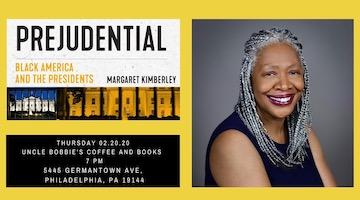 Every single US president—regardless of party—actively upheld white supremacy in the US.
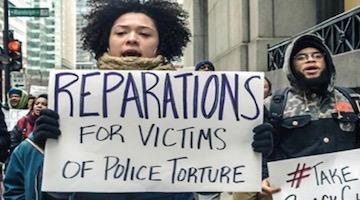 Chicago’s torture machine was both a real mechanism to produce confessions through pain, and a racist political instrument.
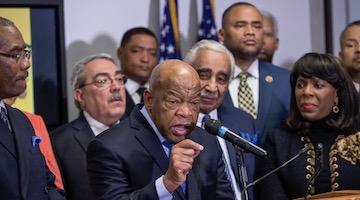 This week readers discussed the Democratic Party’s theater and the new arms race in outer space.
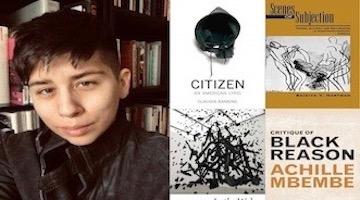 An educator helps students navigate books that reveal Blackness as historicity, slavery as both obscured and ever-present, and the violence of race.



