A Black Agenda Radio commentary by executive editor Glen Ford Black households headed by college graduates have been steadily losing ground to their white collegiate peers over the past two decades. Indeed, Black college families lost a much higher proportion of their net worth during this period than did Black families whose heads did not graduate from college – who didn’t have much to lose.
Black College Households Lost Half Their Wealth Despite Degrees A Black Agenda Radio commentary by executive editor Glen Ford “Black college families saw a steady erosion of their economic status.”
For generations, it has been an article of faith among Black people that education is the path to success, not just for the individual, but for the Black community as a whole. That’s never been entirely true, which is why W.E.B. Dubois was the first Black person to get a PhD from Harvard, but was not allowed to teach there, and why Black high schools in Washington, DC, during Jim Crow were full of teachers with doctorates who couldn’t find steady employment, elsewhere. The notion that college is the “great equalizer” in American society may have some validity for whites and Asian Americans, but for Hispanics and Blacks, the situation is much more complicated.
A new study by the Federal Reserve Bank of St. Louis finds that the wealth of Black families headed by college graduates diminished dramatically between 1992 and 2013. There were three recessions over that time period, but despite the downturns the median net worth, or wealth, of white households headed by a college graduate increased by 86 percent. For Asian college families, the rise in net worth was even more dramatic over the two decades; their wealth went up nearly 90 percent. But, Black families in which the head of household held a college degree saw their net worth drop by more than half: 56 percent, when adjusted for inflation. In other words, three recessions in 20 years didn’t stop whites and Asian American college graduates from steadily increasing their family wealth, while Black college families saw a steady erosion of their economic status. Hispanic households headed by college graduates lost a catastrophic 72 percent of their wealth in the last recession, alone, largely because they were even more heavily invested in housing than their Black counterparts.
“They were deeper in debt, both on their houses and their college educations.”
Indeed, Black college graduate households lost a lot more during the recessions than Black families headed by people without college degrees, whose wealth declined less than 4 percent. But, of course, that’s largely because most Black people don’t have much wealth to lose. After the last recession, Black median household wealth shrank to one-twentieth that of white families.
Black college households, along with their Hispanic peers, sank a lot more of their money into the family home, where much of it disappeared in the Great Recession. The homes of white college graduates declined in value by only 25 percent, during the economic meltdown. But Black and Hispanic college graduates’ homes lost about half their value.
The authors of the study conclude that the Black and Hispanic college families fared so badly during recessions because they were deeper in debt, both on their houses and their college educations. Without the benefit of affluent relatives, and in a job market rife with racism, their college degrees provided little protection from economic downturns.
The study states the obvious: that “higher education alone cannot level the playing field.” But a report by the Federal Reserve Bank cannot tell the real truth: that it is statistically impossible for Blacks, under the current system, to ever achieve economic parity with whites, no matter what their educations. What’s needed is a fundamental transformation of society – a revolution. Let that be a lesson to you.
For Black Agenda Radio, I’m Glen Ford. Find us on the web at BlackAgendaReport.com.

 Ralph Poynter was a pioneer in the fight against white supremacy, oppression, and injustice around the world. His voice and presence cannot be replicated.
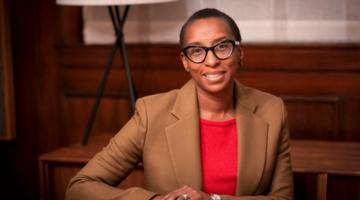 Anti-Black racism and Zionism are two cornerstones of Harvard’s flawed foundation. We should mourn Claudine Gay’s tenure at Harvard because she was both a victim and an agent of white supremacy.
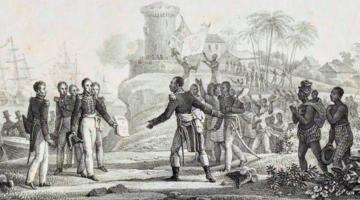 After Haiti gained independence in 1804 following a slave revolt, France threatened to invade and re-enslave the Haitian people if they did not pay compensation to French slave owners for their lost…
 Civilian democratic forces are demanding inclusion in proposed discussions in Djibouti.
 Thandisizwe Chimurenga is the author of the new book, Some of Us Are Brave, Volume I : Interviews and Conversations with Sistas on Life, Art and Struggle.


