A Black Agenda Radio commentary by executive editor Glen Ford
The New York Times touts Rwanda as a place of economic miracles, a country with almost no mineral resources that nevertheless plans to “leapfrog” straight to an information economy. What the Times fails to mention is that Rwanda’s relative prosperity is based on the extermination of its Congolese neighbors and the expropriation of their natural resources.
Rwanda’s Formula for Success: Murder Your Neighbors and Steal Their Wealth
A Black Agenda Radio commentary by executive editor Glen Ford
“Rwanda’s so-called ‘New Economic Model’ is simply pillaging and massacre, theft and murder on a huge scale.”
In the years since 1996, at least 6 million people have died in the Democratic Republic of Congo as a direct result of an invasion by two U.S. client states: Rwanda and Uganda. It is the greatest slaughter since World War II, yet only a small fraction of the American public is even aware that the genocide occurred. The public remains ignorant of the ongoing crime – in which the United States is fully complicit – because the U.S. corporate media have successfully covered up the murder of millions of Congolese. More than that, organs like the New York Times act as PR agents for the perpetrators of the genocide, especially Rwanda – as exemplified by a puff piece that appeared in the Times, this week, titled “Rwanda Reaches for New Economic Model.”
The article boosts Rwanda as an African economic success story, a country that is growing at 8 percent a year, even though it has “no oil, natural gas or other major natural resources” and no real industry. The Times takes us on a tour of Rwanda’s fledgling little commodity and stock exchanges, and quotes a government minister bragging that the country’s development plan is to jump directly from an agricultural base to an information economy, “leapfrogging” over the industrial stage of development, altogether.
“Yganda became a significant diamond exporter, even though it previously produced no diamonds, at all.”
In fact, the relative prosperity of the minority Tutsi political and business elite, is built on the bones of 6 million dead Congolese and the natural resources looted from their country. Rwanda’s so-called “New Economic Model” is simply pillaging and massacre, theft and murder on a huge scale, in concert with multinational corporations and under the protection of the United States.
A United Nations panel of experts confirmed, in 2001, that both Rwanda and Uganda were building up their own economies by looting eastern Congo’s mineral resources – coltan, diamonds, copper, cobalt and gold – and hauling away timber from Congo’s forests. The investigators found that Rwandan and Ugandan militaries had appropriated Congo’s wealth for themselves to such an extent, that Uganda became a significant diamond exporter, even though it previously produced no diamonds, at all. Ugandan gold exports increased 50-fold between 1994 and 2000. Rwanda increased its gold production 10 to 17 times between 1995 and 2000. Rwanda’s exports of coltan doubled and quadrupled, as did its production of cassiterite, another exotic mineral.
The UN report found Rwandan President Paul Kagame and Ugandan strongman Yoweri Museveni to be accomplices in the systematic looting of Congo, just as a later UN panel found both countries liable for genocidal acts against the Congolese people. Kagame and Museveni have built their economies on the extermination of their neighbors. Yet, the New York Times calls both countries African success stories. This week’s puff piece notes the 20th anniversary of the so-called Rwandan genocide of 1994 – the cause, extent and nature of which is actually in great factual dispute – while making no mention of the much larger loss of life right next store, in Congo, which is the source of the Rwandan elite’s prosperity. And, because the New York Times and its fellow media whores cover up the genocide, the carnage and the looting continue to this very day.
For Black Agenda Radio, I’m Glen Ford. On the web, go to Black Agenda Report.com.

 The full extent of Democratic Party treachery was exposed when the Roe v. Wade decision was overturned. Only right wing Americans have any expectation of getting what they want from the electoral…
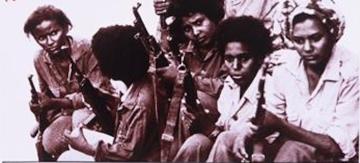 A 1980 speech by Black lesbian poet and activist Pat Parker provides a feminist, anti-imperialist blueprint for the present.
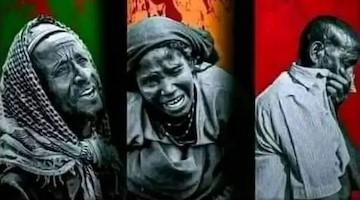 Conflict in Ethiopia continues to claim the lives of many civilians, as recently happened in the Wellega region.
 Drunken Count Ghouliani/low Barr-Boss Tweet revealing irreparable rot of capitalism…
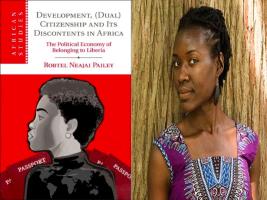 This week’s featured author is Robtel Neajai Pailey. Pailey is Assistant Professor in International Social and Public Policy at the London School of Economics and Political Science. Her book is…


