A Black Agenda Radio commentary by executive editor Glen Ford
Republican refusal to accept Barack Obama as a Grand Bargain partner has once again saved Social Security from cuts desired by both the White House and the GOP. Liberals are congratulating themselves, but gridlock is the real hero.
Gridlock (Once Again) Rescues Social Security from Obama and the GOP
A Black Agenda Radio commentary by executive editor Glen Ford
What saved Social Security – for the moment, at least – was the Republicans continued refusal to join the First Black President in a Grand Bargain.”
President Obama now says that he won’t include cuts in Social Security thanked
What saved Social Security – for the moment, at least – was the Republicans continued refusal to join the First Black President in a Grand Bargain in which the two business parties would work hand in hand, in the spirit of bipartisanship, to dismantle what’s left of the social safety net. Barack Obama fervently hoped that he would go down in history as the man who finally unraveled Franklin Roosevelt’s New Deal and Lyndon Johnson’s Great Society, through a consensus of the two major parties. He repeatedly stuck out his hand to his corporate colleagues on the other side of the aisle. Luckily for the rest of us, however, the Republicans always slapped his hand away, preferring gridlock to a shared victory.
And so begins Year Six of the Obama presidency, with another White House assault on entitlements frustrated, not so much by progressives, but by the intransigent, racist Right. Gridlock, once again, to the rescue.
Barack Obama fervently hoped that he would go down in history as the man who finally unraveled Franklin Roosevelt’s New Deal and Lyndon Johnson’s Great Society.”
We at Black Agenda Report take some pleasure in saying, We told you so. Specifically, back in November of 2010
Obama had already handpicked a deficit cutting commission whose job was to create an austerity model that the Republicans and the right wing of the Democrats could agree upon. The more liberal Democrats would be cast into the dustbin of history, along with their favorite social programs. White House spokesman Robert Gibbs said those Democrats who balked at Obama’s steady rightward course were “crazy” and “ought to be drug-tested.” The liberals’ feelings were hurt, but of course, they kept coming home like little puppies. They suffered through 2011, when Obama put all entitlement programs on the grand bargaining table – only for the Republicans to ultimately reject the collaboration in favor of overreach and games of chicken.
Essentially, gridlock – and its associated drama – has prevailed on Capitol Hill ever since, preventing Obama and the Republicans from coordinating their strategies on behalf of the One Percent. Race plays a definite role in this – and, for once, it has worked in the people’s favor, by keeping natural corporate allies, who share very similar agendas, at each other’s throats much of the time.
But, this gridlock on the Right will end sooner rather than later. The people’s domestic programs, international peace, and the viability of the planet, must ultimately be saved by a people movement, or it will not be saved, at all.
For Black Agenda Radio, I’m Glen Ford. On the web, go to BlackAgendaReport.com.
BAR executive editor Glen Ford can be contacted at Glen.Ford@BlackAgendaReport.com.

 The collapse in support for the UN resolution against the U.S. blockade of Cuba reflects Washington's aggressive diplomatic pressure and blackmail on Latin American governments rather than any…
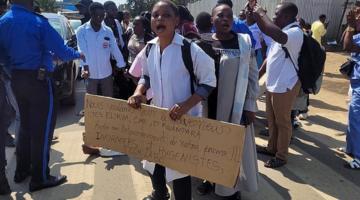 Washington signed agreements for Congo's copper and cobalt while Ebola spread across 67 health zones and medical workers went unpaid for their hazardous labor.
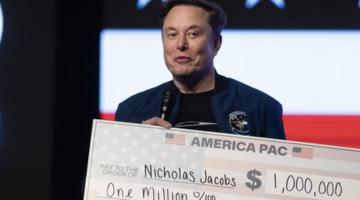 “In a democracy, it’s supposed to be one person, one vote, and the more one person can influence, the less egalitarian our system becomes,” said one expert.
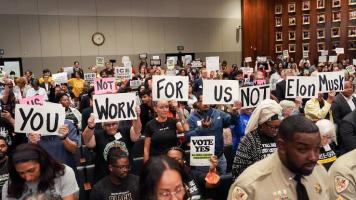 KeShaun Pearson of Memphis Community Against Pollution discusses the struggles against Elon Musk's data center and Memphis' compromised elected officials.
 In this week’s segment, we discuss Brazil's presidential election, where the incumbent president secured victory after losing in the first round of voting. But we begin with a conversation about an…



