A Black Agenda Radio commentary by executive editor Glen Ford
Four years ago, huge numbers of Blacks thought African Americans were doing well, despite the facts of the economic meltdown – a kind of mass madness. But a new survey shows “a portion of Black folks have snapped out of the delirium, and now see the world, and their actual position in it, more clearly.”
Blacks Slowly Emerging from Obama Delirium
A Black Agenda Radio commentary by executive editor Glen Ford
“People are forced to confront the facts of the disaster that has befallen Black America.”
There have been tons of commentary and what passes for analysis of the Black condition in the United States, 50 years after the March on Washington. The most fascinating recent data on how African Americans assess their situation in the U.S. comes from the Pew Research Center. The Pew researchers are noted for accumulating data over long periods of time, but their latest report also shows a dramatic change in Black outlook in the past four and six years, based on surveys taken in 2007, 2009 and this summer.
When questioned at the beginning of August, only 26 percent 39 percent
Lots of other polling organizations took notice when the Pew numbers came out in 2009, and did their own surveys to confirm that, yes, Blacks were the most optimistic ethnic constituency in America – even though the hard facts showed that they had been hurt worst of all.
“Twenty-six percent still think that Blacks are in a better situation.”
There could be no possible reason for such a disconnect from reality than the ascension of Barack Obama to the White House. We wrote extensively about the phenomena in Black Agenda Report, beginning with an article titled “Living a Black Fantasy
Four years later, the Pew poll shows that a portion of Black folks have snapped out of the delirium, and now see the world, and their actual position in it, more clearly. But, many more have not yet faced the fact that Obama is a servant of Wall Street who offers Blacks nothing but his own physical presence in the White House.
Of course, within the 26 percent who still think that Blacks are in a better situation, are a few folks who really have made personal progress in the worst of times. The rest, however, are still trippin’.
Obama’s approval rating among Blacks dropped dramatically
For Black Agenda Radio, I’m Glen Ford. On the web, go to BlackAgendaReport.com.
BAR executive editor Glen Ford can be contacted at Glen.Ford@BlackAgendaReport.com .

 The word "whataboutism" is used to silence and insult opponents of U.S. imperialism. It should be embraced as a means of revealing what is too often kept hidden.
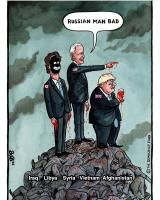 U.S. determination to be the world's hegemon created the crisis in Ukraine. The impacts are felt by working people in this country, who must look outside for solidarity and leadership as…
 International Women's Day has radical roots going back more than 100 years. Caribbean women have always played a pivotal role in political organizing.
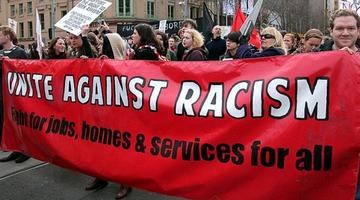 The American public are inundated with anti-Russian war propaganda that is worse than in the days of the Red Scare.
 The U.S. claims the right to sanction, to steal from other nations, with one-third of humanity suffering from these crimes. Sanctions are war by other means and cause great suffering…


