A Black Agenda Radio commentary by Glen Ford
The United States stands virtually alone in its crusade against Cuba, at the United Nations General Assembly and in western hemispheric forums. “Rather than isolating Cuba, the 52 year-long embargo has resulted in the isolation of the United States.”
Score at United Nations: Cuba 188 – U.S. 3
A Black Agenda Radio commentary by Glen Ford
“On Cuba, as with foreign policy in general, Barack Obama represents the continuity of U.S. imperial policy.”
For the 21st year in a row, the United Nationals General Assembly has nearly unanimously condemned the U.S. economic embargo against Cuba, now in its 52nd year. The vote was 188 to 3, with only Israel and the tiny Pacific island of Palau siding with the United States. Two other mini-states in the Pacific, the Marshall Islands and the Federated States of Micronesia, abstained from the vote. Cuban Foreign Minister Bruno Rodriguez noted
The Castro brothers, Fidel and Raul, have not only born witness to U.S. decline in the hemisphere and the world, they have contributed mightily to the humbling of the Yankees. Not content simply to survive America’s unremitting hostility over the course of two and a half generations, Cuba has been an icon of resistance to U.S. imperialism around the world. The people’s of southern Africa owe Cuba a huge debt for helping defeat Washington’s allies, the racist South African military, in Angola, in 1988
“Washington earned the hatred of vast sectors of Latin American society, while Cuba’s prestige continued to grow.”
The Cuban revolution’s impact on Latin America cannot be overstated. After the 1959 revolution, the United States pushed one country after another into military dictatorships, under which hundreds of thousands were massacred and disappeared. The U.S. and its fascist friends declared war, not just on the Left, but on Latin American civil society itself, in a crusade to prevent another Cuba from happening in the Americas. As a result, Washington earned the hatred of vast sectors of Latin American society, while Cuba’s prestige continued to grow. One by one, the U.S.-backed dictatorships collapsed, allowing Latin American politics to come alive, again. The people of South and Central America had shared the collective nightmare of rule by Washington’s fascist proxies. They also shared a determination to never again be dominated by the superpower to the North. Majorities in every Latin American country knew exactly what the Cubans meant when they spoke of the dangers of U.S. imperialism.
Earlier this year, at a summit meeting of hemispheric leaders, the United States found itself totally isolated on the question of Cuba. Even the president of Colombia, Washington’s closest ally in the region, declared there could not be another summit without Cuba’s presence
For Black Agenda Radio, I’m Glen Ford. On the web, go to BlackAgendaReport.com.
BAR executive editor Glen Ford can be contacted at Glen.Ford@BlackAgendaReport.com .

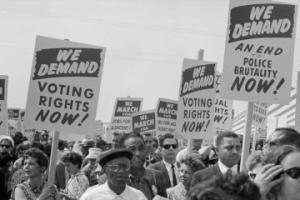 The Supreme Court kneecapping of the Voting Rights Act didn't have to happen? Democrats, especially the black leadership class had more than a generation to exploit their moral and political…
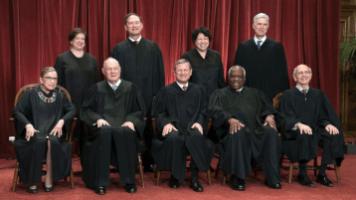 Supreme Court kneecaps the voting rights act... BAR's Bruce A. Dixon on the Real News Network Real News Network, where you can find much more news updated every day at http://therealnews.com.



