A Black Agenda Radio commentary by Glen Ford
The Black Is Back Coalition talks a look forward and back at its national conference, this weekend, in Newark, New Jersey. The gathering will focus on Blacks and elections in America. Forty years ago, Blacks took nominal power in much of urban America. “What did African Americans do correctly during this period of African American power at the polls in urban America, and where did we go wrong?”
Black Is Back Coalition Examines the Question of Elections
A Black Agenda Radio commentary by Glen Ford
“Why is it that so many Black people have come to believe that elections are the only political game in town?”
Elections – what are they good for? Well, for a people who were deprived of all human rights for most of their almost four centuries on this continent, full participation in American elections might have seemed like Promised Land. Of course, by the mid-1960s, Blacks in some northern states had been voting continuously for a century and a half. But they held only five seats
The first African American elected mayor of a sizeable city was Robert C. Henry List of First African American Mayors
“Who decided 40 years ago that mass grassroots movements were passé?”
Forty years later, Washington DC, the quintessential Chocolate City, has lost its Black majority, Atlanta and Newark are headed in the same direction, and Black Harlem is shrinking like a raisin in the sun, as are the Black populations of New York City as a whole and most other African American population centers. Gentrification, which is the most visible expression of finance capital’s determination to reclaim the cities for those with money, and the deindustrialization of America, have brought the beginning of the end of the era of the Black Metropolis.
Therefore, it is really quite late in the game to conduct an analysis of what Black people did during those decades when they wielded overwhelming electoral power in the big cities, since that historical window is now closing. Nevertheless, the period must be honestly evaluated, because it provides real answers to the real problems that Black people confronted in the quest for self-determination. What did African Americans do correctly during this period of African American power at the polls in urban America, and where did we go wrong?
This weekend, August 18 and 19, in Newark, New Jersey, the Black Is Back Coalition for Social Justice, Peace and Reparations will dedicate much of its annual conference to the question of elections: who pays for them, who makes the rules, who dominates the conversation – and, most importantly, why is it that so many Black people have come to believe that elections are the only political game in town? Who was it, representing what social strata in Black America, that decided 40 years ago that mass grassroots movements were passé, and that running for office in the Democratic Party was the road to genuine Black empowerment? And what good are Black politicians who are answerable to rich people outside of the Black community?
For information on the Black Is Back national conference in Newark, go to BlackIsBackCoalition.org.
For Black Agenda Radio, I’m Glen Ford. On the web, go to BlackAgendaReport.com.
BAR executive editor Glen Ford can be contacted at Glen.Ford@BlackAgendaReport.com .

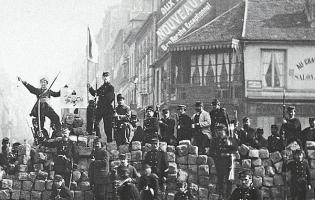 Music in Montreal: Our song, “The Internationale!”
 This week’s featured author is Cristina Mejia Visperas. Visperas is Assistant Professor of Communication at the University of Southern California. Her book is Skin Theory: Visual Culture and the…
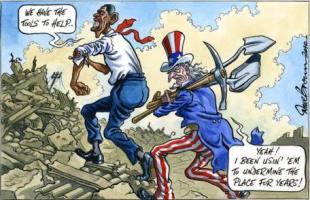 If Haiti is "the poorest country in the hemisphere" it is because imperialist policies continue to impoverish and destabilize that nation.
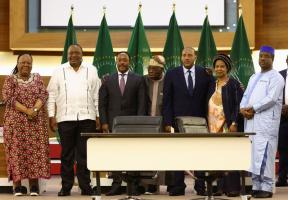 The people of Ethiopia are understandably relieved that a peace agreement now exists between their government and the TPLF. But aspects of the agreement may allow the U.S. to continue the conflict…
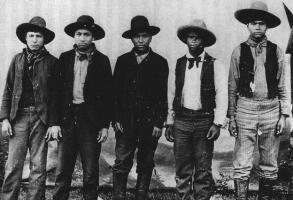 The day known as Thanksgiving is an opportunity to remember how the settler colonial state began its genocide against both indigenous people and enslaved Africans.


