A Black Agenda Radio commentary by Glen Ford
Rwanda’s crimes against Congo are the subject of another United Nations report. The U.S., Rwanda’s ally and protector, “is also liable for the genocide in Congo.” Washington has placed its guns and money in the hands of an aggressive, minority regime – which is not surprising. “U.S. policy in Africa has almost always been to choose chaos in those places where it cannot rule directly.”
The Genocidal Fruits of U.S. Africa Policy
A Black Agenda Radio commentary by Glen Ford
“Why does the United States place its strategic interests in the hands of the elite of a warlike minority in the heart of Central Africa?”
The United Nations has finally released a report
Apologists for U.S. policy in Central Africa are fond of using the word “strategic.” The United States, they say, arms and protects Rwanda because America has “strategic” business and defense interests in the Congo’s vast mineral deposits. The infinitely corrupt Congolese strongman Mobutu Sese Seko
“A formula for endless war.”
Why would the United States choose such allies to protect its so-called “strategic interests.” On the face of it, this would seem like a formula for endless war in the region. Even before the mass killings of Tutsis in 1994, they never comprised more than 15 percent of the population in Rwanda or in Burundi, where Hutu people make up the vast majority. Having lorded it over the Hutus during and prior to the arrival of European colonialism, and having massacred both nations
The answer is: Yes, they do understand. Since independence, U.S. policy in Africa has almost always been to choose chaos in those places where it cannot rule directly. And chaos brings genocide. The U.S. reasons that, at any given moment, chaos contains many options, an infinity of possibilities for superpower action – whereas stable regimes with broad popular support provide less room for the foreigner to maneuver, less possibilities for a quick change of policy or regime.
Which is one reason that China looks good to Africa and to much of the rest of the formerly colonized world. The Chinese do not foment coups, or encourage whole regions to become saturated in arms. They just want to do business in a stable environment. That’s why China has surpassed the U.S. as Africa’s trading partner, and why U.S. imperialism will ultimately be defeated. Because nobody wants someone around who spreads chaos and mass death everywhere he goes.
For Black Agenda Radio, I’m Glen Ford. On the web, go to BlackAgendaReport.com.
BAR executive editor Glen Ford can be contacted at Glen.Ford@BlackAgendaReport.com .

 “Real estate interests are licking their chops over ‘development’ opportunities linked to the Obama Center’s construction.”
 “We have lived, and continue to live, in a climate that doesn’t support life.”
 “As Dr Abiy continues his path of close relations with Eritrea expect to see a growing wave of criticism, maybe even demonization, once his “honeymoon” period with the western medi
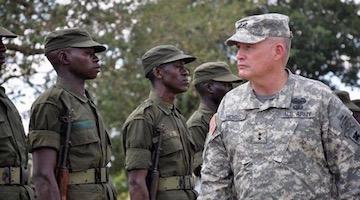 “Enormous sacrifices made in the protracted and often brutal anti-colonial resistance wars are now coming to naught.”
 “The Trump administration takes every opportunity to divert attention from the fact that there are a lot of people suffering in poverty in the richest country in the world.”



