A Black Agenda Radio commentary by Glen Ford
African Americans have lost, by some measures, two generations of gains since the onset of the “Silent Depression” in the early 2000s. So profound is the decline, “nothing but the most wrenching and thorough social transformation – something like a revolution – offers any hope of eventual economic parity with whites.” But the “Obama Effect” convinces many Blacks that, despite the evidence, the African American condition has actually improved under Obama.” It is a fatal delusion.
The Real “Obama Effect” – Not the Movie
A Black Agenda Radio commentary by Glen Ford
“There is absolutely nothing on the horizon that would reverse the steady relative deterioration of the Black economic condition, absent massive, targeted government intervention.”
In the soon to be released movie “The Obama Effect
I’m sure the movie has a happy ending, but in the real life and history of Black people, “The Obama Effect” has been disastrous. Black economic progress is not just at an end; the African American economic condition has so deteriorated, nothing but the most wrenching and thorough social transformation – something like a revolution – offers any hope of eventual economic parity with whites.
The latest Census Bureau figures show that the median white household is now 22 times more wealthy
The gap has widened, since 2009, when whites registered only 20 times more wealth Silent Depression
“Last week’s numbers confirm once again that the Black condition is only getting worse.”
And now, almost four years after the Wall Street meltdown and President Obama’s election – and going on a decade since the Black Depression began in the early 2000s – African Americans are in even worse shape. There is absolutely nothing on the horizon that would reverse the steady relative deterioration of the Black economic condition, absent massive, targeted government intervention. The Republicans aren’t going to do that – and neither will President Obama, of his own volition. He avoids even the whiff of targeted federal intervention that might tend to favor Blacks. It’s against his philosophy, as he has repeatedly stated since the Spring of 2009, when Obama declared that a “rising tide” will lift all boats and that Blacks should not make special pleadings. Even when the Congress provided him with $6.7 billion targeted at those worst hit by the housing catastrophe – and the certainly means Black folks – Obama’s Treasury Department let most of the money sit there, unspent.
I would call Obama a fraud – except for the fact that Black folks mostly fooled themselves into believing that Obama’s success was their own. As a number of polls and studies have shown, even as Blacks were losing two generations of economic ground, large numbers of African Americans believed that the Black condition had dramatically improved The Obama Effect might have saved the fictitious Charles Dutton movie character’s life, but it’s made African Americans blind and deaf, seemingly incapable of putting up a fight. The real Obama Effect can destroy a people.
For Black Agenda Radio, I’m Glen Ford. On the web, go to BlackAgendaReport.com.
BAR executive editor Glen Ford can be contacted at Glen.Ford@BlackAgendaReport.com .

 “Libya has become a marketplace for the trafficking of human beings.”
 “Militants in the rebel stronghold of Misrata referred to themselves as ‘the brigade for purging slaves, black skin.’”
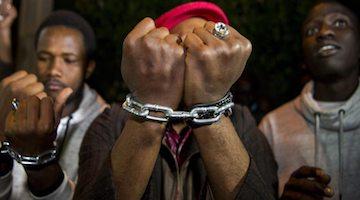 “The Obama administration bombed Libya into oblivion while using racist and terrorist rebel groups to do their dirty deeds on the ground.”
 US to Blame for Slavery in Libya
 A key strategist among the Black radicals that were behind the election of two Black mayors in Jackson, Mississippi, says his fellow activists have a decision to make: “Are we trying to be a good s



