A Black Agenda Radio commentary by Glen Ford
If American economic hegemony crumbles, so must U.S. imperialism. An IMF report predicts Chinese economy will surpass that of the U.S. in just five years, based on the value of goods and services produced. After the eclipse, all that will remain of U.S. imperial power is its awesome military – the power to destroy a world it can no longer dominate by other means.
China to Become Economic #1 in 2016: U.S. Imperialism Doomed
A Black Agenda Radio commentary by Glen Ford
“At or around the year 2016 the United States will fall from the economic pinnacle it has occupied since the late 1890s.”
The end of U.S. economic hegemony in the world is near – much nearer than almost anyone thought. No less an authority than the U.S.-dominated International Monetary Fund predicts that China will outstrip the United States by the year 2016, when measured by the real value of what people earn and spend
Imagine: most of us alive today will see a watershed in modern civilization. At or around the year 2016, unless something wholly unforeseen occurs, the United States will fall from the economic pinnacle it has occupied since the late 1890s. Much more importantly, the bell will have tolled, definitively, for U.S. imperialism.
This is a subject that is separate from the question of capitalism’s continued survival as a social system in the U.S. or elsewhere on the planet. It is about U.S. empire. However one describes the Chinese system, it is not the twin of U.S. imperialism, which has maintained its supremacy through the rigging of world markets, the artificial supremacy of the U.S. dollar, and most importantly, the coercive force of its military – all of which are interrelated. U.S. imperialism seeks to entrap the world economy, to put it in service of finance capital, largely headquartered in New York and London. The Chinese system is fueled by relentless production of actual goods.
“For some on Wall Street and in the Pentagon, the economic news is a signal for massive, preemptive military action.”
The U.S. and European imperialists, in one sense, dug their own graves decades ago, when they gambled that they could somehow maintain their grip on the world, while transferring the production of real goods, actual products, to the south and the east of the planet, through corporate globalization. They methodically dismantled the productive capacity of what had been the world's powerhouse, the United States, in search of ever lower labor costs in what we used to call the Third World. The outsourcing of actual production to the east and south meant higher rates of return – profits – on investors' dollars. Detroit and Pittsburgh and Chicago withered and rusted away, while Wall Street became economically and politically all-powerful.
Wall Street thought it could remain in the global catbird seat through its financial supremacy, backed up by an irresistible military. But especially since the meltdown of 2008, Wall Street has turned pure parasite All that now remains of U.S. imperial power is its military, more expensive than all the other militaries of the world, combined – in some ways, as much a burden as a weapon.
The Chinese do not spend even one-fifth the U.S. war budget, but will soon have an economy that is leaving the Americans in the dust. For some on Wall Street and in the Pentagon, the economic news is a signal for massive, preemptive military action, before the whole imperial edifice collapses. These are people who cannot envision a world in which they are not on top. They will not go down quietly. We are in, as the Chinese say, “interesting times.” The empire may not choose to go out in twilight, but in an inferno.
For Black Agenda Radio, I'm Glen Ford. On the web, go to www.BlackAgendaReport.com
BAR executive editor Glen Ford can be contacted at Glen.Ford@BlackAgendaReport.com .

 US imperialism is rooted in the nation’s history of slavery and white settler expansionism.
 “It’s really disgusting to see Democratic Congress members and senators condemning an obvious step towards peace,” said David Swanson, director of World Beyond War.
 Cedric Johnson, author of "The Panthers Can't Save Us Now" and Jay Arena at the 2018 NYC Left Forum.
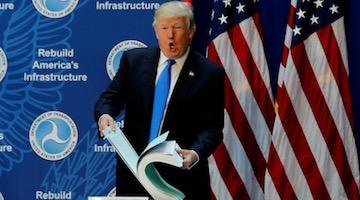 “The Trump experience has plunged corporate ideology and war rationales into disarray.”
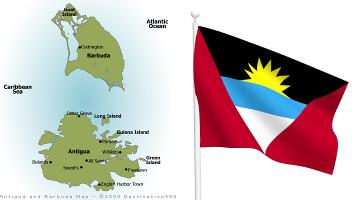 Antigua and Barbuda is an eastern Caribbean nation, a federation of two island British colonies that became independent in 1981. Hurricane Irma destroyed most of Barbuda’s infrastructure in 2017.



