A Black Agenda Radio commentary by editor and columnist Jared Ball
Young white demonstrators should be advised not to complain of being “enslaved” to student loans and such, any more than they would speak of a “Holocaust” of unemployment. Such metaphors of slavery are more than merely inaccurate – they may reveal dark facts about the speaker. But privilege does not brook criticism from the “quarters.” “Former Black Liberation Army soldier Asanti Alston recalled his friend’s experience at an occupation of being shouted down as ‘divisive’ for trying to focus attention on Black poverty and mass incarceration.” Privilege wants the conversation all to itself, like Empire.
Occupy These…! Slavery and Abuse by Metaphor
A Black Agenda Radio commentary by editor and columnist Jared Ball
“The use of Black suffering as a mechanism of White transcendence is as old as race itself.”
Of these recent occupations Bryan Bullock asked recently, “if Wall Street didn’t get a bailout, would there have been a bailout for the hood?” And Kenyon Farrow described the “race problem” of these occupations and responded quite critically to the repeated use by White occupationists of the metaphor of slavery. Both have added themselves to a growing number of those whose views of these occupations are justifiably cynical. When Farrow described this abuse by metaphor he was also responding to a long history of literal Black suffering becoming metaphorical propaganda for White self-interest. So yes, violence, as H. Rap Brown once said, may indeed be “as American as cherry pie,” but the use of Black suffering as a mechanism of White transcendence is as old as race itself and even predates the America for whom violence would become so essential.
Hearing of and seeing the White-held signs calling for an end of “our” enslavement by Wall Street is, in part, why more and more are looking to challenge the language and the focus of these White Occupy Wall Streeters. The metaphor of an often misused metaphor demands it. As Patricia Bradley has documented, this metaphor of slavery became the leading tool of propaganda used by the White middle and upper classes to shape the public opinion of White colonists against England. In one fell swoop their propaganda worked to aid in solidifying the status of enslavement to only Black people while only publicly discussing slavery as something forced upon themselves by the British. Chief among these propagandists was the slave-owning Samuel Adams whose image, now cleansed with the help of a beer brand, brings new levels of appreciation for the Dave Chapelle Samuel Jackson beer parody. “Yes they deserve to die! And I hope they burn in hell!”
“White middle-class settlers today decry their own semi-step downward toward those darker people they themselves enslave and with whom they want nothing to do.”
So the growing number of darker critical voices of the occupations have centuries of metaphorical abuse to add to the physical and are correctly noting the similarities. During his recent talk at Hampshire College former Black Liberation Army soldier Asanti Alston recalled his friend’s experience at an occupation of being shouted down as “divisive” for trying to focus attention on Black poverty and mass incarceration. “Empire gets defensive,” he said, it has no time for critiques of racism. It is this kind of increasing tension being reported in smaller darker circles that reminds of this history of abuse by metaphor. White colonists not wanting to be reduced to the conditions of those they themselves enslaved adopted the denunciations of slavery by the British in precisely the same way White middle-class settlers today decry their own semi-step downward toward those darker people they themselves enslave and with whom they want nothing to do. They don’t want to end slavery either, they just don’t want to be forced any closer to those truly defined, permanently, as the real enslaved.
So, in response, there are those now calling for an Occupy the Hood movement while others define their efforts as Hip-Hop Occupies in a Rise to Decolonize. In fact, this group’s goal is to “embrace the term ‘occupation’ as it has been reclaimed by militant workers of color from Latin America (Oaxaca, Buenos Aires, South Korea, China, among other places) to describe their occupation of factories, schools and neighborhoods, to strike back against oppressive forces.” Further, the Hip-Hop Occupies collective says that, “we fully endorse the ‘Decolonize’ framework as a necessary expansion…” That, “In the face of brutality in the legacy of capitalism, a system that relied upon the enslavement of African and Caribbean peoples, the genocide and displacement of Indigenous Peoples, and the violent seizure of lands for colonial profit, we embody a vision of intersectional social justice and self-determination.”
These are part, like the work of the Black Is Back Coalition, of still-not-dead embers of a global majority’s non-alignment with even liberal elements of the West. These are the signs of what may yet prove to be the most (only?) redeeming value of these occupations; a radical, global and organized response led by the colonized to what can only be the incompleteness of “movements” led by Whites and liberals. For as Alston also said, this “monster” called the “American way” and “democracy” must fall. And its metaphors too.
For Black Agenda Radio I’m Jared Ball. On the web go to BlackAgendaReport.com.
Dr. Jared A. Ball is an associate professor of communication studies at Morgan State University in Baltimore and is the author of I Mix What I Like! A Mixtape Manifesto (AK Press). He can be found online at: IMIXWHATILIKE.COM.

 In August 2020 the late Glen Ford spoke to former political prisoner Jihad Abdulmumit of the Jericho Movement about the origins and importance of Black August.
 Wilmer Leon and Margaret discussed the true reasons for antipathy towards Niger, and why other African nations are used as proxies for western interests.
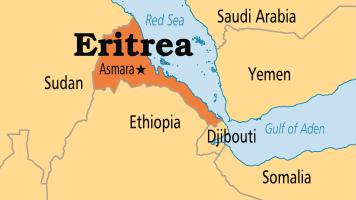 Eritrea is an example of an independent and self-determining African state. Its people are rightly proud of their history.
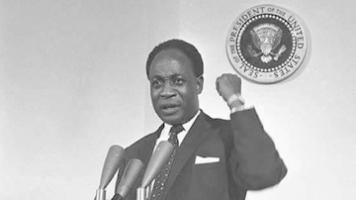 Sixty years ago, Nkrumah told us why it was important that Africa unite. Today, his message and roadmap for Pan-African unity is needed more than ever.
 The war against Africans intensifies, the puppets and stooges do as they are ordered, while others are satisfied with empty gestures. But the revolutionary path is unchanged, as Ajamu Baraka…


