A Less ‘White' USA - But What Political Direction?
by BAR executive editor Glen Ford
"It is in Black people's interest that immigrant workers be secure in the employment they obtain in this country."
 Sometime last year, the "minority" population of the United States reached the 100 million mark, according to the U.S. Census Bureau. That means only two-thirds of Americans are whites of non-Hispanic background. In four states - Hawaii, New Mexico, California and Texas - non-Hispanic whites are a minority. The relentless march towards a less and less white United States would continue, even if U.S. borders could be hermetically sealed, because the younger the age of the demographic cohort, the less white they are. Nearly half the nation's children under the age of five, are Hispanic, Black or Asian.
Also in 2006, the Black American population officially reached 40 million. Because of consistent undercounting of African Americans, we can assume that the real figure is considerably more than 40 million. The Black population isn't growing as fast as Hispanics and Asians, but white "Anglos" are hardly increasing their numbers at all. The racial handwriting is on the wall.
The question for African Americans, and in a larger sense, for all progressives, is: What will be the political composition and behavior of this "new" United States in the making. It is an historical FACT that Blacks are the most politically progressive American group, by far. African Americans are a distinct ethnicity with a shared history and culture, a myriad of institutions stretching back many generations on U.S. soil. Blacks share reference points that connect - and give cohesiveness to - a unique, essentially progressive African American worldview. And it is Blacks who are the "Other" pole in the long-prevailing Black-white American dichotomy. For that reason, most of us, until recently, have known where we stood in the American scheme of things, and have opted overwhelmingly on the side of social change.
"It is largely up to Blacks, by our actions, to determine if other ‘minorities' will become progressive partners."
But "Asians" are not an ethnicity - they are grouped together for Census purposes by the region of the globe from which they migrated. Hispanics are not an ethnicity, either, but a language group, an umbrella for populations from many nations and cultures. The challenge to African Americans is to do everything possible to create the political conditions that encourage practical bonds of solidarity in action between Blacks and the growing, but extremely differentiated non-Black "minorities." It is largely up to us, by our actions, to determine if they will become progressive partners, or will take what may seem to be an easier route, by collaborating with the worst elements of the dwindling white Anglo population.
In the critical arena of jobs, it is in Black people's interest that immigrant workers be secure in the employment they obtain in this country - secure enough that they will organize to raise their standards of living, rather than bring down standards of labor for everyone. Blacks must take leadership in this common struggle for workplace justice and living wages. Because, in the fullness of time, the immigrants WILL organize; the only question is, Will they organize with us, or against us.
For Black Agenda Radio, I'm Glen Ford.
Glen Ford can be contacted at Glen.Ford (at) BlackAgendaReport.com.

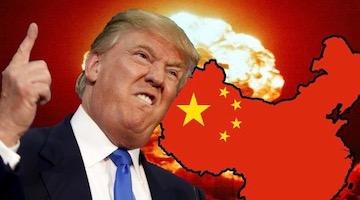 The real target of Trump’s trade war is not, primarily, the Chinese, but the U.S.-based corporations that spent the last generation outsourcing manufacturing capacity (jobs) to China.
 Bernie Sanders wants to take private profit out of the energy grid as part of his comprehensive Green New Deal plan.
 Harris’ candidacy has since day one operated as a protest campaign against Bernie Sanders. “Harris appears to be the elite’s most favored insurance policy.”
 Rwanda is treated as a showcase of US-allied Africa, but even western capitalists don’t believe dictator Paul Kagame’s economic numbers, and his own fortune comes from looting Congo.
 The fundamental division between “dope” and medicine has always been the race and class of users.



