Malcolm X and the “Pan-African Pantheon”
It is a mistake to ask, What would Malcolm do if he were here, because if Malcolm had lived we would not be in the situation that confronts us, today. “What exists today is in part the willful result of his assassination.” Deprived of a clear mind and voice, the Black movement ultimately faltered, and failed.
Malcolm X and the “Pan-African Pantheon”
A Black Agenda Radio commentary by BAR columnist Jared A. Ball, Ph.D.
“Malcolm X represented an incorruptible proponent of revolutionary politics.”
Today would have been the 85th birthday of Malcolm X. It is also the 85th anniversary of the birth year of what living legend Elombe Brath calls our “pan-African pantheon;” Malcolm X, Patrice Lumumba and Frantz Fanon. And in each case the analyses and movements that produced this pantheon are as necessary as ever. Lumumba’s Congo remains mired in a Western-inspired and Western-supported world war costing the lives of at least 10 million Congolese and counting. Fanon’s Martinique remains impoverished, consumed by labor strife and said by the French president Nicholas Sarkozy to forever be the property of France. And despite mythological delusions of progress Malcolm’s Black America is so impoverished, suffering world record-levels of un- and under-employment, a recession said to be “permanent,” and rates of incarceration seen as so systematic as to have that process compared to a modern state of enslavement.
And while there is the annual temptation to ask, “what would Malcolm say or do in response to today’s conditions,” it is best to remember at least of couple of things: First, today’s conditions and a living, breathing Malcolm X are absolutely mutually exclusive. One could not exist with the other. There is not one trace of evidence to suggest that Malcolm X would have, over the last 40 years, found ways to accept or rationalize the loss of a movement and a momentum that was designed to rid us of the conditions faced here and abroad, so we have to conclude, based on all existing evidence, that what exists today is in part the willful result of his assassination. This is, of course, the purpose of political assassinations, to stunt or end movements represented by the target. What do we think those in power killed him to achieve?
Secondly, as we have argued previously, the fact that those who took up the mantle of a struggle defined by Malcolm X remain marginalized academically, omitted journalistically or left to languish in prisons absent any legitimate legal justification, is conclusive proof of the continuity of power and the incompleteness of that movement. This especially after this past week’s release of a man who admits to having carried out the killing of brother Malcolm. If this man can serve his time and be allowed to go safely home while so many others whose efforts were in the lineage of Malcolm X remain incarcerated or exiled there can be no discussion of “progress,” or “completion.”
“Malcolm X had become the international standard by which our struggle was measured.”
And finally, it is as Dhoruba bin-Wahad said many years ago, “If Malcolm were alive today he’d be a political prisoner and we’d be saying nothing of him because we don’t support our political prisoners.” Malcolm X represented an incorruptible proponent of revolutionary politics that defies a single name but combined a kind of revolutionary nationalism, pan-Africanism and anti-imperialism with a grassroots focus that is today as threatening as ever. It is why Wahad noted that as soon as Malcolm X’s image became powerful again among the youth of the early 1990s that it had to be destroyed. This is part of a continuing semiotic warfare Malcolm himself noted when he proclaimed correctly that the United States “had perfected the science of image-making.”
Congressman John Lewis wrote in his memoirs said that in 1964 as a member of the Student Non-violent Coordinating Committee he toured the African continent on a path that happened to follow one recently taken by Malcolm X. Lewis noted that at each stop African leadership warned his contingent that if they were anywhere to the right of Malcolm no ear would be given them. Malcolm X had become the international standard by which our struggle was measured. Today, that standard has been reset along lines far farther to the right of Malcolm X than Lewis and SNCC represented in 1964 and to our severe detriment.
Lets make yet another call to commemorate Malcolm X by encouraging further enrollment in efforts attempting to continue his work. We have the examples, beginning next week with the release of his missing autobiographical chapters in New York City, as well as, The Malcolm X Grassroots Movement, whose Washington, DC chapter will be hosting a Malcolm X Day event May 29 and the Black Is Back Coalition whose work around the country is beginning to reignite and reset the standards of an anti-war movement. In the end Malcolm’s Organization for Afro-American Unity had as part of its mission a Black united front that sought to further the phrase he helped to popularize, “by any means necessary.” That kind of political unity is a missing component to a truly commemorative effort of our “shining Black prince.”
Jared Ball can be reached at freemixradio@voxunion.com.

 For almost two weeks, tens of thousands of Panamanians have been taking to the streets across the country protesting the cost of living crisis and lack of of response and attention from the…
 I. Didn’t Lynne say something like, “The law’s What they say it is…today…” (????????????????) Didn’t Lenin say something like, “The state is an
 The anniversary of the Sandinista revolution and a Central American zone of peace, the end of Roe v. Wade and American politics, and Biden administration aggression against Russia and China and the…
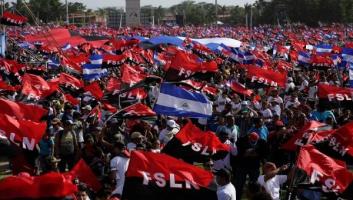 On July 19, 1979 Sandinista forces emerged victorious after years of struggle against the U.S. backed Somoza dictatorship. We talk to Netfa Freeman who is in Nicaragua about the significance of these…
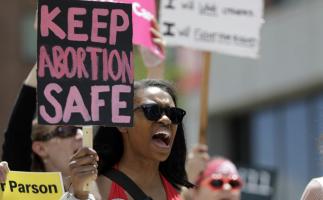 Pascal Robert discussed the impending end of the Roe v. Wade decision, and how the Supreme Court and American politics created this new crisis.


