A Black Agenda Radio commentary by Glen Ford
 There is no advice Black and brown parents can give their children to avoid being stopped and frisked by New York City police. Cops last year stopped almost half a million non-whites on the streets based on “furtive movements,” appearing to “case” a person or location, or for reasons explained only as “other.” Apparently, Blacks are nine times as “furtive,” felonious-looking, or “other”-wise threatening, as whites.
A Police State for Black and Brown New Yorkers
A Black Agenda Radio commentary by Glen Ford
“Stop-and-frisks have reached astronomical heights – increasing five-fold under the current police commissioner – on direct orders of City Hall.”
A full-blown police state exists in New York City. It is not the result of a crime wave; crime has been on the decline for decades, as successive city administrations proudly boast. The New York police state has been methodically constructed by the city administration to create an environment of fear and intimidation in Black and brown neighborhoods. Last year the racist police state juggernaut swept up nearly half a million African American and Latino New Yorkers, while affecting only 53,000 whites.
A Center for Constitutional Rights' lawsuit forced the city to begin keeping racial data on police activity following the 1999 police killing of Amadou Diallou. The latest data show that Blacks are nine times as likely to be stopped and frisked as whites. And these are anything but polite police procedures; in about one out of four cases, police draw their weapons or throw people to the ground. Still, only about six percent of the stops result in a formal arrest. In other words, in three out of four cases in which cops draw their weapons or use violence against New Yorkers on the street, in involves totally innocent persons, unworthy of arrest. Police used force against only 19 percent of whites, but against 27 percent of Blacks. Those whites that are among the very small proportion stopped by police are slightly more likely to be arrested than Blacks, and one-and-a-half times more likely to be carrying a weapon.
The Center for Constitutional Rights concludes, as would any sane observer, that the stop-and-frisk numbers reflect racial bias, and that they are flagrantly unconstitutional. It is equally clear that stop-and-frisks have reached astronomical heights – increasing five-fold under the current police commissioner – on direct orders of City Hall. The pace of unjustifiable stops has become too fast and furious even for some street cops. The Village Voice newspaper is publishing a series of articles based on secret police recordings of supervisors as they impose relentless and escalating quotas for stops and petty summonses on residents in Black and brown Brooklyn.
“In nearly half the cases, cops claim they stopped a pedestrian because he was making ‘furtive movements.’”
This has nothing to do with crime, and everything to do with enforcement of a racist social order.
The cops claim that they are simply exercising their right to stop people based on “reasonable suspicion.” But of course, white racism has its own system of reasoning, its own logic – it even invents or imagines its own facts. Police fill out forms to list the “facts” as they see them, after every stop-and-frisk on the street, as required by New York City law. In nearly half the cases, cops claim they stopped a pedestrian because he was making “furtive movements.” What are “furtive movements”? Apparently, whatever the police think or imagine they are. The second biggest excuse for frisking people – listed in 30 percent of the stops – is that they were “casing a victim or location.” In other words, the cop could just look at the subject and see that he had felonious intentions – that criminal “look” about him. In 19 percent of the cases, the cops don't even bother to be specific about why they made the person a target of the state; they simply check “other” as the reason.
Why has New York created a police state for Blacks and Latinos? Because the powers-that-be think that a voting majority of citizens approve, and because Black and brown leadership are in the pockets of those in power. For Black Agenda Radio, I'm Glen Ford. On the web, go to www.BlackAgendaReport.com.

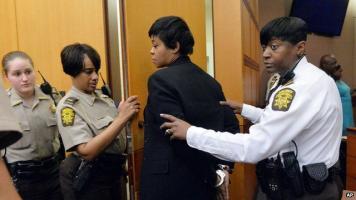 Atlanta is no mecca for Black people. It is a political plantation where the white overseers rule. Fani Willis’ prosecution of Black teachers was an awful example of the power dynamic in that…
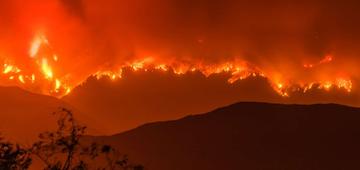 Thomas Sankara, radical leader and martyr of Burkina Faso, understood that the problem of ecological destruction was rooted in capitalism and imperialism.
 …
…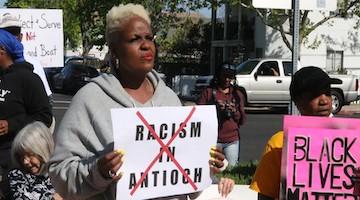 Acts of police brutality and other forms of misconduct are common throughout the country. The East Bay Area of California is exceptional only in that some officers have been indicted for a…
 Mosaic: An Interview with August K. Clayton


