“Tanzania’s government and Rastafari asserted a different way of ordering the world through the repatriation: pan-Africanism.”
In July 2017, the Ethiopian government announced its plans to finally grant identity cards to Rastafarians who had petitioned for such legal status since the mid-twentieth century. This represented a stunning reminder of the capacity of marginalized people and movements to bring about state action. This was not the only time that Rastafari accomplished such a feat.
In 1979, a Jamaican Rastaman, Joshua Mkhululi, approached the President of Tanzania, Julius Nyerere, with a serious request. He asked Nyerere to allow the wide-scale repatriation of Jamaican Rastafarians to Tanzania. Nyerere “agreed with the principle of black Africans returning to Africa.” In 1985, the government granted Rastas the “right of entry” into Tanzania and offered them permanent residency with the option for citizenship. For Rastafari, Africa was the Promised Land, and Nyerere’s government facilitated the “movement of Jah people.”
Movement has been an extremely important aspect of human history. Most recently, news cycles have been replete with the movement of large numbers of people from war-torn and poverty-stricken areas. These stories include coverage of people from Libya to Italy and from Syria to multiple parts of the world. In addition, the advent of Brexit and the Trump administration’s preoccupation with border control have reignited interest in the role that movement has historically played in re-ordering the world, and in shaping/re-constituting/re-configuring identities. They have also sparked interest in how such political developments might lead to future movement, as well as how the constriction of borders that prevent movement will affect identity formation and nationalism in years to come.
“President Julius Nyerere ‘agreed with the principle of black Africans returning to Africa.’”
Rastafari emerged in colonial Jamaica during the early 1930s and represented a comprehensive worldview that encompassed religious commitments, rituals, as well as political imaginaries and strategies. My new book, Jah Kingdom: Rastafarians, Tanzania, and Pan-Africanism in the Age of Decolonization, focuses on the movement of Rastafarians from Jamaica and other parts of the Western world to Tanzania during the post-independence period. As the end of European colonial rule gained traction in the mid-twentieth century, the nation state came to represent liberation for colonized peoples around the world. But for Rastafari, the nation state did not symbolize freedom. From their diasporic dwelling place in Jamaica, they sought liberation from colonial oppression through movement; movement to Africa. Rastafarians were not visitors in Africa. As they saw it, they were repatriates; returning Africans. More than just a migration, the move to Africa represented the physical act of a deeper quest to return to Africa on multiple levels: psychologically, intellectually and spiritually.
For Rastafari, Africa was the root of the African diaspora. They were resolute in their assertion that the identities of black people in the diaspora stemmed from an African root and not from ‘new world’ plantations. Their pan-Africanism was grounded in the idea that all black people came from Africa, were Africans, and were all a part of a global liberation struggle that spanned the African continent and its diaspora. Julius Nyerere agreed. The repatriation shows that just as peoples of African descent had imagined and enacted modes of pan-African collaboration across time and space before the formal end to colonial rule, such efforts continued into the post-independence period.
“Rastafari sought liberation from colonial oppression through movement; movement to Africa.”
This history of Rastafarian movement happened within the context of a particular and significant development in world history: the end of European colonial rule and the concomitant rise of nation-states across Africa and the Caribbean. As the head of an African nation-state, Nyerere had the power to help Rastas translate their dream of repatriation into an actual reality. Though the nation-state and national sovereignty had been established as the basis of world organization, Tanzania’s government and Rastafari asserted a different way of ordering the world through the repatriation: pan-Africanism.
Through this history, Rastafarians and Tanzanian state officials defied the status quo and the presumption of national sovereignty. With pan-Africanism as the impetus for this movement of Rastas from the Caribbean to Tanzania, they showed that continental and diasporic Africans continued to define themselves outside of the norms of the existing geopolitical landscape. This pan-African negotiation represented an alternative vision for the post-independence path forward. It was one that was connected to the transnational black radical tradition and it rendered national boundaries unstable. It was a difficult position to take as pan-African loyalties in this period were tied to the heavily surveilled anti-colonial wars fought by African freedom fighters against the Portuguese and South Africa, and interfaced with the machinations of the Cold War. Furthermore, as Nyerere saw it in his capacity as chairman of the South Commission, the “rich, industrialized and powerful” nations of the Global North continued to wield their power through the pointed maintenance of political and financial structures that prevented true independence and development in the Global South.
“As the head of an African nation-state, Nyerere had the power to help Rastas translate their dream of repatriation into an actual reality.”
In the midst of such complexity, Tanzanian state officials and non-state (Rastafarian) actors came together to imagine the world anew, and acted upon their ideological commitments. This meant that Rastafari had effected action at the level of the African state and Tanzania expanded its borders to accommodate diasporic Africans. This reminds us that anti-racist, anti-capitalist African diasporic politics have been and continue to be transformative and have historically led to action. This history of Rastafarian repatriation, which underscores the importance of the relationship between Africa and its diaspora, might be dismissed by some as the fanciful preoccupations of idealists from a bygone era. But the meaning and legacy of the repatriation render such a perspective foolhardy and shortsighted. In general, the history of diasporic repatriation to Africa continues to reverberate in the contemporary period as recent developments in Ethiopia attest.
As the conditions of inequality wrought by slavery and colonialism continue to take new forms from one historical period to the next, Rastafari has demonstrated its capacity to evolve and to remain a relevant form of resistance to white supremacy and capitalist exploitation. In terms of repatriation to Tanzania in particular, the returnees have had a tremendous impact on Tanzanians who have embraced Rastafari as a serious philosophy, and have precipitated social developments far beyond the initial mission of the repatriation. This yields insight into Rastafari’s evolution in Africa, the role of continental Africans in defining diaspora, as well as the ways in which this history of movement shaped, re-shaped and tested pan-African bonds and identities.
Monique Bedasse is Assistant Professor in the Department of History, with an appointment in the Department of African and African American Studies, at Washington University in St. Louis.






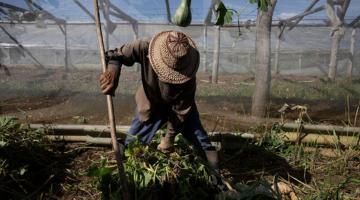 The Trump administration has already cut off Cuba’s access to oil. Now it’s attempting to starve the Cuban people, targeting the country’s capacity to grow, process, and import food — unless it buys…
 Fergie Chambers is an American philanthropist who was arrested on July 10 in Ibiza, Spain, by order of the Trump Administration.
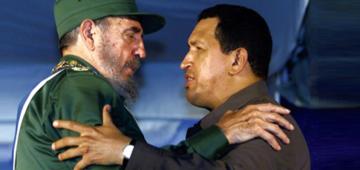 Cuba's leadership has chosen resistance over subordination as the blockade tightens, but Venezuela's sovereignty is being stripped away.
 In this week’s segment, we hear about the crisis in northwest Indiana, including the city of Gary, where some residents have gone more than two weeks without power after a storm. As in the rest of…
 Our guest is Sam Husseini. He’s a veteran independent journalist and senior analyst at the Institute for Public Accuracy. He is now running for Congress in Maryland’s 4th district as a Green Party…


