The South has always been the region where the most exploitative labor practices are tested first.
Originally published in Scalawag Magazine.
Plantocracy: (Noun) A government or political system that consists of a small, moneyed ruling class overseeing a large population of servants, slaves, or serfs; descriptive of any period of slavery and indentureship, particularly that of the early American South.
Southern Labor, and its structural underdevelopment, has long served as the germinating seed sewn by capital, imperial power, and the longue duree of the plantocracy that determines the coherence of "the worker." By extension, it determines what is understood as "workers' rights" and "labor exploitation." On Mayday 2026, we launch our new Southern Labor section with this special series, Week of Writing: May Day.
For this inaugural series in honor of International Workers' Day, we collected pieces from our Southern Labor contributors that capture the state of labor in the South, particularly in the face of fascist state violence, technological advancement, the prison industrial complex, and worsening economic and climate crises—all intimately linked to Empire's insistence on endless war and extraction at the expense of the working class.
Marxist urban geographer Bobby Wilson interrogated the South's particular labor arrangement in his pathbreaking study of Southern industrialization in Birmingham, Alabama, America's Johannesburg: Industrialization and Racial Transformation in Birmingham. Wilson writes, "The cultural logic of capitalism assumes that growth overcomes geographical diversity," and "The transformation of race must be understood geographically, as well as historically."
It is from these two understandings that Wilson's study of industrialization in Birmingham, and the "race-connected practices" it deployed to discipline Black and Southern labor, made a regional intervention in the discourse of Marxist historical materialist analysis and a racial intervention in our understanding of the reproduction of capitalism. His outline of the way racial terror produced the regional-local practices that shaped labor in the birth and duration of Birmingham's industrial regime placed the Southern question at the heart of labor inquiry. He writes:
We must continue to embrace the importance of class in capitalist development, but we must not deny race its ontological status…If we critically analyze race-connected practices within the context of capitalist development, we can avoid assigning a priority to race or class; they are relational. Racial relations must contend with class relations.
To think "labor in the South" thus forces a theory of labor and capitalist transformation over time that refuses to deny the glaring antiBlack antagonisms that structure the notion of "proletarianization"—who gets to be considered workers/laborers, what work and labor is considered valid and coherent, and at a higher scale, how and why the South as the zone of perpetual underdevelopment indexes the progress, development, and sustainability of its non-Southern counterparts.
In other words, to consider Southern Labor is to consider the blackened labor of the South in generating the exploitation and extraction standards through which the world accumulates capital, disciplines labor, and invests in the systems of violent oppression labor struggles fight to overcome.
From the rice, tobacco, cotton, sugar cane, and indigo of the plantation to the sharecropping, debt peonage, and convict leasing of Jim Crow and beyond, the South has historically been the region that heralds the most exploitative, anti-worker labor practices because the South is the site of the plantation. Southern labor in the afterlife of slavery thus requires a labor movement that seeks to end the plantocracy's prevailing terms of order, meaning it must be abolitionist and revolutionary in its intent.
The Southern Labor Condition
Labor in the 21st century is marked by a technological turn that places the people, places we live and love, and the planet in unending crises that poses an existential threat to us all. To interrogate what the dangerously high stakes of technofascist and unceasing genocidal warfare turn from South to South, we must first look historically at the role Southern regions have always played in serving Empire's blood thirsty expansion.
Appalachia infamously fueled industrial capital expansion with its coal, timber, and iron resources, while Alabama, as Birmingham's "Steel City" nickname hints, has been one of the nation's leading producers of iron and steel since Reconstruction. Atlanta is the headquarters of Georgia's largest employer, Georgia-Pacific, the company responsible for the Peach State's title as the number one state for paper and pulp production in the U.S. As Scalawag's extensive coverage of the Gulf South frequently notes, America's position as the world's leading oil producer is so because of the sprawling petroleum extraction and chemical processing infrastructure that pollutes Texas and Louisiana. The urban South—Austin, Dallas, Atlanta, Nashville, Oklahoma City—are all booming and emerging tech hubs. Yet, despite being the historic home of NASA, Disney, SpaceX, Texas Instruments, Coca-Cola, FedEx, and Delta Airlines, the South and its labor force remains unthought in conversations about tech and corporate fascism.
We must also interrogate the role of the South as a laboratory for weaponry, surveillance technologies, artificial intelligence systems, data centers, and other modes of violence that are, eventually, exported to other parts of the country and the world. In "GILEE and Cop City: Tactical Villages and Global Policing," Eva Dickerson stages such an interrogation by indicating the public-private partnership model at the heart of the "Atlanta Way" responsible for making Atlanta a global city and desirable destination for mega sporting events, corporate headquarters, and conventions. It is also this model that appeases the city's development regime—responsible for decades of uneven development, mass displacement, and gentrification—that made possible both the Georgia International Law Enforcement Exchange (GILEE) deadly exchange program with israel and the Cop City training facility.
Southern Labor Organizing
Southerners have consistently resisted against the ruling class, withholding their labor. From the 1934 textile strike—the largest single-industry strike in U.S. history with over 400,000 mostly Southern workers walking off their jobs to demand higher wages, better working conditions, shorter hours, and union recognition—to the recent Alabama prison labor strikes, Southern workers have always recognized the power of our labor and its place within larger exploitative, capitalist, and carceral systems.
In 1835, Black workers in Southeast DC organized a racially-integrated strike at the Washington Navy Yard—the first recorded strike of federal civilian employees—demanding higher wages, better working conditions, a 10-hour-long workday, and lunch break privileges. 100 years later, economics professor George Sinclair Mitchell noted that wages were still lower and work hours were longer in the South than in the rest of the country.
Even now, according to the Southern Workers Assembly, "Workers in the Southern U.S. have the lowest wages in the country leading to the highest poverty levels; we have the weakest worker protections and badly underfunded public services leading to the worst health outcomes and the shortest life spans; and fewer than five percent of workers have collective bargaining."
Black farmers' unions and alliances in the South have historically fought against economic exploitation and land loss. For example, the Sharecroppers' Union formed during the Great Depression in Alabama, fighting against exploitative landlords and the oppressive debt peonage system that kept many farmers trapped in poverty. The Southern Tenant Farmers Union (STFU) was formed in 1934 in Arkansas and protested against evictions and poor conditions, organizing strikes for higher pay and better treatment for sharecroppers. In 1935, the STFU successfully organized a cotton pickers' strike, raising wages. Leaders of Southern states recognize the power of labor strikes and collective bargaining, and these largely conservative, "pro-business" political leaders continually work to uphold anti-union attitudes and legislation throughout the South.
"One thing we do not need is more labor unions. We have gotten where we are without them, and we do not need them now. We are a right to work state. We have the lowest union membership in the country."
— Henry McMaster, Governor of South Carolina, 2024 State of the State address
Southern anti-union sentiment runs deep, growing in popularity following the Civil War and the abolition of plantation slavery. White business owners squashed union efforts from fear that an organized Southern labor force would empower formerly-enslaved Black workers and dismantle the long-established racial and socioeconomic order of the South. Employers used this same racial hierarchy as a tactic to disrupt cross-racial union solidarity, stoking the fires of already virulent racial tensions and Southern white racial anxieties around the possibility of Black economic mobility.
AntiBlackness sits at the foundation of Southern Labor exploitation, and its legacy ensures that workers in the South remain underinsured and continue to face some of the poorest working conditions in the nation, with lower wages and longer hours. Despite these conditions, union membership remains the lowest in Southern states, with only six percent of unionized workers across the entire region in contrast to 11 percent elsewhere in the US.
WorkRise notes that Alabama, Georgia, and Tennessee have each "passed laws that revoke eligibility for economic development incentives from employers who voluntarily recognize a union" since 2023. Meanwhile, other Southern states specifically seek to attract businesses by emphasizing anti-union positions. One of the largest employers throughout the Southern region is the federal government, employing approximately 1.5 million people in the South—nearly half its total workforce. These states "either block collective bargaining among public-sector workers or offer no legal protections for it."
Gender and Labor
In 2025, when the Trump Administration ramped up attacks on Diversity, Equity, and Inclusion (DEI), targeting women and people of color in the workforce, it was Black women who bore the brunt of the damage, with over 300,000 Black women disappearing from the workforce in just a few months, the majority of them being public-sector workers.
As Nykia Greene-Young writes for The EDU Ledger,
"Black women have historically been among the most consistent participants in the American workforce. Even during periods when other groups of women were discouraged or prevented from working, Black women labored inside homes, hospitals, classrooms, factories, and government offices to ensure stability for their families and communities… The South has always depended heavily on Black women's labor. From caregiving and education to community organizing and public service, Black women have been the backbone of Southern economic life."
Economists recognize the significance of Black women's labor to "Southern economic life" and the economy at large, applying the labor statistics regarding Black women's employment to shape their understanding of economic and employment trends across the nation. Jessica Fulton, a senior fellow at the Joint Center for Political and Economic Studies, told The 19th News that "Black workers, and particularly Black women, show up as a canary in the coal mine, giving a picture of what may happen to everyone else later."
This trend follows in other areas, particularly in reproductive injustice. The South is the region where many of the most draconian abortion legislation has thrived and Black Southerners have been significantly impacted by the consequences of this legislation—from the criminalization of miscarriages and stillbirths, to a brain-dead woman used as an incubator on her deathbed, to forced c-sections. The rise of pronatalism, abortion bans, and fetal personhood laws are tactics priming citizens for further sexual and reproductive labor exploitation. Once again, the shadow of slavery, and the systematic violation of Black reproductive freedoms, continue to fuel the engine of the extraction machine.
From Slavery to Prison Labor
The history of labor organizing in the South is distinct from other regions in the U.S. because of the history of antiBlackness which informs anti-worker, anti-union sentiments. UNC Chapel Hill's archive of The Labor Movement in the U.S. South pulls together a collection of resources and historical records that tell the story of how Southerners have organized around labor despite "historically low unionization rates among rank-and-file workers, the region's reactionary political climate, and because of the economic and social legacies of chattel slavery."
"Slavery was so profitable, it sprouted more millionaires per capita in the Mississippi River valley than anywhere in the nation."
—Greg Timmons
After the Civil War came convict leasing, a legalized forced labor—meaning another slavery system—in which states leased prisoners, the majority of whom were Black men, to private companies and planters for labor in farms, mines, railroads, factories, lumber yards, and road construction, maintaining control over Black labor and the generation of capital. Masters had no incentive to keep workers alive, and torture and abuse, along with poor working conditions and disease, were common.
In "Texas Runs on Prison Slave Labor," Monsour Owolabi—who is currently on disciplinary sanction in TDCJ's Ferguson Unit for peacefully withholding his labor power—details the history of the convict leasing system how this coerced convict labor led to the creation of the South's modern infrastructure, expanding mining, coal, and steel production as well as the region's roads and railroads, fueling the burgeoning political capitalist system. He writes,
"In 1962, the Texas Prison System garnered $2 million in profits from its 10,000 acres of land allotted to cotton cultivation, which housed five cotton gins that operated seven days a week, 24 hours a day. Its predominantly New Afrikan and Chicano labor force harvested an average of 700 bales of cotton per day, for a total of 12,000 to 14,000 bales of cotton. And these laborers received zero wages for their labor."
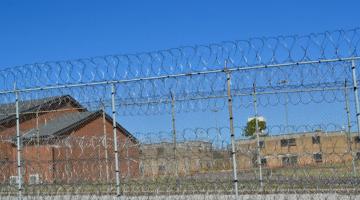
Though convict leasing was outlawed in the mid-20th century, it was a precursor to prison labor. To this day, the Texas Prison System uses convict labor to produce furniture, textiles, and more, due to the extremely low cost of production, while prisoners make little to no wages. America's largest maximum-security prison, Angola, sits on a former plantation in which Louisiana prisoners stand in long rows, picking vegetables by hand, as armed guards watch on horseback. In Alabama, the last state to officially abolish the convict leasing system in 1928, prisoners are forced to work under threat of punishment, like solitary confinement or denial of parole. Nothing has materially changed in the South nor America since the inception of the American project; this nation has survived by gathering and hoarding imperial capital through slavery.
In 2016, prisoners across 24 states, including Alabama and Florida, coordinated with contraband cellphones and organized a national strike protesting prison slavery and inhumane conditions. Tens of thousands of prisoners withheld their labor, for which they were paid as little as 17 cents, leading to nationwide prison lockdowns. After a riot at Lee Correctional Institution in South Carolina that killed seven prisoners, prisoners across the nation launched a series of labor and hunger strikes for over two weeks in 2018, calling for 2,000-calorie diets, better living conditions, and the reduction of solitary confinement, though by 2019, none of their demands were met.
Michael Kimble, who has been held captive in an Alabama prison for over 40 years and a participant in the labor strikes, writes:
"We see work strikes as a weapon to be used to hit 'em where it hurts. There are many different strategies and tactics that prison rebels use, and work stoppages are just one of them. We organize around the knowledge that prison is slavery and super-exploitation of our labor power. Work stoppages are often violent due to the arena and conditions that prisoners are forced to maneuver in."
Our coverage of Southern Labor is intended to increase our audience's political literacy. With this series, and our larger work, we interrogate how the South—rendered a sacrifice zone, and home to the nation's largest concentration of surplus populations, deemed fundamentally incompatible with regional, national, and global progress—determines the limit and extent by which all labor may be exploited.
Sherronda (they/she) is a Southern-grown gothic nerd. As a versatile creator, they lend their talents to multiple spheres as an essayist, editor, storyteller, creative consultant, and artist. She currently serves as the Editor-in-Chief of Scalawag Magazine and is the author of "Refusing Compulsory Sexuality: A Black Asexual Lens on Our Sex-Obsessed Culture." Alongside queer theory and (a)sexual politics, their writing often focuses on cultural critique and media analysis, especially horror.
Tea S. Troutman (they/them) is an abolitionist, digital propagandist, editor, and critical urban theorist born in Macon, Georgia, and currently calls Atlanta home. Tea is a Ph.D. student in the Geography, Environment, and Society department at the University of Minnesota, and also holds a B.S. in Economics and a Master's of Interdisciplinary Studies in Urban Studies, both from Georgia State University. Tea's work draws heavily on their experience as a long-time community organizer in Atlanta, Georgia, and their research interests broadly consider urbanism and critical urban theory, afropessmism, black geographies, and black cultural studies. Their dissertation project is a critique of Atlanta, "New South Urbanism," Anti-Blackness and the global circulation of the idea of the Black Mecca.
Aarohi Sheth is an abolitionist, essayist, storyteller, editor, and poet from Houston. They currently serve as Scalawag’s fact checker and Hurricane Season editor. Aarohi writes about grief in all its forms, bayou communities, humidity, radical (re)imagination, the family as a horror, and more.






 Students in France are engaging in mass protests. Hundreds of them have been arrested and injured by police, and many schools are closed. Annick Metefia joins us from Paris. She is a member of the…
 Ajamu Baraka of the Black Alliance for Peace joins Dimitri Lascaris on BettBeat Media for a conversation about something Western publics have not yet come to terms with — the fact that resistance to…
 Progressive candidates rarely remain so after winning public office. Zohran Mamdani is no exception, but his capitulation to New York zionists angered his supporters, and the people he hoped to…
 “Between October 2 and October 8, 1937, between 15,000 and 40,000 Haitians and Black Dominicans were slaughtered by Dominican troops…”
 Ethiopia and Eritrea are on the brink of a war that could further destabilize the Red Sea, disrupt oil tanker traffic, and drive gas prices even higher.


