In 2025, Françafrique didn’t die — it just booked a seat on a French military plane. Macron’s “Operation Rescue” proves that old habits still fly first-class.
Originally published in Raïs Neza Boneza.
In October 2025, a French military aircraft quietly took off from Réunion Island on a mission that seemed straight out of a Cold War spy novel. Its target was not a terrorist, nor an endangered diplomat, but the disgraced president of Madagascar — a former nightclub DJ turned strongman, accused by the United Nations of ordering the massacre of 22 protesters.
The man’s name is Andry Nirina Rajoelina, and his escape from Antananarivo aboard a French military plane reveals that the specter of Françafrique — that toxic blend of political meddling, personal loyalty, and postcolonial arrogance — still haunts Paris.
A Rescue Without Honor
On 12 October 2025, while the streets of Madagascar’s capital were filled with chants for justice, a CASA aircraft of the French army was dispatched to retrieve Rajoelina. According to multiple sources, French paratroopers were even instructed to open fire if the Malagasy army tried to stop them — an illegal military operation conducted on sovereign African soil.
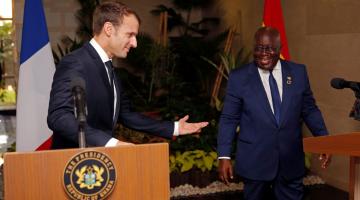
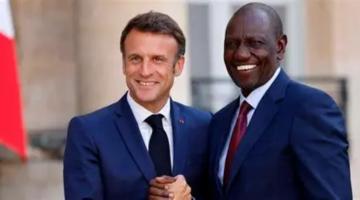
President Emmanuel Macron, when pressed, offered only evasive answers about “constitutional stability” and “friendship with the Malagasy people.” Behind those platitudes lies the uncomfortable truth: France intervened once more to protect one of its own, no matter how compromised.
Between Blackmail and Brotherhood
It wasn’t humanitarian concern that prompted this rescue. It was blackmail — and old political debts.
Rajoelina, who also holds French nationality, reportedly threatened to expose illicit payments and secret arrangements linking him to Nicolas Sarkozy and his network. When the walls began to close in, he made it known that he could “reveal everything.” Within hours, Sarkozy himself allegedly called Macron. The order was given.
The Élysée reacted not out of moral duty, but out of fear — fear of another scandal, fear of the ghosts of the past coming back to haunt the French presidency.
The Cost of Cynicism
Macron’s government justified the operation in the name of “stability” and “avoiding chaos.” But the real chaos lies in this duplicity. For all his promises to end Françafrique, Macron has perpetuated its logic — protecting corrupt allies while preaching democracy.
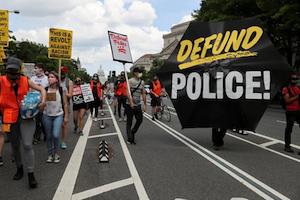
French-made tear gas killed infants in Antananarivo; French officials turned a blind eye to state violence. Then, when the regime collapsed, Paris whisked its protégé away to safety. This isn’t diplomacy. It’s complicity.
A Generation That Sees Clearly
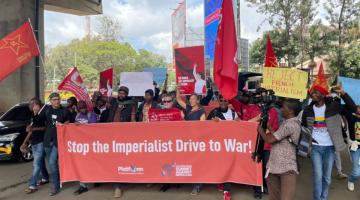
Across Africa, a new generation is watching. Educated, connected, politically aware — Agonizing but organizing as it recognizes the double standards at play.
When Macron lectures Africans about “foreign interference,” the irony is bitter: just days after that statement, France interfered directly in Madagascar’s sovereign affairs.
For Malagasy youth, this episode is more than an insult — it’s a betrayal. They fought for freedom, and France stole their victory.
The Pretence of a Break
Macron once vowed to end Françafrique. Yet in practice, he has merely digitized it — replacing briefcases with encrypted calls, coups with covert “exfiltrations.” The logic remains unchanged: France decides who stays, who falls, and who escapes.
The Rajoelina affair is not just a diplomatic scandal. It is the moral bankruptcy of an entire system — one that still treats African nations as chessboards for European power games.
Françafrique is not dead. It has simply rebranded itself — polite words instead of decrees, jets instead of jeeps, but the same contempt beneath the surface.
And once again, the bill will be paid by the people — the Malagasy people who demanded justice, and were answered with silence.
Raïs Neza Boneza is a Congolese-Norwegian writer, researcher, and human rights activist. He is co-convenor for Africa of Transcend Global Network, a network for peace, development, and the environment.




 Liberation struggles are not fought only on the battlefield. The African Party for the Independence of Guinea-Bissau and Cape Verde (PAIGC) left a legacy of educational decolonization.