A veteran Grenadian revolutionary explains the situation of Venezuela today, condemns the US build-up, and offers his advice and solidarity.
Originally published in Venezuela Analysis.
In 1983, the US invaded Grenada under the pretext of “protecting” US students and “restoring democracy,” when the real target was the revolution initiated by Maurice Bishop. Today, Washington advances a similar strategy in the Caribbean, targeting Venezuela based on fabricated “narco-terrorism” claims.
Chester Humphrey is a veteran of Grenada’s revolutionary movement, a labor leader, and a member of Grenada’s Parliament for 32 years. In this interview, he reflects on the parallels between these two historical moments, exposing the enduring logic of US imperialism in the region and the lies used to justify military interventions. Humphrey draws a clear line connecting the past and present, underscoring how revolutionary projects need to maintain unity, popular support, and regional solidarity to survive.
The 1983 US invasion of Grenada claimed to be “protecting” US students and “restoring democracy.” Today, Washington justifies its military buildup in the Caribbean—especially against Venezuela—with the fiction of “narco-terrorism.” How do you see these two moments in relation to one another, and what do they tell us about the enduring logic of US imperialist activity in the region?
The parallels are unmistakable. What we’re seeing today is simply the latest chapter in a centuries-long pattern of imperial domination in our region. That pattern began with the violent arrival of European powers at the end of the 15th century and has been carried forward, without interruption, by the United States. Washington’s pretexts may change—from “protecting students” in Grenada to “combating narco-terrorism” in the Caribbean. But the underlying objective remains the same: to secure control over the political destiny and material wealth of the hemisphere.
Europe’s conquest of the Americas laid the structural foundations of this system: genocide against Indigenous nations and the largest forced enslavement of human beings in world history—all to generate capital and accumulate wealth. The scale of the transatlantic slave trade was so vast that it altered the migratory routes of sharks that followed the slave ships across the ocean.
That original violence forged a logic of domination that endures to this day—reshaped, rebranded, but unchanged at its core. The United States eventually inherited and modernized that system, converting old colonial rule into a post-colonial control. The 1983 invasion of Grenada and the current aggression against Venezuela are not anomalies but new installments in the same imperial narrative, updated for the twenty-first century.
Neither Grenada then nor Venezuela now presents any military threat to the United States. What both represent is the threat of an alternative model of development independent of US domination, capable of mobilizing the people’s resources for their own benefit. In both cases, Washington fears that these nations offer a real alternative to US imperial control in the hemisphere. The United States wants pseudo-democracies across the continent, from which it can exploit resources, maintain the vast majority of our peoples in oppression and poverty, and allow the rise of small, comprador, highly bureaucratic, colonial-dependent states dominated by local oligarchies aligned with Washington.
In Grenada, the Revolution represented an alternative system of development, and that was a threat. We could also speak directly to the American people, especially African Americans, because we share a language and deep cultural ties—and that, too, represented a threat. That made Grenada particularly dangerous in Washington’s eyes: the example of a small, Black-led nation charting its own independent path.
Similarly, Venezuela today poses no military threat to anyone. What it represents, through the Bolivarian Revolution, is the effort to reclaim the nation’s wealth from US multinationals and to carry forward the historic project begun by Simón Bolívar: the struggle for true independence and regional unity.
From a tactical standpoint, the United States is now following the same script it used in Panama in 1989. First, invent a pretext: fabricated accusations relating to drugs. Then attack. Now the story is that Venezuela is a “narco-state.” It’s a blatant and transparent deception. No serious government in the region believes it, apart from one nearby that has chosen to align itself with Washington.
Even Britain has taken some distance by withholding drug-related intelligence in the Caribbean. I don’t believe the UK has fully cut its intelligence sharing with the United States, because these countries are conjoined twins, but London has publicly signaled discomfort with Washington’s reckless behavior in our region.
Both then and now, the United States justified invasion through lies. What were those lies in Grenada’s case, and how did the world respond?
The United States claimed it was invading to “rescue” its students at St. George’s University, Grenada’s internationally-recognized medical school, home to nearly ten thousand students, most of them Americans. This pretext was entirely fabricated; the students were not in danger.
It’s worth recalling that in 1983, even Margaret Thatcher condemned the US invasion, insisting she had no prior knowledge of it. Grenada was part of the British Commonwealth, with the monarch as head of state. So, the US had, in effect, invaded a realm of the Crown without Britain’s consent. It was a first in Commonwealth history. Britain even voted at the UN General Assembly to denounce the invasion as a violation of international law.
But of course, Britain and the United States are like conjoined twins. Publicly, the UK expressed outrage, yet privately, it continues to collaborate.
What lessons does the Grenada experience hold for Venezuela and other countries facing US aggression today?
The number one lesson is the importance of internal unity within the revolutionary movement. That was the fatal weakness of the Grenadian Revolution.
The Americans had long been preparing: running military exercises, planting agents, carrying out sabotage, trying to undermine our economy. None of it succeeded until the internal split occurred within the ruling party. Once that happened, the Revolution collapsed, and the US just came in and mopped up.
So the essential lesson is that revolutionary forces must maintain internal unity and close connection with the working people. That’s what sustains Venezuela today. Despite the enormous pressure in the form of economic warfare, coup attempts, etc., the Bolivarian Revolution has endured because of internal cohesion within the leadership and the people’s continued support.
Let’s return to the present. US officials have been pressuring Grenada to install US radar and technical infrastructure at the Maurice Bishop International Airport. What is your position on these plans?
The Grenadian government has not agreed to Washington’s request to install a US satellite downlink station here. The Americans want it because of Grenada’s geographic location, which would help guide their cruise missiles and other precision munitions.
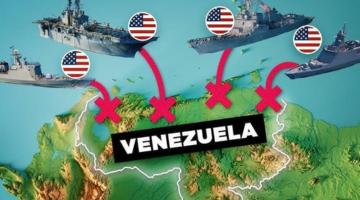
If you look at the US military build-up, that’s what it’s about: preparing for possible strikes on Venezuela. The submarine is only the coordination platform for the launch, but real control requires satellite guidance and radars. That’s why Grenada is being pressured to lend itself for the radar installations.
How do you view the role of regional organizations like CARICOM in defending sovereignty and resisting militarization?
With the exception of one state, Caribbean countries remain committed to the principle that the region must be a Zone of Peace—a principle reaffirmed many times by CARICOM and most recently subscribed by former prime ministers across the region. It is fundamental to our survival as independent nations in a neo-colonial world.
CARICOM’s commitment to this principle is vital. The Caribbean must not be drawn into the wars of empire or used as a staging ground for US military operations.
Still, government declarations are not enough. Our peoples must also be vigilant. Caribbean citizens understand US intentions and don’t support the aggression against Venezuela. Most see clearly that the talk of “narco-terrorism” is a fabrication and, in Grenada’s case, most understand this claim to be just as false as the claim of “rescuing students” that was used to justify the 1983 invasion of Grenada.
There are deep ties between Grenada and Venezuela. Could you speak about some of the historical and people-to-people connections?
Indeed, our connections run deep. There is a very large Grenadian community in Venezuela, perhaps the third or fourth largest outside of Grenada itself. Thousands of Grenadians went to Venezuela to work in the oil fields, especially in the western state of Zulia. I, for one, had a great-uncle who spent his entire adult life in Venezuela. So our families, our histories, and our cultures are intertwined.
Venezuela is, in many ways, a Caribbean country. Its longest border is Caribbean-facing, and there are even Venezuelan islands where people speak both Spanish and English. We are not distant peoples; we are family.
That’s why the solidarity between our respective peoples has grown, especially since the rise of the Bolivarian Revolution. Despite some tensions—like the Guyana-Venezuela border issue, which has now been tempered through the Argyle Mechanism—there is overwhelming solidarity between the peoples of the Caribbean and the people of Venezuela and its government.
Beyond governments, what can grassroots movements do to defend sovereignty in the region and support Venezuela?
We must build direct people-to-people solidarity. Cuba has shown us how to do this. Despite language barriers, Cuba built deep bonds across the Caribbean. Every CARICOM country today has leaders who were educated in Cuba.
In Grenada, our ministers of foreign affairs, finance, and tourism are Cuban-trained, and our public healthcare system still depends on Cuban medical cooperation. So the relationship is not abstract; people feel it in their daily lives.
Venezuela also built solidarity through programs like Misión Milagro, initiated by Chávez, which flew patients from across the Caribbean to Cuba for free eye surgeries. Thousands of people recovered their sight because of that program.
This kind of tangible solidarity cuts through the US propaganda that dominates our media. Remember, we are bombarded by American misinformation 24 hours a day through CNN, NBC, BBC, and also Hollywood. It shapes minds and promotes the myth that the US model is divinely ordered and best for all.
We must creatively counter this conditioning through cultural exchanges, education, and grassroots media. That’s how the Cuban comrades have sustained their revolution.
What do you see as the concrete military scenarios the United States is preparing against Venezuela today?
After years of talking about the need for “regime change,” the US picked up the Panamá libretto to legitimize the attack on Venezuela. Now, if we are talking about the actual military roadmap, I believe the US is preparing a “surgical intervention.” They have learned from their failures in Vietnam and Afghanistan. Practically their only “success,” if you can call it that, was Grenada—a tiny country of 110,000 people. Fortunately, Venezuela is far larger and has international allies.
I think Washington plans to target specific leaders—political and military—using drones and precision strikes, similar to what Israel does in Lebanon and elsewhere. They might also try to seize strategic posts, but it will not be an old-style land invasion.
They will attempt to decapitate the leadership and then negotiate a surrender with the remaining forces, installing their chosen puppet. That’s why we just witnessed the promotion of María Corina Machado—whose rap sheet as a war-mongerer and a Zionist is known by everyone—as a Nobel Peace Prize winner.
One thing is clear, however. The US is not moving all this weaponry, satellite systems, and specialized forces by the thousands to do nothing.
This is the danger we face: a rogue superpower that believes it has a divine right to determine the destiny of every nation in the hemisphere. It’s the Monroe Doctrine revived. They want to “Make America Great Again,” but that so-called greatness was built on genocide, slavery, and war.
Some things persist, and others change. US imperialism is more dangerous today because it is weaker. Yet it no longer stands unopposed: new powers and alliances have emerged, and above all, peoples who have learned from history now stand in its way.
What message would you like to send to the Venezuelan people?
First, my deepest empathy and solidarity. The people of Grenada do not believe Washington’s lies. We know what this is really about: taking control of Venezuela’s oil and its future.
Be vigilant. The US tracks everything: phones, movements, coordinates. They will try to take out your leadership in one strike. But remember: the US is not invincible. History shows that imperial powers fall.
And as long as the people of Venezuela maintain unity, as long as you keep the Revolution close to the people, you will endure.
So, I send my solidarity to the Venezuelan people, to the Socialist Party, and to all progressive and patriotic forces. My spirit and my heart are with you.

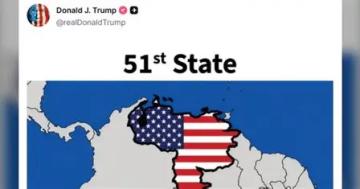
 In this week’s segment, we discuss student protests by Black and brown youth in France against austerity measures and race-based inequality in the education system. But we begin with a discussion of…
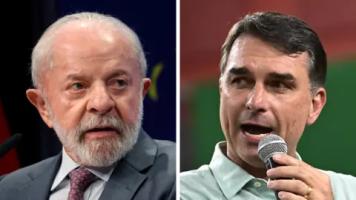 Brazil's incumbent president Lula da Silva finished second behind Flavio Bolsonaro in the first round of the presidential election. Because neither man received at least 51% of the vote, a run-off…
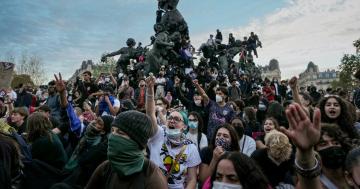 Students in France are engaging in mass protests. Hundreds of them have been arrested and injured by police, and many schools are closed. Annick Metefia joins us from Paris. She is a member of the…
 Ajamu Baraka of the Black Alliance for Peace joins Dimitri Lascaris on BettBeat Media for a conversation about something Western publics have not yet come to terms with — the fact that resistance to…
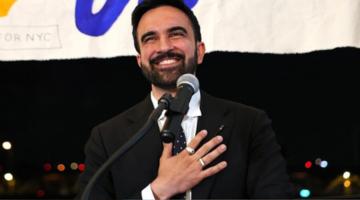 Progressive candidates rarely remain so after winning public office. Zohran Mamdani is no exception, but his capitulation to New York zionists angered his supporters, and the people he hoped to…


