Non-unanimous verdicts allow ten jurors to “simply ignore the views of their fellow panel members of a different race or class.”
“People still languish in prison based on an unconstitutional rule.”
When I was lying on my bunk in Angola prison, the maximum-security facility in Louisiana, my dream of coming back to Oregon sustained me. I missed the parks, the hiking trails and the friendly people.
In 1982, I was 19 years old and learning the welding trade at the Job Corps program at Mt. Hood. I was planning to join the military. But someone called an anonymous tip line in New Orleans, my hometown, and said that a “negro male” with my name had committed a murder the previous year.
I spent 28 ½ years in prison for a crime I didn’t commit. When lawyers with the Innocence Project New Orleans uncovered exculpatory evidence that the prosecutors hid from my lawyers, the Louisiana Supreme Court sent the case back to the trial court. The prosecutor then offered me a deal in exchange for my release. Now, I’m back in Oregon as a first-year law student at Lewis & Clark Law School.
While I was in prison, I was paid 20 cents an hour to help other men with their legal cases. Decades ago, I spotted a legal issue that put a lot of people behind bars unfairly. Louisiana allowed defendants to be sent to prison, sometimes for life, based on jury verdicts of 10-2 or 11-1. The only other state to recognize guilty verdicts by nonunanimous juries was Oregon. I knew plenty of guys who were innocent, but had been convicted by nonunanimous juries. In any other state or the federal system, they would not have been convicted because the government failed to meet its burden of proof.
“I knew plenty of guys who were innocent, but had been convicted by nonunanimous juries.”
In Louisiana, the split-jury rule was adopted by a Jim Crow era constitutional convention in order to “perpetuate the supremacy of the Anglo-Saxon race,” according to official state records. In Oregon, as the U.S. Supreme Court recently observed, the “rule permitting non-unanimous verdicts can similarly be traced to the rise of the Ku Klux Klan and efforts to dilute the influence of racial, ethnic and religious minorities on Oregon juries.” As Justice Brett Kavanaugh wrote, the rule had just that effect in both states: allowing 10 jurors to “simply ignore the views of their fellow panel members of a different race or class.”
As a “jailhouse lawyer,” I filed petition after petition challenging nonunanimous juries. I lost and lost. Even after I was released, I continued trying. Finally, on my 23rd attempt, the U.S. Supreme Court agreed to address the issue, and on April 20, in Ramos v. Louisiana, the court struck down Oregon and Louisiana’s split-jury rule and said that from now on, jury verdicts must be unanimous.
The ruling was an incredible victory. But it’s incomplete. The Supreme Court ruling entitles people convicted by nonunanimous juries to a new trial untainted by racism if their case is on direct appeal – those cases in which convictions are under initial reviews by an appellate court. But when it comes to people whose cases are older, the law is murkier.
“Ramos v. Louisiana struck down Oregon and Louisiana’s split-jury rule.”
Oregon Attorney General Ellen Rosenblum appears to be taking the stance that those people are out of luck. Her office has already fought a Marion County man’s attempt to challenge his 2016 conviction by a nonunanimous jury, arguing that the Ramos decision should not apply retroactively to older cases like his. And there’s little to suggest her office will act any differently for the hundreds of other defendants in prison due to split jury verdicts who are filing their cases now.
Rosenblum’s decision means that people will languish in prison based on an unconstitutional rule that Justice Sonia Sotomayor called “racially biased” and Justice Kavanaugh called an “engine of discrimination.”
Rosenblum has the power to make this right. She can acknowledge the injustice of maintaining the nonunanimous jury verdict standard for older cases just as she has already acknowledged its injustice for cases still in the direct appeals process. As Justice Neil Gorsuch wrote in striking down nonunanimous juries, it is wrong to “perpetuate something we all know to be wrong only because we fear the consequences of being right.” If Black lives – and the lives of other minorities – matter to the attorney general, she will do the right thing and give the benefit of Ramos v. Louisiana -- a new trial -- to all of those convicted by racially tainted nonunanimous juries, even those whose cases are beyond direct appeal.
Calvin Duncan is a first-year law student at Lewis & Clark Law School. He was on the legal team that brought Ramos v. Louisiana challenging the constitutionality of nonunanimous jury verdicts to the U.S. Supreme Court. He lives in Portland.
This article previously appeared in OregonLive.com.
COMMENTS?
Please join the conversation on Black Agenda Report's Facebook page at http://facebook.com/blackagendareport
Or, you can comment by emailing us at comments@blackagendareport.com






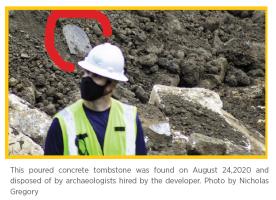 Activists secure a legal victory in the fight to save the Moses African Cemetery in Bethesda, Maryland.
 Recent debates about Critical Race Theory (CRT) have been abysmally uninformed at best and utterly inaccurate at worst.
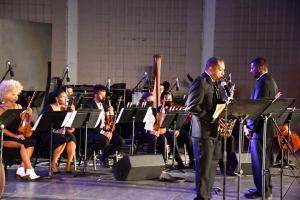 Bird, strings, Big Chief: 100: Harlem (For Charlie Parker/Donald Harrison/Harlem Symphony Orchestra) Gathering witnesses bearing beautiful collisions—
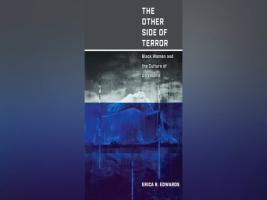 In this series, we ask acclaimed authors to answer five questions about their book. This week’s featured author is Erica R. Edwards.
 Richard and Roberto would like to dedicate this feature to Glen Ford, one of the fiercest critics of U.S. corporate media the country has ever known.


