The Sudanese protest movement needs a focused strategy to resist the RSF's growing power.
“The RSF are backed by both Saudi Arabia and the UAE, who want to ensure their continued participation in the catastrophic war in Yemen.”
On a hot May evening, I was stuck at a traffic light in a small rickshaw on my way to the sit-in in front of the army headquarters in Khartoum, when the call to prayer rang loud, marking the time to break fast.
I saw a member of the Rapid Support Forces (RSF -- a rebranded version of the notorious Janjaweed militia) approach with dates and water. As he moved from car to car, I hoped the traffic lights would turn green, or his supply would run out before reaching us, as I didn't see myself breaking my fast that day, or any other day, with a member of a militia responsible for many horrors in Darfur and Yemen.
To my disappointment, he reached us and so I picked up a date. After a short hesitation, I chewed on it, finding it hardly palatable.
Just a few weeks earlier, right after Sudanese President Omar al-Bashir had been ousted, I had watched dozens of his colleagues taking positions around the same army headquarters where the sit-in was staged. They were well-armed and unsociable, with such ghostly looks as if arriving from another dimension. The RSF have since tried, with little success, to mix dates with bullets.
This brought to mind the start of the sit-in on April 6, before the RSF appeared, when I saw army soldiers handing drinking water to protesters braving the heat. I remember feeling somewhat suspicious -- how else, given that the army had been the bedrock of the Sudanese dictatorship for decades? But as is now clear, the army was far from unified that day, and neither is it today.
“As is now clear, the army was far from unified.”
Disobedience spread from the bottom up when the order to crush peaceful protesters was issued, and when some soldiers and officers, such as colonel Hamid Othman Hamid, sided with protesters, leaving the top ranks little choice in the end but to sacrifice al-Bashir, their commander-in-chief, to save their own skin. After all, once it starts, insubordination can quickly turn, out of fear of regime retribution, into outright mutiny.
There are a number of reasons why the RSF, whose core fighters come from the violent war zone in Darfur, were handed control of Khartoum. First, the ruling Transitional Military Council (TMC) stopped trusting the army ranks. Second, being largely from outside the capital, the RSF would likely show no hesitation cracking down on strangers. Third, having already engaged in atrocities in Darfur and elsewhere, they could be more willing to obey orders no matter how ghastly.
Credible reports, based on video evidence and eyewitness accounts by survivors of the sit-in massacre, have painted a horrific picture of killings, beatings, burning of tents, and widespread rape - tools previously used by the genocidal Janjaweed against defenceless Darfuri villages. Inexplicably, even the University of Khartoum next door was ransacked.
Yet, the RSF retain regional, if not international support. Crucially, they are backed by both Saudi Arabia and the UAE, who want to ensure their continued participation in the catastrophic war in Yemen.Egypt, too, has shown its support, hoping the militia would be used to purge Islamists of the "former" Sudanese regime.
“The RSF could be more willing to obey orders no matter how ghastly.”
Add to that an often overlooked but valuable service that the RSF provide - namely controlling undocumented migration through Sudan to Europe. This might in part explain how Janjaweed leader Mohamed Hamdan Dagalo (also known as Hemedti), a former camel trader accused of crimes against humanity, recently received top Western diplomats in his new lavish Khartoum office.
Yet, things have quickly turned sour for the RSF and the TMC in the aftermath of their bloody crackdown on the sit-ins in Khartoum and other cities. They were ill-advised by their allies in Riyadh, Abu Dhabi, and Cairo, who likely wanted to send a clear warning to their own and other Arab populations, but underestimated the international backlash. Over several months, Sudan's nonviolent revolution had captured the world’s attention through mass mobilization, poetry, song, and art.
Today, the Sudanese capital, under the RSF, feels eerily like a city under occupation. A few days after the massacre, I talked to two of their soldiers deployed near my home. One of them, a Darfuri, looked disturbingly young and against all logic harboured dreams of policing the 2022 World Cup. Both seemed unsure as to what purpose they served exactly, but when asked about the killing of protesters at the sit-in, they said it was punishment from the heavens.
While RSF fighters have engaged in dreadful crimes in Darfur and lately in Khartoum and elsewhere, it is vitally important that our approach to them is different from the one we take up towards their leadership.
“Sudan's nonviolent revolution captured the world’s attention through mass mobilization, poetry, song, and art.”
Many of them are victims of a harsh reality, where widespread impoverishment and deliberate underdevelopment, the absence of the rule of law, and empowered tribalism have left little choice to young men but to join militias and armed groups.
This also means that within a future transitional justice process, the victimization of the young men serving within the ranks of RSF will have to be recognized. While accountability is essential, not least as a deterrent, so is reconciliation as a step towards either disarmament or possible integration into the army. Sudan can look to a number of other countries, including Colombia and its peace process with the FARC, for models to follow.
The RSF leadership, on the other hand, must be prevented from usurping power and held accountable for its numerous crimesno matter what. If the TMC continues to push for holding highly questionable early elections, which could possibly bring Hemedti himself to power, the Sudanese people must fully mobilise once again, the way they did to oust Bashir, and put maximum pressure on the military.
If the TMC accepts the proposals made by the Ethiopian Prime Minister Abiy Ahmed, tasked by the African Union with mediating between the military and civilians, and joins a wider transitional government, where civilians exercise actual legislative and executive powers, then protest leaders need to insist that Hemedti does not play any political role. We must work towards bringing him and the others responsible for atrocities across the country to swift justice.
Currently, the Freedom and Change alliance, the de facto leadership of the nonviolent Sudanese revolution, seem on the right track. After the massacre, it called for total civil disobedience in a bid to pile pressure on the generals to agree to a civilian-led transition. Popular support has been overwhelming, bringing the country to a complete halt for three days. The TMC in their desperation might have unwittingly "played themselves" by pulling the plug on the internet.
“The RSF leadership must be prevented from usurping power and held accountable for its numerous crimes.”
Meanwhile, nonviolent protests throughout Sudan are building up towards the 30th anniversary of al-Bashir's ascent to power on June 30. Unless a deal is sealed by then, the alliance could be under huge pressure from the public to unilaterally form a civilian government -- particularly the executive and legislative branches that the generals had in principle agreed to.
International support at this juncture could be key. The African Union has suspended Sudan and initiated a mediation process. The EU has promised economic assistance conditional on power being handed to civilians. But these measures barely scratch the surface.
The financial empire underpinning Hemedti's rise to power -- including his exports of gold from Jebel Amir in Darfur, as well as his direct profiteering from the war in Yemen -- needs to be targeted by global sanctions.
The international community must back a genuine civilian government, even if it is formed without an agreement with the TMC. This would not only boost the legitimacy to a civilian-led transition in a country long ruled by generals, but also facilitate the prosecution of those responsible for grave crimes.
Hatim Salih is a Sudanese theoretical physicist and activist. He spends his time between Cambridge (UK) and Khartoum.
This article previously appeared in Aljazeera.
COMMENTS?
Please join the conversation on Black Agenda Report's Facebook page at http://facebook.com/blackagendareport
Or, you can comment by emailing us at comments@blackagendareport.com

 In this week’s segment, we hear about the fascist, white supremacist organization, Patriot Front, and the meaning of their recent march in Washington on July 4th. But we begin with an update on the…
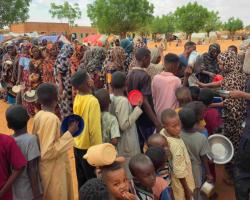 The war in Sudan between government forces and the United Arab Emirates (UAE) backed Rapid Support Force (RSF) continues, and so does what experts call the worst humanitarian crisis in the world. The…
 Daryle Lamont Jenkins is founder of One People’s Project, which seeks to combat and expose right-wing, white supremacist groups and individuals. He joins us from New Brunswick, New Jersey, to discuss…
 FIFA and the USA are nothing more than corrupt institutions who rig, renege, and rationalize the fact that neither adheres to their own purported standards - whether it’s the so-called Declaration of…
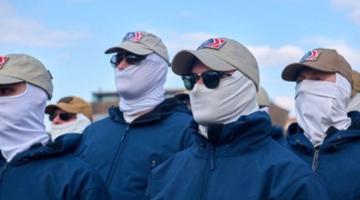 The Patriot Front’s bold incursions into U.S. cities are a sign of their burgeoning strength and of the weakness of Black movement politics.


