Americans Tip Their Hand on Iraq Oil
"If a nation's government cannot influence the export and price of its most vital commodity, then that nation is no longer sovereign."
 The latest version of the proposed Iraq oil law, drawn up by Americans and now before the cabinet of the Iraqi government, is a document like none other on the planet. Essentially, it would eliminate the Iraqi central government's role in guiding the development of the nation's most precious asset, oil. Instead, various regions and sub-regions would line up to offer multinational corporations the best terms for oil exploration and drilling deals; in other words, Iraqis would be compelled to underbid each other in a process that can only result in huge advantages to the oil companies. Indeed the law seems designed to encourage the dismemberment of Iraq, with every region free to pursue its own deals with foreigners. If ever there were a law that embodied the principle of "divide and rule," it's this one.
The proposed law would allow oil companies to lock Iraqis into 35-year agreements, and would forbid the central government from deciding how much oil is pumped out of Iraqi soil. That means Iraq, the second or third largest reservoir of oil in the world, could no longer be a part of OPEC, the organization of oil-producing countries, whose main reason for existing is to regulate oil supplies and, thereby, the price of oil on the world market. If a nation's government cannot influence the export and price of its most vital commodity, then that nation is no longer sovereign.
"Having failed to make Iraq a de facto colony of the United States, the Americans believe that divide and rule is the next best thing."
But of course, the Iraqi government is not sovereign; it is a gaggle of factions headquartered in Baghdad's American Green Zone fortress, in the midst of a civil war in which the various factions jockey for favor with the foreign occupier. Each faction and sub-faction seeks wartime advantage through American money, weapons and favor. Having failed to make Iraq a de facto colony of the United States, the Americans believe that divide and rule is the next best thing. But even if the Iraqi cabinet OKs the American-crafted document, the law will not survive the current conflict. Whoever comes out on top will be forced to renounce the law, or face the wrath of every other Iraqi whose patrimony has been signed away to foreigners. Of that, I am certain.
In the end, the oil companies won't win this game, either. Big Oil does not prosper when chaos reaches levels that threaten the reliability of production. In the current Iraqi situation, the oil law is a recipe for endless chaos, as regions and localities and factions and sub-factions combine and divide in battles for control of scattered oil pools and processing facilities.
Multinational corporations would prefer to control the price and availability of oil, themselves. But, failing that, they would rather deal with strong national states that can guarantee order and stability. The Iraq oil law was first drawn up in U.S. corporate boardrooms when it was assumed that the overthrow of Saddam Hussein would pacify the country, allowing American oil executives to create a heaven on earth for their own profit. That dream is long gone, and the signatures on a piece of paper of Iraqi faction leaders posing as a government, cannot bring it back. If the Americans think they can achieve by legalistic trickery, that which they could not win through war, they are crazy. But then, we already knew that.
For Black Agenda Radio, I'm Glen Ford.
BAR Executive Editor Glen Ford can be contacted at Glen.Ford (at) BlackAgendaReport.com.

 This week’s featured author is Lorgia García Peña. Peña is Professor of Latinx Studies at Tufts University. Her book is Translating Blackness: Latinx Colonialities in Global Perspective.
 The people of Peru continue to protest the coup which ousted President Pedro Castillo Terrones. Clau O'Brien Moscoso reports from Peru.
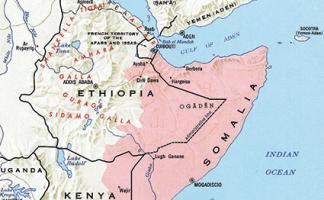 A conflict between Somali unionists and secessionists was spawned by a U.S. attempt to acquire a military base. War and a humanitarian crisis are the end result.
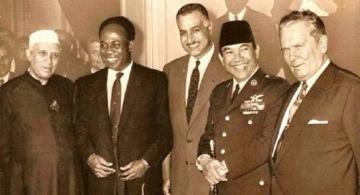 South Africa's participation in military drills with Russia and China is an indication that the global south are not taking orders from Washington. African nations should continue their…
 The Ministry of Foreign Affairs of the People's Republic of China spells out what is wrong with U.S. foreign policy. While administrations may change, the imperative to dominate doesn't. U.…


