BAR Book Forum: Matthieu Chapman’s Book, “Anti-Black Racism in Early Modern English Drama”
This book analyzes Early Modern English Drama as a form of cultural production in which the paradigm of Early Modern England was shifting to account for encounters with black Africans.
“What does it mean to be anti-racist in a country whose very foundation is poured and set in the metaphysical absence of blackness?”
In this series, we ask acclaimed authors to answer five questions about their book. This week’s featured author is Matthieu Chapman. Dr. Chapman is Assistant Professor of Theatre Studies at the State University of New York at New Paltz. His book is Anti-Black Racism in Early Modern English Drama: The Other “Other”.
Roberto Sirvent: How can your book help BAR readers understand the current political and social climate?
Matthieu Chapman: First and foremost, we need to understand when and where the current political and climate began in relation to blackness. So often, public discourse engages anti-blackness as a uniquely American phenomenon, and thus studies of the topic begin at 1776 with the Declaration of Independence or in 1619 with the arrival of ’20 and odd negroes’ at Point Comfort. This book analyzes Early Modern English Drama—the works of Shakespeare, Marlowe, Peele, and others from 1550-1642—as a form of cultural production in which the paradigm of Early Modern England was shifting to account for encounters with black Africans. By repositioning black social death not as a product of the slave trade but as a pre-existing condition that allowed for the slave trade, we can begin to examine anti-blackness not only as a global phenomenon, but also as inextricable from the presence of colonizers on settled American lands. With anti-blackness ungirding the libidinal economy of those who arrived, settled, and built nationhood here, anti-blackness ceases to be what America does and now must be re-read as what America is. This is especially important as the discourse of racial power relations shifts to “anti-racism.” What does it mean to be anti-racist in a country whose very foundation is poured and set in the metaphysical absence of blackness? How can we read “Anti-racist America” as anything other than an oxymoron? How can America become anti-racist and still exist as a nation, as an idea? These are some of the questions we can begin to engage if we position anti-blackness as predating the middle passage, and as America as a product of anti-blackness, and not the other way around.
What do you hope activists and community organizers will take away from reading your book?
The biggest takeaway is that anti-blackness is a global phenomenon with no identifiable spatial or temporal origin. As such, we have to reconfigure the ways we think about community organization and activism. If America is a by-product of anti-blackness and not the other way around, we need to begin asking questions outside of the frame of the American experiment. We need to ask ourselves if the antagonist is the institutions and behaviors of the structure, or the existence of the structure itself? How can we reform something that has no coherence outside of black inhumanity and social death? This is not to say that community organization and activism lack value—many institutions have made great strides, and I applaud their work. I just want to ask what is the end goal? Voting rights? Police abolition? A seat at the table? These are all reformist ideas, and they have merit if we accept that the anti-black structure is divine and immutable. But what good is the right to vote when the choices are a slow death and a fast one? How can you abolish police when they are not just an institution, but the entire non-black population? Why do you want a seat at a table made from our bones? Why should we be content to feast on the crumbs strewn across our ancestors’ broken backs and shattered souls? With this work, I hope that community organizers and activists take away bigger questions and bigger goals, understanding that blackness should not have to censor itself or lessen its demands for revolution. The world has neither contained nor lessened the violence it inflicts on blackness; why should we have to compromise our lives for their comfort? It’s so fascinating how a world that functions on anti-black violence has the gall to say, “violence isn’t the answer.” What they mean is “violence isn’t the answer for you, because our violence is bigger than your violence.”
We know readers will learn a lot from your book, but what do you hope readers will un-learn? In other words, is there a particular ideology you’re hoping to dismantle?
There are two primary assumptions that I hope readers will unlearn: one, the notion that anti-blackness is a uniquely American problem resulting from the unmitigated violence of chattel slavery; and two, that Shakespeare and his early modern colleagues are somehow immune or distant from the capacity for anti-black racism.
The first assumption is signaled to and spoken of in Afro-Pessimism, although rarely directly addressed. Denise Ferreira Da Silva, Zakiyyah Iman Jackson, João Costa Vargas, and others have written brilliant works that encompass anti-blackness outside of the confines of American Chattel Slavery. But anti-blackness that exists outside of the afterlives of chattel slavery has only recently entered public discourse. In some ways, I am grateful that Lin Manuel Miranda and others excluded Afro-Latinx people from the In the Heights film, because that erasure has had an immense impact of public discussions of anti-blackness and moving us toward a conversation that recognizes that anti-blackness is an antagonism that functions outside of the confines of nation, class, gender, and other identity conflicts.
The second assumption has been a battleground in Renaissance Studies since at least the 1950s, when Eldred Jones published Othello’s Countrymen. Scholars such as Kim F. Hall, Imtiaz Habib, Joyce Green MacDonald, Ayanna Thompson, and countless others have spent decades digging up the bones of Early Modern England’s racism, only for New Historicists to repeatedly and unacademically dismiss their findings and arguments as anachronistic and presentist. So often when we study history, we break it down into events and eras with artificial lines of delineation—you get a Ph.D. in the Renaissance or Victorian or Classical Literature or in American or European or African History. But these lines often obscure larger continuums that help us understand not only the origins of our modern world, but how that world continues to function. So the second assumption I want people to unlearn is that the lines of academic disciplines in regards to the past and present are imagined and violent—they are put in place to disrupt continuums and conversations that, if revealed, could alter the ways in which we organize and seek redress.
Who are the intellectual heroes that inspire your work?
My work crosses boundaries into four fairly distinct fields (those damn lines I just talked about): Afro-Pessimism/Critical Theory, English Literature/Comparative Literature, Theatre, and Renaissance Studies, and I have my heroes in each one. Frank Wilderson, Saidiya Hartman, Janet Smarr, Kim Hall, Ayanna Thompson, Adrienne Kennedy, Suzan Lori-Parks, Amiri Baraka, Hortense Spillers, John Murillo III, Jaye Austin Williams, Nicholas Brady, Joy James, Jared Sexton, Selamawit Terrefe, Patrice Douglass, Julie Burelle, Miles Parks Grier, Ambereen Dadabhoy, Tearrance Arvelle Chisholm, Mary Rabaran-Olm, Stuart Hall, Sylvia Wynter…the list is endless.
Some are mentors, some are colleagues, some I don’t know personally, but all have inspired me in various ways. But for the most part, they have this two in common: they don’t play by the rules and aren’t confined to the structures and genres and fields and paradigms that those in power try to trap us into reinforcing and thinking through. These are all people whose work has expanded my ideas of what I thought possible.
In what way does your book help us imagine new worlds?
This is a great question. I would love to know what new worlds readers have imagined when reading it, and I would love to have those conversations. Maybe they will help me imagine new worlds as well.
Roberto Sirvent is editor of the Black Agenda Report Book Forum.
COMMENTS?
Please join the conversation on Black Agenda Report's Facebook page at http://facebook.com/blackagendareport
Or, you can comment by emailing us at comments@blackagendareport.com



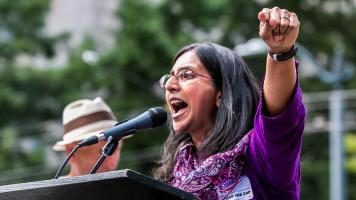 Kshama Sawant is a former Seattle, Washington City Council Member best known for her role in raising the minimum wage to $21 per hour, the highest in the nation. She is now running for Congress in…
 Memories of a sovereign Venezuela collide with the reality that it is now a U.S. vassal state.
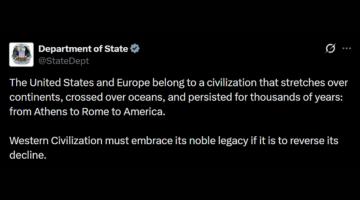 The crisis of late-stage capitalism has stripped away the liberal disguise and revealed white supremacy as the official ideology of the U.S. state.
 “It is perfectly clear that the war of aggression waged by Morocco against the [Western] Saharan people is a purely colonial war.”
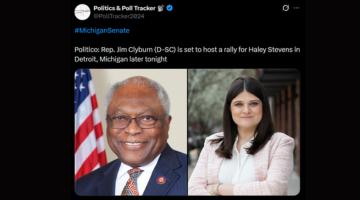 The Congressional Black Caucus electoral strategy has turned the 2026 midterm elections into a dumpster dive for corporate interests and Zionist approval.


