With the face of AIDS having changed from white gay men to non-whites, it is wise to tap into an earlier radical tradition.
“Racial and sexual trauma converged during the early era of AIDS.”
In this series, we ask acclaimed authors to answer five questions about their book. This week’s featured author is Darius Bost.Bost is Assistant Professor of Ethnic Studies in the School for Cultural and Social Transformation at the University of Utah. His book is Evidence of Being: The Black Gay Cultural Renaissance and the Politics of Violence.
Roberto Sirvent: How can your book help BAR readers understand the current political and social climate?
Darius Bost: Currently, black gay and bisexual men are still in the midst of an AIDS crisis. However, AIDS remains marginal in our current political and social climate. One of the first things that President Trump’s administration did after arriving to the White House was to fire the Presidential Advisory Council on HIV/AIDS. At the state and local levels, especially in the South in which the virus is taking a notable toll on black communities, resources for HIV/AIDS treatment and prevention is shrinking. This has contributed to the disproportionate infection and death rates of the most marginal members of the black community, especially black poor, queer, and trans people.
“This movement did not see AIDS as separate from the other social determinants of health that continually produce ‘medical apartheid’ in black communities.”
My book recovers the history of what Cathy Cohen describes as the first stage of AIDS prevention in black communities: the art and activism of black gay men during the early era of the epidemic. Similar to the current moment, black gay activists faced state and community neglect. This legacy is important because it traces a history of AIDS activism that viewed the elimination of racism, homophobia, and capitalism as critical to the elimination of HIV/AIDS. Unlike current biomedical models that emphasize treatment and prevention, this movement did not see AIDS as separate from the other social determinants of health that continually produce ‘medical apartheid’ in black communities. This movement beckons us to center the power of collectivity, creativity, self- determination, and radical love in our current movements to end the ongoing crisis of AIDS in black communities.
What do you hope activists and community organizers will take away from reading your book?
I hope current AIDS activists and organizers will be able to situate themselves within a historical tradition. I hope they will see this historical tradition as offering alternative political strategies that are not dependent on state support and dominant public health paradigms. I hope that Black Lives Matter activists will see the contemporary movement for black lives as having precedent in early black feminist and queer movements in the post-Civil Rights era. I hope black activists and LGBTQ activists will consider HIV/AIDS more forcefully in their political work, to no longer marginalize the ongoing AIDS crisis because it affects the most marginal members of these communities. And I hope that other movements will see the freedom dreams of black gay men as relevant to their own freedom dreams.
We know readers will learn a lot from your book, but what do you hope readers will un-learn? In other words, is there a particular ideology you’re hoping to dismantle?
I’m hoping to dismantle the bifurcation between race and sexuality that still renders HIV/AIDS as marginal in discussions of black trauma, and marginalizes black people in discussions of queer trauma. By centering the experiences of black gay men, I show how racial and sexual trauma converged during the early era of AIDS.
The book also situates AIDS within a longer history of African diasporic trauma to challenge the persisting gender and sexual divide in our conceptualizations of the afterlife of slavery. Moreover, I hope to challenge dominant queer theoretical discourse that reproduces the ideology that the AIDS crisis is over. This discourse prevails because the face of AIDS has changed from white gay men to non-white and non-Western subjects.
Who are the intellectual heroes that inspire your work?
Evelynn Hammonds broke ground with her prolific research on AIDS beginning in the mid-1980s. Cathy Cohen’s book, The Boundaries of Blackness: AIDS and Breakdown of Black Politics has heavily informed my research. Robert F. Reid-Pharr’s book, Black Gay Man: Essays inspired me to go to graduate school; I wanted to write like that.
In what way does your book help us imagine new worlds?
The book is concerned with imagining futures through the arts and collective practice despite the ubiquitous violence targeting black/queer communities. The field of black studies—and I think black communities more broadly—is haunted by melancholy, due to the pervasive death, injury, and injustice we are forced to witness on a daily basis. By focusing on black queer optimism, even within this archive of death, I hope to suggest that the pervasiveness of violently anti-black and anti-queer culture and politics should not prohibit our collective strivings for futures beyond these forces. But this vision of collectivity and futurity requires us to remember the importance of difference within our communities—that our visions of black liberation will remain impoverished if we continue to invest in respectability and normativity. The black gay cultural renaissance of the 1980s provides a usable black/queer past by demonstrating how in the face of death and loss, black gay men used culture for self-making and world-making. Despite the fact that a generation of black gay artists and activists died of AIDS, the body of literature they produced shows how black cultural imaginings are central to envisioning futures beyond our death-bound horizons.
Roberto Sirvent is Professor of Political and Social Ethics at Hope International University in Fullerton, CA. He also serves as the Outreach and Mentoring Coordinator for thePolitical Theology Network. He’s currently writing a book with fellow BAR contributor Danny Haiphong called American Exceptionalism and American Innocence: A People’s History of Fake News—From the Revolutionary War to the War on Terror.
COMMENTS?
Please join the conversation on Black Agenda Report's Facebook page at http://facebook.com/blackagendareport
Or, you can comment by emailing us at comments@blackagendareport.com

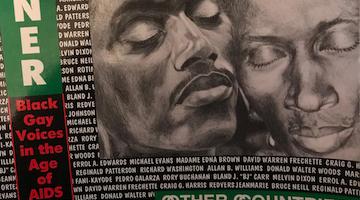

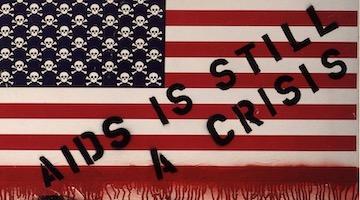
 Activists and community organizers should be inspired by the work of elders engaged in social change.
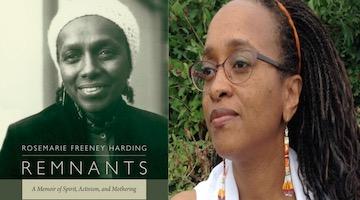 There is a need and desire among folks in activist communities for resources of ritual and spiritual grounding.
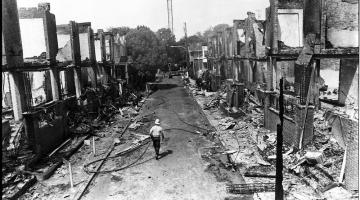 Remains that were found to be those of a Black MOVE teen-ager who was killed by Philadelphia police in 1985 were treated as an anthropological specimen.
 Do some, most or all US police departments have a pattern and practice of racial bias that makes them fundamentally unable to regulate themselves?
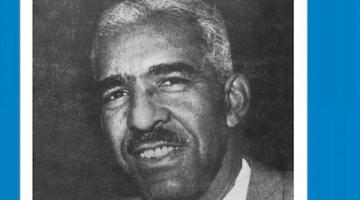 Hunton’s devotion to peace and “mutual cooperation” came out of his understanding that “war and militarism were endemic” to capitalism.


