“Anticommunism provided a global language that could be used to silence anti-racist organizing.”
In December 1954, a message from the actor, singer and activist Paul Robeson was read aloud at the annual conference of the African National Congress (ANC) in Durban. This eloquent letter asserted Robeson’s status as a citizen of the world, as well as his commitment to the struggle against apartheid. “I know that I am ever by your side, that I am deeply proud that you are my brothers and sisters and nephews and nieces—that I sprang from your forbears,” Robeson declared, before ending his statement with the following rallying cry: “We come from a mighty, courageous people, creators of great civilizations in the past, dreamers of new ways of life in our own time and in the future. We shall win our freedoms together. Our folk will have their place in the ranks of those shaping human destiny.”
The circumstances in which this message was delivered to the ANC draws attention to the conflicting forces that shaped African American engagement with the early antiapartheid movement. At the time of the conference, Robeson had been refused his passport for four years. Fearful that it would be politically dangerous if he was able to criticize Jim Crow and American foreign policy overseas, the State Department continued to deny his right to travel until 1958. His anticolonial work as Chairman of the New York based Council on African Affairs (CAA) was cited as justification for this measure, preventing Robeson—and many of his allies on the left—from addressing ANC delegates in person.
“Black activists who drew attention to the comparable nature of white supremacy in the United States and South Africa faced harassment, arrest, and even imprisonment.”
The Cold War greatly narrowed the possibilities for transnational black protest. A powerful political ideology in both the United States and South Africa, anticommunism provided a global language that could be used to silence anti-racist organizing. Boasting that South Africa had been “one of the first nations in the world to outlaw communism,” the National Party passed the Suppression of Communism Act in 1950. This legislation, which echoed the Smith and McCarran Acts in the United States, was used to prosecute suspected “subversives” who openly defied the authority of the state. As racial protest became framed as part of a worldwide communist threat to freedom and democracy, black activists—like Robeson—who drew attention to the comparable nature of white supremacy in the United States and South Africa faced harassment, arrest, and even imprisonment.
Robeson’s letter to the ANC achieved little in practical terms. It did not reconfigure the domestic and international forces that worked to stifle the anti-apartheid movement; neither did it alter any laws or usher in a new political moment. However, his declaration to black South African activists that, “We shall win our freedom’s together” shows how black radicals continued to think and act globally during the darkest days of the Second Red Scare.
Indeed, that this message of support arrived in South Africa at all is politically significant. The fact that African nationalists heard these words at a time when the apartheid state was clamping down mercilessly on anti-apartheid protest amounted to a symbolic reminder of the exchanges that had long connected anti-racist struggles in the U.S. and South Africa. This was a fleeting but powerful moment of Pan-African solidarity, an optimistic assertion that the struggle for rights and freedom would be successful on both sides of the Atlantic, and a hopeful insistence that the ANC and the Congress Alliance would overthrow apartheid rule and that a free and democratic South Africa would assume its place alongside the free nations of continent.
“African Americans and black South Africans navigated state power in ways that challenged white supremacist politics on both sides of the Atlantic.”
Ultimately, Robeson’s statement to the ANC is illustrative of the perseverance of black activists and their belief that the struggles against racism in South Africa and the United States were interconnected. It is suggestive of how black activists responded to state repression, continued to speak truth to power, and found spaces where they could maintain their political agency when faced with the most challenging of circumstances. Evoking the spirit of Robeson’s message, my new book Winning Our Freedoms Together: African Americans and Apartheid, 1945-1960 traces this political work. Noting the complexity of these transnational black exchanges, as well as their achievements and limitations, I try to show how African Americans and black South Africans navigated state power in ways that challenged white supremacist politics on both sides of the Atlantic. While anticommunism had a devastating impact on the lives and activities of black radicals, many continued to insist that the struggles against apartheid and Jim Crow were intimately bound up with one another. Despite the best efforts of government officials, the bonds that connected African Americans and black South Africans ultimately survived the repressive politics of the early Cold War.
Nicholas Grant is a Lecturer in American studies at the University of East Anglia in the UK. His research engages with the fields of African American and black international history. His first monograph, Winning Our Freedoms Together: African Americans and Apartheid, 1945-1960, will be published as part of the University of North Carolina Press’ Justice, Power and Politics series in November 2017.


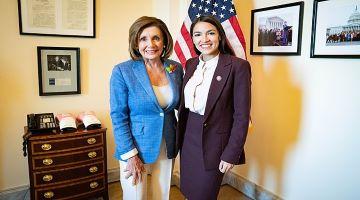 Congresswoman Alexandria Ocasio-Cortez and other so-called progressives exemplify the dangers of depending on the Democratic Party to enact any meaningful change.
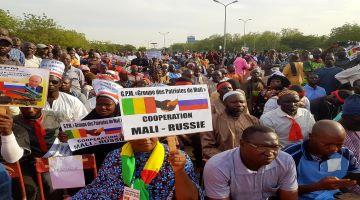 The "scramble for Africa" continues with the U.S., former colonizers such as France, and now Russia, all competing for influence.
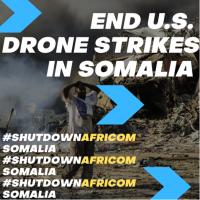 Speech by Salome Ayuak given at the International Month of Action Against AFRICOM launch event.
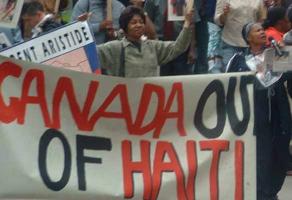 Dismantling the unelected and colonialist CORE Group is the first step to loosening the imperialist stranglehold over Haiti.
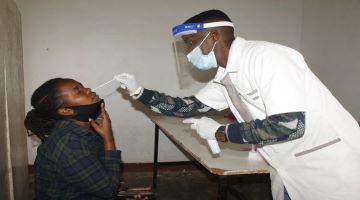 African nations might have produced a patent free vaccine that would have benefitted the whole world.


