In excerpts from a speech given in Accra, Ghana, BAR editor and contributor Dr. Jemima Pierre highlights the United Nations’ involvement in the 2004 coup d'état and the subsequent occupation of Haiti. In discussing the deployment of Kenyan troops as a U.S. proxy force during the invasion and occupation, she raises important questions about neocolonialism and imperialism, as well as African self-determination and Black sovereignty. She began the discussion by addressing the calculated destabilization of Haiti and its sovereignty by the U.S. and its Western allies, along with broader global participation that has provoked ongoing issues for Haiti. She argues that post-colonial states, especially those in Africa, have much to learn from Haiti’s experiences with Western imperialism.
Originally published in Business Ghana.
Haiti became the world’s first black-led republic and the first independent Caribbean state when it threw off French colonial control and slavery in the early 19th century. But, how free has the country truly been since achieving independence? In a public lecture titled "Haiti, Africa, and the Unfinished Project of Black Sovereignty," Professor Jemima Pierre examines the historical and ongoing imperialist control of Haiti. The Institute of African Studies, University of Ghana hosted the lecture on December 12, 2024.
Professor Pierre highlights the United Nations’ involvement in the 2004 coup d'état and the subsequent occupation of the country. By discussing the deployment of Kenyan troops as a U.S. proxy force during the invasion and occupation, she raises important questions about neocolonialism and imperialism, as well as African self-determination and Black sovereignty. She began the discussion by addressing the calculated destabilization of Haiti and its sovereignty by the U.S. and its Western allies, along with broader global participation that has provoked ongoing issues for Haiti. She argues that post-colonial states, especially those in Africa, have much to learn from Haiti’s experiences with Western imperialism.
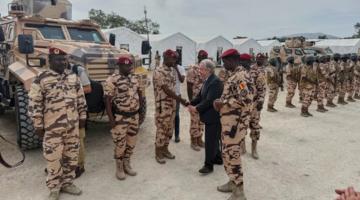
UN Peacekeeping Mission in Haiti
Professor Pierre holds that the 2004 coup d'état in Haiti, along with the subsequent occupation, should be viewed as a successful exercise in neo-imperial sabotage orchestrated by the United States, France, and Canada. Following the coup, these two countries— the U.S. and France— voted to send in what they framed as a peacekeeping force to Haiti, under the auspices of the United Nations. This intervention was carried out under a Chapter 7 mandate, which allowed foreign troops to use full force against the Haitian population.
The United Nations took over operations from the U.S., Canadian, and French forces, establishing the United Nations Stabilization Mission in Haiti (known by its French acronym as MINUSTAH). This initiative was presented as a mission to restore peace and security, but it functioned as a military occupation. MINUSTAH was a multi-million-dollar operation that typically deployed between 6,000 and 12000 troops and police officers in Haiti, accompanied by thousands of civilian personnel. The military aspect of the MINUSTAH mission was primarily led by Brazil, which provided a significant number of soldiers. However, the force comprised troops from various countries around the world, especially from the Global South.
The UN occupation was marked by significant brutality against Haitians. Civilians were attacked and assassinated, and the "so-called peacekeepers" committed numerous sexual crimes. Professor Pierre noted that UN soldiers even dumped human waste into rivers, which people then drank from, resulting in an epidemic affecting forty thousand individuals. According to her, the UN has never been held accountable for these crimes against the Haitian people.
Neo-Imperial Sabotage and Haitian State Dismantling
The 2004 occupation of Haiti was solidified by the formation and operation of the Core Group, which consists of officials from European and Latin American countries. This group has effectively ruled Haiti since the coup d'état in 2004. Professor Jemima Pierre contends that the coup and the subsequent occupation should be seen as a successful act of neo-imperial sabotage by the United States, France, and Canada. These Western allies overthrew a democratically elected president, circumvented the constitution, and installed various prime ministers and presidents, all while dismantling the Haitian state. By late 2023, Haiti had no elected officials and lacked a legitimate government, which led Professor Pierre to describe it as “a failed state under continuous occupation.”
European Imperialism and the League of Nations
Professor Pierre also discussed the period at the beginning of the 20th century when World War (I) was settled through a new idiom of international corporation and development that served to consolidate colonial control and preserve Western hegemony into the present. Europeans settled their rivalry by deploying a cunning language of morality and international cooperation that claimed to do away with the excesses of the early phases of the post-1885 European colonization. According to Professor Pierre, they did that to have more peaceful cooperation among sovereigns. This was a re-articulation of European white power because only European nations were considered capable of sovereignty. This notion of international corporation instituted an international hierarchical racial order that justified renewed European rule as the civilizing trusteeship.
This was the formation of the League of Nations, and the mandate system of trusteeship established in 1920 at the end of the First World War. The various bureaucracies of the League of Nations became the basis for the structures of jurisprudence and relations of what we now understand to be the European and US-led global international order. The African continent was a key site for the consolidation of this new international order and its structures of maintenance and enforcement.
The new international order was explicitly shaped by colonialist assumptions about social order, and more explicitly racist, assumptions about the readiness and ability of Africans to engage in self-rule. According to Professor Pierre, this international order continues to shape our world, as the formation of the League of Nations in 1919, Haiti had already attained its independence and had considered itself sovereign for more than a century, but its position within the league was contradictory. Africa was central to the mandate system of the League of Nations, and it is contradictory with the League as it sought to deploy its tenuous sovereignty on behalf of Africans under the mandate system, while itself was under foreign occupation.
Professor Pierre argues that Haiti's experience with the West over the past 200 years highlights “the structural and racial inequities present in today's international system”. This helps to understand the country’s unique role in the modern world as both a quasi-sovereign nation and as a laboratory for the US and Western imperialism serving as an example for African populations to understand the limits of modern models of black sovereignty in a world structured by white supremacy. Professor Jemima Pierre encourages all to learn from the experiences of Haiti in the context of a hegemonic Western system of global governance to understand the workings of neocolonialism in the current moment and the challenges to Black emancipation.
About Professor Jemima Pierre
Professor Jemima Pierre is a distinguished Faculty of Arts Professor of African and African Diaspora Studies at the Institute of Race, Gender, Sexuality and Social Justice (GRSJ) and Faculty Associate in the Department of Anthropology at the University of British Columbia, Vancouver.
She is also a Research Associate at the Centre for the Study of Race, Gender, and Class at the University of Johannesburg. She is the author of The Predicament of Blackness: Postcolonial Ghana and the Politics of Race and co-editor of The Anthropology of White Supremacy: A Reader. Her next book, titled Of Natives, Ethnics, and True Negroes: A Counter-History of Anthropology, will be published this year.
She is currently completing another book titled Haiti: The Second Occupation.





 In this week’s segment, we discuss student protests by Black and brown youth in France against austerity measures and race-based inequality in the education system. But we begin with a discussion of…
 Brazil's incumbent president Lula da Silva finished second behind Flavio Bolsonaro in the first round of the presidential election. Because neither man received at least 51% of the vote, a run-off…
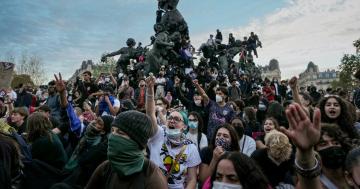 Students in France are engaging in mass protests. Hundreds of them have been arrested and injured by police, and many schools are closed. Annick Metefia joins us from Paris. She is a member of the…
 Ajamu Baraka of the Black Alliance for Peace joins Dimitri Lascaris on BettBeat Media for a conversation about something Western publics have not yet come to terms with — the fact that resistance to…
 Progressive candidates rarely remain so after winning public office. Zohran Mamdani is no exception, but his capitulation to New York zionists angered his supporters, and the people he hoped to…


