by Dr. Fikrejesus Amahazion
The ruling party in Ethiopia has gotten away with another sham election, this time with very little protest from the western powers, with whom the regime in Addis Ababa is strategically aligned. “The international community provides the regime with carte-blanche to continue its repressive rule,” including suppression of rival parties and oppressed nationalities, and massive land giveaways.
Empty Boxes – The West and Ethiopia’s Elections
by Dr. Fikrejesus Amahazion
“What happened in Ethiopia was not an election, but armed robbery by the EPRDF.”
To no one’s surprise, Ethiopia’s ruling party, the Ethiopian People’s Ruling Democratic Front (EPRDF), swept the country’s recent national elections. In the last election, the ruling party collected 99.6 percent of the parliamentary seats, while during these elections it has so far won all of the 442 declared seats (with little more than 100 seats yet to be confirmed). To paraphrase U.S. Under-Secretary Wendy Sherman’s widely ridiculed recent comments, Ethiopia’s democracy keeps getting “better and better.”
In the days and weeks preceding the latest elections, there was some coverage of Ethiopia’s repressive socio-political and rights context. Observers highlighted the ruling regime’s long stranglehold on power (in power since the early 1990s), Ethiopia’s deplorable human rights record, the harassment, intimidation, and arrest of opposition members before the vote, the regime’s mass surveillance and censorship (and the ongoing detentions of journalists and bloggers), the extensive restrictions on civil society, and the country’s “villagization” program characterized by forcible relocations of indigenous groups.
Yet, as the election has come and gone, the focus on Ethiopia’s domestic situation has begun to fade. True, the widespread chaos of the 2005 elections, where the ruling party, under the late, authoritarian leader Meles Zenawi, massacred over 200 protesters, was not repeated. However, this year’s elections were hardly credible, legitimate, free, or fair. Numerous protests occurred and many opposition groups cried foul, as candidates were denied registration, harassed, detained, and beaten. Diaspora-based news outlets claimed that people were killed and jailed during and after elections in the Oromia region. Generally, much of the population approached the process with apathy and resignation at the foregone conclusion. As aptly put by opposition groups, “what happened in Ethiopia was not an election, but armed robbery by the EPRDF.”
“This year’s elections were hardly credible, legitimate, free, or fair.”
The response by international donors and western partners has been mild, seemingly sweeping the charade under the rug, and instead trumpeting Ethiopia’s ongoing economic growth. The latter is troubling since promotion of Ethiopia’s economic growth overlooks the fact that its “development strategy” is based upon repressive foundations. The Oakland Institute, an international human rights organization, has widely reported on Ethiopia’s policy of leasing millions of hectares of land to foreign investors, termed as “land grabs.” Implementation of this strategy involves human rights violations including forced displacement, political repression, and neglect of local livelihoods, and places foreign and political interests above the rights and needs of local populations, especially ethnic groups who have historically been marginalized and neglected by the government.
In addition, the international community’s muted response to the sham elections is problematic since it reduces any possibility for progress or improvement in Ethiopia’s democratic governance or rights record. Instead, the international community provides the regime with carte-blanche to continue its repressive rule. By overlooking, if not tacitly supporting, the sham elections, the international community betrays the people of Ethiopia, many who have suffered for far too long (and will continue to do so). For Ethiopians, particularly disgruntled factions, the conclusion is that the world is ignoring their plight, and that affecting change via democratic means is not possible. Consequently, as suggested by Freedom House, “as long democratic governance and respect for human rights are pushed aside by donors in favor of economic development and security cooperation, Ethiopia’s long-term stability is at serious risk.” Unable to have a say in their lives, Ethiopians are left with few options – migration (of which tens of thousands have already done, often falling victim to the seas, trafficking, or even ISIS), or resistance, uprisings, violence, and revolt (as many are increasingly turning to).
“People were killed and jailed during and after elections in the Oromia region.”
So what can (and should) the international community do? Quite a lot, actually. It is clear that simple verbal admonishments are not enough. For years, the west has softly “encouraged” the Ethiopian regime, with little (to no) shift in policy. Instead, as frequently noted by renowned international economist and development scholar, William Easterly, the international “should stop financing tyranny and repression” in Ethiopia.
For decades, Ethiopia has been highly dependent on external economic assistance. In 2012, it was the world’s seventh largest recipient of official humanitarian aid and received $3.2B in total assistance, the latter figure representing between 50-60 percent of its total budget. Ethiopia’s 2011 share of total official development assistance – approximately 4 percent – placed it behind only Afghanistan, while over the years, the country has received tens of millions of dollars in western (especially US) military assistance.
With such a critical dependency on foreign aid, threats to “turn off the tap” unless Ethiopia changes course may provide a viable mechanism toward improving the country’s rights record. Alternatively, rather than providing aid directly to the Ethiopian regime, the international community may consider directly supporting local human rights and democracy groups (although this may be difficult due to Ethiopia’s draconian laws on civil society and NGOs).
The world has appeased the Ethiopian government for far too long, glossing over serious problems and witnessing a deterioration in the country’s rights record. Consequently, a different approach is overdue, focusing on tangible improvements in rights protections and democratic governance. By continuing with the status quo, the international community overlooks the possibility of long-term instability, exposes itself to claims of hypocrisy, and arouses serious questions about its support for the repressive Ethiopian regime.
Dr. Fikrejesus Amahazion is an East African scholar and activist interested in human rights, development, and political economy. He can be reached at fikrejesus87@gmail.com

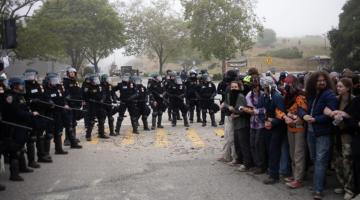 Schools across the U.S. have altered policies and even landscapes in an attempt to make a repeat of last spring’s Palestine protests impossible. The result is a far-reaching war on free expression…
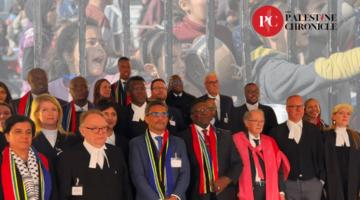 Israel once again is attempting to circumvent international law by appealing to the U.S.
 60 years ago, the Mississippi Freedom Democrats took a stand at the Democratic National Convention, bodily challenging the racist party and the violent voter repression of Black people. Years…
 We are joined by Jasiri Fahali Kiyamaa, an organizer of Curbfest, an event advocating for political prisoners. New York City's Curbfest will take place on Saturday, September 7, 2024 in Brooklyn.
 In 2020 our late comrade Glen Ford spoke at a Black is Back Coalition video conference on political prisoners. In these excerpts of his remarks, he discussed the need to understand the political…


