EDITORIAL: Poor Women: Pawns in the Abortion Controversy, The Black Panther, 1980
A 1980 editorial in The Black Panther argues that the war against abortion is a bi-partisan war against poor women.
On January 22, 1973, the United States Supreme Court announced its decision in Roe v. Wade. The court ruled that a Texas statute criminalizing abortion was unconstitutional and that women had the right to choose to have an abortion without the excessive interference of the state. While the ruling enabled the provision of safe and legal abortions, many women – rural women, poor women, and women of color – had difficulty accessing such terminations, as did many teenagers. By 1977, access to abortions became increasingly restricted as policy and legislative action taken by President Jimmy Carter, the courts, and various states worked to curtail access to abortion, while defanging Roe v. Wade.
In 1980, an unsigned editorial in The Black Panther newspaper titled “Poor Women: Pawns in the Abortion Controversy” recounted this history of the systematic decline of the provisions of Roe V. Wade. The editorial argued that the history of access to abortion, and with it of women’s autonomy over their bodies, has been the history of bi-partisan war against poor women. Then, as now, it was not merely right wing, Christian fundamentalist Republicans who sought to block access to safe and legal abortions. It was also those supposedly progressive Democrats who were happily willing to cede legal and political ground to the Right. In the process of delimiting pathways of abortion access, both left and right-wing politics practically ensured that such access would be limited to a rich, privileged, largely white elite.
Reprinted below, The Black Panther editorial appeared near the end of the vicious, state-sponsored obliteration of the Black Panther Party. Even so, in the editorial we can see the Party’s sustained and sharp focus on and advocacy on behalf of the poor, the marginalized, and the excluded.
EDITORIAL: Poor Women: Pawns in the Abortion Controversy
In 1973, the Supreme Court ruled that a woman has a constitutional right to choose an abortion. Under the Medicaid program, Congress pays for almost all other health services. The court's ruling last month on Medicaid-funded abortions, in effect, penalizes poor women for exercising a constitutional right.
Since the court declared restrictive abortion laws unconstitutional in 1973, more than five million U. S. women have obtained legal abortions provided in nearly 3,000 clinics, hospitals and physicians' offices. The number of legal abortions increased from about 745,000 in 1973 to some 1.3 million in 1977.
In recent years, U. S. women have terminated almost three out of 10 pregnancies by abortion, but some women have faced great difficulties in obtaining safe, legal terminations. Since agencies that perform abortions were (and are) concentrated in large cities, in 1977 nearly one-half million women had to travel–often considerable distances and outside their own states–to obtain abortions. Close to 600,000 women who wanted abortions were not able to obtain them at all.
Poor women, teenagers, minority and rural women were especially affected by this inaccessibility, because they did not have the money or did not know how to search out an agency that performed abortions, or could not take the time from jobs or families to travel to a distant city.
A series of actions taken in the summer and fall of 1977 by President Carter, Congress, the supreme court and most states rapidly and sharply increased the inequality in availability of abortion services which already prevailed. The effect was to deny hundreds of thousands of the poorest of the poor of America's pregnant women–those who are welfare recipients–the opportunity to obtain safe, medical abortions.
- On June 20, 1977, the supreme court ruled that states and localities need not pay for “nontherapeutic” abortions for poor women even though they pay for childbirth and other pregnancy-related expenses, and that public hospitals need not perform such abortions.
- On July 12, 1977, Carter declared that he supported these decisions and opposed government financing of abortions “except when the women's life is threatened or when pregnancy is the result of rape or incest.”
- On August 4, 1977, based on the supreme court rulings, a federal court lifted a restraining order that had prevented enforcement of the Hyde amendment –passed in 1976 and named after its sponsor, Illinois Congressman Henry J. Hyde–which prohibited the use of Health, Education and Welfare (HEW) funds to pay for abortions except to save a pregnant woman's life.
Virtually all HEW payments for abortions had been for poor women, under Medicaid. Under this program, the federal and state governments share the cost of furnishing necessary hospital, laboratory and physicians' services for poor people, almost all of whom are public welfare recipients.
- After a long debate in Congress, during which the Senate sought to "liberalize" the Hyde amendment to cover all "medically necessary" abortions, while the House tried to continue restricting abortions to life-threatening situations, a compromise amendment was attached to the 1978 Labor-HEW Appropriations bill. It permitted the federal government to pay its share of the cost of abortions for Medicaid-eligible women only, in cases where their lives were threatened, in cases where two doctors certified that continuation of the pregnancy would result in severe and long-lasting physical health damage, and in cases of reported rape or incest. The same amendment was attached to the 1979 Labor-HEW Appropriations Act, and is now in effect.
- As long as the federal government paid its share for abortions for Medicaid-eligible women, so did most states. But following withdrawal of federal Medicaid funds, the overwhelming majority of states sharply limited their abortion funding, imposing conditions similar to or more restrictive than those in the Hyde amendment.
In other words, even before the Hyde amendment and its state counterparts sharply restricted public funding of abortion for AFDC recipients, about 133,000 Medicaid-eligible women who wanted abortion services were unable to obtain them because the services were not available or accessible to them, or because the states had policies prohibiting such payments.
The average estimated cost of abortion in the United States is $285. The average AFDC payment for an entire family (usually a mother and two children) is $241 a month. Thus, the cost of an abortion, on average, is $44 greater than one month's AFDC payment for an entire family.
Congressman Henry Hyde, author of the Hyde amendment, plans to introduce a constitutional amendment forbidding all abortions except in cases in which the mother's life is threatened by the pregnancy. Hyde says that by 1984 he will have the necessary two-thirds vote in Congress to pass such an amendment.
The supreme court's ruling is a clear attack by the federal government on the health and reproductive rights of poor women. There is a well-organized group of people in America which is dedicated to ending all free government services for poor people. This group has used its power to further eliminate the rights of the poor in this country.











 The Supreme Court ruled in favor of the Trump administration cancellation of Temporary Protected Status (TPS) for more than 350,000 Haitians in the U.S. TPS holders can no longer work legally, are…
 In this week’s segment we discuss how the U.S. controls other nations in the hemisphere such as Guyana, which become de facto US colonies and assist in imposing imperial policies in the region. But…
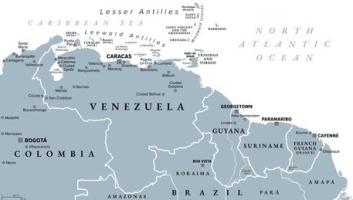 Gerald Perreira is chairperson of the Organization for the Victory of the People in Guyana. He discusses the America’s Counter-Cartel Coalition (ACCC) known as Shield of the Americas, the latest…
 The Democratic Party will recalibrate its messaging after its well-funded senate candidate in a Michigan primary lost to Abdul El-Sayed, who by his own admission is a capitalist, not a socialist, and…
 “Conflicts over colonies constitute the major source of war in the modern world.”


