by Danny Haiphong
DeRay McKesson, the twitterist whose followers have met twice with Hillary Clinton, appeared on Stephen Colbert’s show to conduct what looked like another of Campaign Zero’s “racial sensitivity sessions.” Outrageously, McKesson has compared charter schools to the Black Panther Party’s free breakfast program. He relies on the very architects of the racialized order to keep “his career prospects safe and power snugly in the hands of the oppressor.”
McKesson's Colbert Appearance is the Direction Imperialism Wants for the Black Lives Matter Movement
by Danny Haiphong
“McKesson expressed his hope to hear more from the Democratic Party candidates on what they plan to do about racial injustice.”
Little excites US imperialism more than a Black spokesmen with deep ties to the corporate media. Corporate media comedian Stephen Colbert invited Campaign Zero and self-identified Black Lives Matter leader DeRay McKesson on his evening show to discuss white privilege and race relations. The discussion occurred conveniently on the Martin Luther King holiday. The Black Lives Matter twitter celebrity did not disappoint as far as US Empire is concerned. McKesson's media appearance contained all of the ingredients of the Empire's preferred political direction for the young Black Lives Matter movement.
With phone in hand, McKesson displayed his full array of twitter politics during the interview. He explained his thoughts on white privilege and the phrase "All Lives Matter." McKesson disagreed with the phrase on the basis that if all lives mattered, then Black people would not be protesting in the streets. He took credit as the lead organizer of the Ferguson and Baltimore protests and helped Colbert understand what it meant to be "woke." The conversation quickly shifted to the police. The focus of the Black Lives Matter movement, McKesson explained, should not be on "bad apple" cops but on "police culture" and "accountability."
“The ruling class would rather have oppressed people in the US seek conversations with Democratic Party candidates and television talk show hosts than truly confront power.”
The interview introduced these topics to warm up the audience for the Empire's true hopes for the Black Lives Matter movement. After McKesson stated that the focus of the movement needs to be on how to "undo the impact of racism," Colbert predictably asked him to compare the Civil Rights movement of today to the Civil Rights movement of a half-century ago. He answered by explaining how Martin Luther King was a radical and revolutionary for economic justice, but immediately shifted the conversation to Twitter. McKesson stated that twitter greatly enhanced the movement's capabilities beyond what the movement could do in the past. He made no mention of what actually made King a radical and what gave McKesson the credibility or accountability to comment on the subject in the first place.
But the Democratic Party debate was mentioned and McKesson made sure not to disappoint his future paymasters in Washington. He explained how he felt the candidates were progressing in their acknowledgement of white privilege and "systemic injustice," especially Hilary Clinton and Bernie Sanders. McKesson expressed his hope to hear more from the Democratic Party candidates on what they plan to do about racial injustice. Colbert then asked McKesson to educate him on white privilege. They switched seats for style points and McKesson explained to Colbert how his position of power could be used to "dismantle" white privilege.
As Umi Selah noted in the Black Radical tradition Conference, McKesson's twitter activism has been an "asylum of neo-liberal values." His rise to stardom has been dependent upon the promotion of white privilege politics and coded support for Democratic Party imperialists. McKesson remains a favorite of Teach for America and served as an HR rep for Baltimore and Minnesota public schools. A New York Times article called him a "ruthless administrator." McKesson showed off his HR background when he claimed support for charter schools on twitter and egregiously compared them to the Black Panther Party's free breakfast program.
“He explained how he felt the candidates were progressing in their acknowledgement of white privilege and ‘systemic injustice.’”
US imperialism wants the Black Lives Matter movement to loyally follow McKesson and his politics. The ruling class would rather have oppressed people in the US seek conversations with Democratic Party candidates and television talk show hosts than truly confront power. Teaching white elites how to extend their privilege will always be accepted by the profiteers and war-mongers that control Washington. Racial sensitivity sessions are the antithesis of independent, radical organization to secure power for the oppressed, dispossessed, and brutalized of the earth. The reliance McKesson places upon the very architects of the racialized order keeps his career prospects safe and power snugly in the hands of the oppressor.
Criticism and self-criticism are essential components of a movement that is unafraid to walk a revolutionary path. McKesson shouldn't be allowed to utter Martin Luther King's name without knowing that he is the opposite of everything King represents. King resisted imperialist war, organized the working class, and called for an end to the triple evils of materialism, racism, and militarism. For this, King was assassinated by the same state that currently supports McKesson's counter revolutionary agenda. More organized efforts such as the Black Radical Tradition conference are needed to revive the legacy of King and thwart the Empire’s desire to lead the Black Lives Matter movement into McKesson’s abyss.
Danny Haiphong is an Asian activist and political analyst in the Boston area. He can be reached atwakeupriseup1990@gmail.com. His work can also be found athttp://gianalytics.org/en/authors/danny-haiphong and has been published in CounterPunch, Center for Global Research, and TruthOut.

 For Black August, read William L. Patterson on racial genocide, the law, and the Martinsville Seven.
 One year ago the U.S. was ousted from Afghanistan after making war on that country for 20 years. But the U.S. killed civilians as it left and stole Afghanistan's assets. It seems there is no end to…
 …
…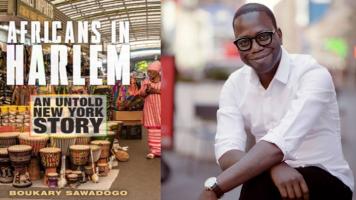 This week’s featured author is Boukary Sawadogo. Sawadogo is Associate Professor of Cinema Studies and Black Studies at City College–City University of New York. His book is Africans in Harlem: An…
 Ahjamu Umi and Roberto Sirvent discuss revolutionary organizing.


