A Black Agenda Radio commentary by Glen Ford
The U.S. is stalking Africa like an imperial predator. Eritrea is on the short list of who’s going to be attacked next. Eritrea, says the U.S., creates instability. However, “it is not little Eritrea that is destabilizing the Horn of Africa, but the United States, which has made the region a front line in its so-called War on Terror.”
Where Will the U.S. Strike Next in Africa?
A Black Agenda Radio commentary by Glen Ford
“Eritrea’s real sin is to be one of the very few nations in Africa that do not have military relations with AFRICOM, the U.S. war machine.”
Under the direction of the United States, the UN Security Council recently extended sanctions for another year against the northeast African nation of Eritrea. The country of 6 million people, nestled against the Red Sea, is on America’s hit list. In the imperial double-speak of Washington, Eritrea is described as a “destabilizing” force in the region – which simply means the government in Asmara has refused to buckle under to U.S. military domination of the Horn of Africa.
Back in 2009, Secretary of State Hillary Clinton threatened to “take action
The monitors, who are, in effect, tools of U.S. policy, reported that they found “no evidence
“In the imperial double-speak of Washington, Eritrea is described as a ‘destabilizing’ force in the region.”
It is, of course, not little Eritrea that is destabilizing the Horn of Africa, but the United States, which has made the region a front line in its so-called War on Terror. Washington's closest ally in the neighborhood is Ethiopia, from which Eritrea won its independence in 1993 invaded Somalia bankrolls, arms and trains
And there sits Eritrea, surrounded by warring American puppets, interfering in no one’s affairs, yet determined to defend her sovereignty – accused by the world biggest and most aggressive power of destabilizing the region.
Eritrea’s real sin is to be one of the very few nations in Africa that do not have military relations with AFRICOM, the U.S. war machine. That puts a bulls-eye on her back, along with Zimbabwe and Sudan, which U.S. Ambassador to the UN Susan Rice demanded be blockaded and bombed back in the George Bush administration. Barack Obama’s Africa policy is an extension and expansion of Bush’s aim to militarize the continent, and the much older U.S. policy to create chaos and horrific human suffering in those regions it cannot directly control. In practice, Obama’s doctrine is the same as Bush: “You are either with us or against us.”
Eritrea rejects that doctrine; that’s why it is a target. For Black Agenda Radio, I’m Glen Ford. On the web, go to BlackAgendaReport.com.
BAR executive editor Glen Ford can be contacted at Glen.Ford@BlackAgendaReport.com .

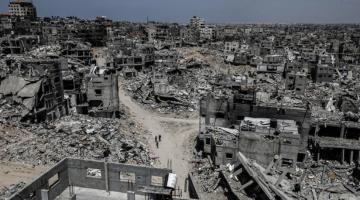 For years, Israel used the “Dahiya doctrine” in Gaza. Now it’s using the “Gaza doctrine” in Dahiya — and Tehran.
 The cost of the United States' war on Iran is falling hardest on the working class.
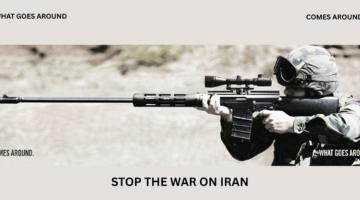 Global Africa must oppose military aggression. Global Africans must stand with the Iranians and prepare to navigate the ripple effects of this war on African peoples.
 In this week’s segment, we discuss past and present U.S. imperialism, analyzing struggles to protect Venezuela’s Bolivarian Revolution and to bring independence to Puerto Rico.
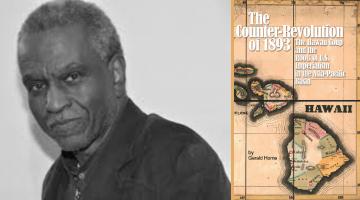 Dr. Gerald Horne joins us from Houston to discuss his latest work, The Counter Revolution of 1893: The Hawaii Coup and the Roots of U.S. Imperialism in the Asia-Pacific Basin. He connects 19th-…


