A Black Agenda Radio commentary by Glen Ford
South Africa’s current crisis is rooted in the road wrongly taken 1994, when the African National Congress and its allies agreed not to upset the corporate order, in exchange for one-person, one-vote. Those chickens are now coming home to roost, as the ANC enforces the corporate order and workers reject union leaders who, they believe, work for the bosses.
What Happened to South Africa’s Freedom Charter
A Black Agenda Radio commentary by Glen Ford
“The official voice of labor, COSATU, cannot credibly claim to represent the interests of working people when it is a partner of the ruling party whose police kill, beat and imprison workers.”
In 1994, the African National Congress of South Africa made a deal with the devil. There would be one-person, one-vote, majority rule of electoral politics. But corporate power over the South African economy would not be tampered with, and white civil servants would be guaranteed they could their well-paying jobs, for life. The ANC also set itself another goal: to create a class of Black millionaires.
Much earlier, the ANC had made a solemn commitment to the broad masses of people. It’s called the Freedom Charter
Yet, none of this has come to pass. The Freedom Charter is absolutely incompatible with the deal the ANC made for a peaceful transition to Black majority rule. If corporate privileges are untouched, there can be no collective ownership of the mineral wealth, the soil, the banks and industries. And social systems that breed new Black millionaires – or millionaires of any kind – cannot possibly give priority to the well-being of the masses of people.
“The Freedom Charter is absolutely incompatible with the deal the ANC made for a peaceful transition to Black majority rule.”
South Africa was one of the most unequal places in the world in 1994, and it is at least as unequal, today – because of the deal cut by the ANC. The covenant with white privilege and corporate power was also entered into by the ANC’s partners: the South African Communist Party and the Congress of South African Trade Unions, COSATU. Thus, the three pillars of the liberation movement agreed that they would not upset the existing corporate framework, and they would not implement the clearly socialist aims of the Freedom Charter. Instead, they nurtured a tiny, Black capitalist class made up largely of ANC insiders. Union leaders became rich men, while conditions for the poor and working classes deteriorated.
These chickens have now come home to roost, especially following the massacre of 34 miners at Marikana. The mining industry is in turmoil, with 41 percent of South Africa’s gold output municipal workers
This fundamentally corrupt arrangement has run its course. There will be nothing but mass bloodshed at the end of this journey unless the African National Congress breaks the pact that it made with corporate power, in 1994. The ANC stands at a crossroads, and must make a turn. For Black Agenda Radio, I’m Glen Ford. On the web, go to BlackAgendaReport.com.
BAR executive editor Glen Ford can be contacted at Glen.Ford@BlackAgendaReport.com .

 Mali’s mining code change in 2024 puts pressure on foreign companies in the country.
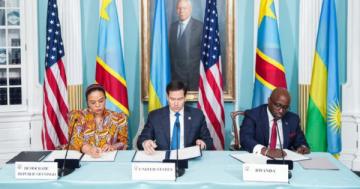
 In this week’s segment we hear about a peace agreement between the Democratic Republic of Congo and Rwanda.
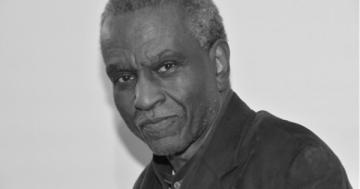 Dr. Gerald Horne is an author and historian who currently holds the John J. and Rebecca Moores Chair of History and African American Studies at the University of Houston. Dr. Horne is a prolific…
 Maurice Carney is the Executive Director of Friends of the Congo. He joins us from Washington to discuss the ongoing crisis in eastern Democratic Republic of Congo, Rwanda’s continued intervention…
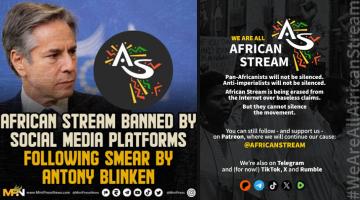 African Stream's Pan-African, anti-imperialist journalistic perspectives made it the target of a state that colludes with corporate media to spread war propaganda.


