The Unbearable Whiteness of Viewing Tween-Teen Film
by Sikivu Hutchinson
"Black women and other women of color are already marked as amoral, sexual and hence outside of ‘normative' femininity."
This article originally appeared in BlackFemLens.
On Friday nights, after the clamor of the school day dies down and the kid-driven euphoria of the weekend mounts, a simple trip to the video store in search of a children's DVD can resemble a cultural minefield. While feature length DVDs of Barbie, imperiled princesses, anthropomorphized ponies with flowing hair and big blue eyes, and Europeanized Japanese characters abound, cartoon or dramatic depictions that center on girl of color protagonists are, not surprisingly, absent from the shelves.* The lack is a reminder of how little progress has been made in the tween/teen film industry, despite the widespread mantra that youth multiculturalism in advertising and programming is "hot" and a colorblind standard is the norm.
To be a girl of color and a media consumer is to be positioned as perpetual voyeur. Media savvy, deluged with the latest fashion and glamour news on pop singers and fifteen minutes of fame movie stars, girls of color negotiate a morass of cultural products that supposedly promote "affirming" themes for tween/teen girlhood. In this era of tween/teen consumer sophistication, the narrative of the empowered heroine predominates. One of the more shopworn examples of this empowerment narrative is represented by the scrappy white heroine, alà the protagonist of the summer movie musical hit Hairspray, set in 1960s Baltimore. The scrappy white heroine is a time honored tradition in literature, mainstream movie melodrama and teen flicks. She is generally an outsider of sorts; either in appearance, class station or both. She fearlessly treads where the more self-absorbed won't deign to venture, breaking curfew, defying the strict Christian mores of her straight-laced family and/or most daringly, consorting with the denizens of black communities.
"Cartoon or dramatic depictions that center on girl of color protagonists are, not surprisingly, absent from the shelves."
For this heroine racial otherness is an adventure, a resort vacation into heretofore unexplored vistas of self-discovery. As always in these kinds of scenarios blackness holds special appeal for the white outsider because of its transgressive potential. Black music, black dance styles, black lingo - are all ripe territories for vigorous Euro mining and imitation. The exploration of these hackneyed themes via the travails of a white female protagonist struggling with her own "outsider" status in the thin, blond-worshipping, relatively privileged world of middle class Baltimore has its precursor in literature like Norman Mailer's infamous 1950s "White Negro" shtick and the global appropriation of hip hop by white consumers.
In Hairspray, the white female protagonist's spiritual journey officially takes off when she is sent to detention and discovers that it is merely a showcase for "funky" black dance shenanigans. The blacks, of course, are just waiting to corrupt an impressionable young white thing like her. Much of the film's visual spark lies in its near obsessive focus on Tracy's bright-eyed bushy tailed exuberance over her dalliances with forbidden fruit.
What are young black female viewers to make of these portrayals? While my elementary school-aged nieces loved the singing, dancing and pageantry of the film, they are old enough (with some prompting), to grasp the relevance of all the black students in the film being confined to detention. Disciplinary action at any age is a harsh and ever present reality for black children, one that satirical movie portrayals of frolicking black youth can't obliterate. Since images of unruly black children abound in American culture, featuring a group of black teens dancing in a classroom with no teacher in evidence is just another slice of comic relief for most mainstream audiences.
When presented with evidence of their irrelevance, children of color make the painful adjustment to misidentification. Socialized with white beauty norms, consuming and misidentifying with whiteness becomes an intimate part of the young female viewer's experience of visual "pleasure." Countervailing images of black, Latino and Asian femininity are available in literature (and to a much lesser extent in alternative film by artists of color) but are insidiously measured against the gold standard of white femininity. In fact, a recent revisitation of the 1954 Kenneth and Mamie Clark "doll test" by a young filmmaker named Kiri Davis found that black children still identified white or lighter skinned dolls as being "nice," while darker-skinned dolls were still rejected as being "bad." Davis' widely acclaimed documentary on black female teen self-identity, "A Girl Like Me," is a welcome antidote to depictions of black female hypersexuality, and a reminder that more black women need to be behind the camera to truly turn the tide of disfigured black images.
"Images of unruly black children abound in American culture."
The dominant culture's equation of female agency with unbridled sexuality and exhibitionism is especially damaging for young black women. While white women like Hairspray's fictitious heroine have always had the luxury to flout patriarchal categories of "good girl" "bad girl" without fear of relinquishing their claim to white privilege, black women and other women of color are already marked as amoral, sexual and hence outside of "normative" femininity. Early exposure to these kinds of narratives sets a dangerous precedent for tween/teen girls of color, who are readily deployed in white TV programs and films as streetwise/commonsensical sidekicks for imperiled white girls and/or the "sassy" antidote to white girl "blandness."
If efforts like Davis' are to be more than just a drop in the bucket there must be a nationwide push to train middle and high school-aged black women to do similar documentary and narrative film work around image construction. Programs such as L.A.'s Inner City Filmmakers and New York-based Women Make Movies help connect youth with production, development and distributional resources to critically engage the media regime with their films. Without these initiatives, and more, the multi-billion dollar tween/teen film industry will continue to thrive on our complicity in the distortion of black female subjectivity.
Sikivu Hutchinson is Editor, blackfemlens.org, a journal of progressive commentary and literature.
http://www.blackfemlens.org/ She can be contacted at shutch2396@aol.com.
*With the possible exception of such popular staples as Dora the Explorer and the Cheetah Girls.

 This week’s featured author is Danielle N. Boaz. Boaz is Associate Professor in the Department of Africana Studies at the University of North Carolina at Charlotte. Her book is Banning Black Gods:…
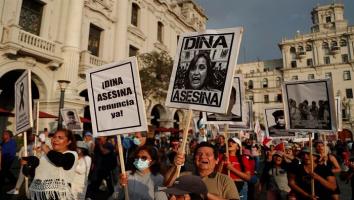 Peru's coup government and its president Dina Boluarte remain in power despite the deaths of protesters and planned mobilizations for the Third Takeover of Lima.
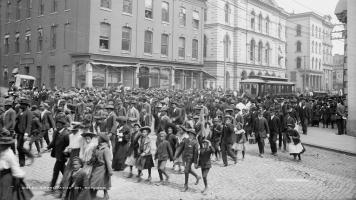 The Juneteenth holiday is an opportunity to delve into Black history in a serious way. Unfortunately, the designation of a federal holiday has trivialized Juneteenth's meaning and given license to…
 Ja Morant plays basketball in Tennessee, an "open carry" state with lose firearm regulations. But the issue of Black people carrying guns is not one of strict legality. Racism is also the issue.
 This episode of Black Republic Media is the second in a series entitled, Murder Inc: The White Settler Republic as Homicidal Maniac.


