A Black Agenda Radio commentary by Bruce A. Dixon
The conversion of the historic black Freedom Movement from the struggle for a broad spectrum of economic, human and political rights into a struggle for mere “civil rights under law” engineered by our black misleadership class has been a blind alley, leading to impotence against gentrification, the prison state, and the drive to privatizate...
There Used To Be These Things Called Public Schools & Public Libraries....
A Black Agenda Radio commentary by Bruce A. Dixon
On last Friday's Super Funky Soul Power Hour, the weekly radio show the eminent Dr. Jared Ball does on WPFW FM in Washington DC, our friend and comrade Kali Akuno wondered aloud at how he might soon have to explain to his now infant daughter that there used to be these things called public libraries and post offices and even public schools.
So what's happened to us? How have the repeal of the New Deal and Great Society, and the enclosures of vast new spaces in media and the natural world become possible? The answer is the elimination of black America's role as anchor of the left wing of the national polity, and the historic defection of black leadership.
This was neatly accomplished by converting the historic black Freedom Movement from a struggle for a broad spectrum of economic, human and political rights into a struggle for mere civil rights under law. In this way, with the signing of a few key laws, and a handful of court decisions, black leadership declared victory and demobilized the movement that might have transformed America. It was the autocratic vision of the NAACP, of Roy Wilkins and Thurgood Marshal, linked to the autocratic style of preachers like Dr. King, triumphant over the radical democratic vision of activists like Fannie Lou Hamer, Ella Baker and the young people who led SNCC.
To be fair, civil rights victories did sometimes lead to a measure of integration, to some public and private sector affirmative action, to diversity, and certainly to fat contracts for well-connected minority enterprises. But they never raised the minimum wage, or guaranteed a public education of equal quality in poor neighborhoods, or established the constitutional right to a vote, a job, or a home. Certainly the alleged victory of the civil rights movement did not protect us from the alarming growth of the prison state in the 70s, 80s and 90s.
Are there really children who don't deserve quality educations, or families that don't deserve homes? Are there whole neighborhoods identified by a combination of class and race who don't deserve public transit, and a third of whose young men just plain need locking up? After the alleged victory of the so-called civil rights movement, the answer is apparently yes. The first places to lose public schools, public transit and public libraries are black communities like Detroit, New Orleans, Philly, and now ominously, metro Atlanta. It's a failure of leadership nationally, and in those places, the historic failure of the black political class,
After leading us down the blind alley of civil rights under law, and securing its own piece of the pie, the black political class of preachers, politicians, business people and wannabees has walked away from the rest of us. It never did propose alternatives to gentrification or the warfare state or environmental racism, to the fact that every 36 hours a black person is murdered by law enforcement, private security forces or vigilantes, and it never led discussions over, let alone fights against the the prison state and the privatization of education and everything else left to steal. Our leaders knew how to celebrate the sixties and how to get paid, that was about all.
And that's how we lost the public schools, public libraries and public transit. For Black Agenda Radio, I'm Bruce Dixon. Find us on the web at www.blackagendareport.com .
Bruce A. Dixon is managing editor at Black Agenda Report, and a member of the state committee of the Georgia Green Party. He can be reached at bruce.dixon(at)blackagendareport.com or via this site's contact page.

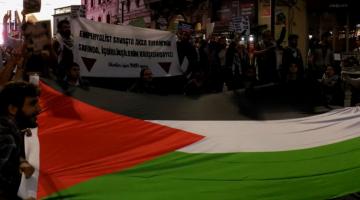 Dilara Sengul is a member of “A Thousand Youth for Palestine”, an organization based in Turkey that is a member of the International Coalition to Stop Genocide in Palestine. She joins us to discuss…
 Participants in an International Working Women's Day webinar explain the importance of the day in building international solidarity.
 Donald Trump’s efforts to normalize relations with Russia, and to end the fighting in the Ukraine proxy war are logical and sensible. But years of whipped up anti-Russia hatred make logical solutions…
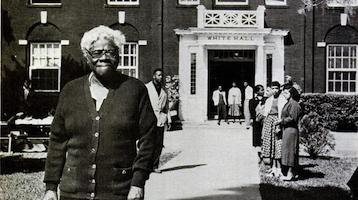 Mary McLeod Bethune’s testament to a good, ethical life.
 The Congolese Action Youth Platform (CAYP) is campaigning for the recognition of the Genocide against the people of DR Congo to be commemorated on August 2nd, the anniversary of Rwanda and Uganda’s…


