A Black Agenda Radio commentary by Glen Ford
The Father’s Day “Silent March” against stop-and-frisk drew thousands to New York’s Fifth Avenue – but it’s not a tactic that should be repeated any time soon. The NAACP’s first wordless procession against lynching, in 1917 – cited as inspiration for Sunday’s event – was shaped by fears and anxieties that have no place in a modern Black movement. Ninety-five years ago, and for generations, Black protesters dressed in their Sunday best and often “abstained from shouts and sloganeering, so as not to appear dangerous in the eyes of whites.”
Photo by Tony Savino
Stop-and-Frisk March: Silence is Not Golden
A Black Agenda Radio commentary by Glen Ford
“In 1917, much of Black America was desperate to prove to white people that they were not like the animalistic caricatures portrayed in racist propaganda.”
Last Sunday’s march
In truth, the deliberately subdued tone of Sunday’s protest provided a politically safe environment for the politicians in attendance to register varying degrees of reservations about stop-and-frisk in a kind of non-threatening quiet zone, where they could avoid permanently burning bridges with Mayor Bloomberg and his billions. This was doubtless an important consideration for march co-organizer Rev. Al Sharpton, who is on Bloomberg’s payroll and acts as President Obama’s Black pit bull.
The 1917 NAACP “Silent March” also needs to be put in historical perspective. There were profound political reasons that Black folks were both silent and dressed in their finest clothes on Fifth Avenue, 95 years ago. Ben Jealous and others say that silence was the order of the day to express mourning for the many victims of racist violence, including the hundreds killed and thousands driven from their homes by white mobs in East St. Louis, Illinois, earlier that year. Certainly, there was much mourning in Black America, but the dress code and silence of the 10,000 Black marchers was meant to convey a more fundamental political message: that Black people were industrious, clean, church-going, patriotic, well mannered, and respectful of white people’s sensitivities. That is, ordinary Americans who did not deserve to be lynched on the street and burned out of their homes, as had occurred in Springfield, Illinois Atlanta, Georgia Birth of a Nation at the White House, and declared it “terribly true.” By 1917, much of Black America was desperate to prove to white people that they were not like the animalistic caricatures portrayed in racist propaganda.
So they marched in their Sunday best, to the sound of muffled drums. They abstained from shouts and sloganeering, so as not to appear dangerous in the eyes of whites. They put what they thought were their best, most dignified faces forward, and muzzled and muffled that which might offend the white powers-that-be.
The political imperative to bring “credit to The Race” by one’s dress and demeanor, even in protest, persisted deep into the Sixties. Blacks dressed to the ‘nines’ to line up to register to vote in Baltimore in 1943 integrate lunch-counters in 1960
For Black Agenda Radio, I’m Glen Ford. On the web, go to BlackAgendaReport.com.
BAR executive editor Glen Ford can be contacted at Glen.Ford@BlackAgendaReport.com .

 Our guest is Abayomi Azikiwe, editor of Pan African Newswire.
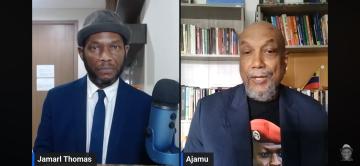 Ajamu Baraka, BAR Editor and Columnist, joined Jamarl Thomas to discuss U.S. decline into overt fascism, the proxy war in Ukraine, and the regime change campaign against Venezuela.
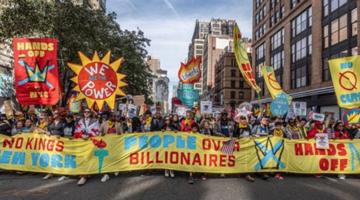 The most recent No Kings march will hopefully be the last. A Democratic Party get out the vote effort is a show that obscures and obstructs the real work of organizing.
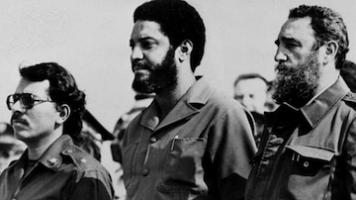 “Long live the Grenadian revolution! Long live the militant unity and solidarity of workers internationally!”
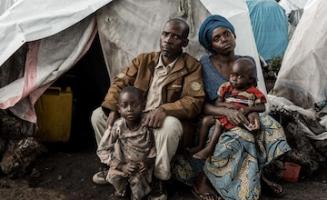 The US has negotiated ceasefires in Gaza and the DRC’s eastern Kivu Provinces, but the killing, displacement, and devastation in both continue.


