 by Netfa Freeman
The most resource-rich region of Africa also “experiences the least socio-political and economic control over its ‘riches’ than any other part of Africa. Fifty years after nominal independence, the Democratic Republic of Congo – where five million have died in the past decade and a half – remains a victim of “the foreign political and economic machinations that have made peaceful progress in the Congo impossible.”
Congo: One Piece At A Time
by Netfa Freeman
“Why is there is a Save Darfur Campaign, but no Save Congo Campaign?”
June 30th should mark 50 years of independence for the Democratic Republic of Congo but not everyone is celebrating. The DRC, as it is commonly known, is the richest area on the African continent. But it has almost no populuar control over its wealth, even by African standards. The security and sovereignty that should accompany 50 years of independence does not go well with the reality of today's Congo, with a fourteen-year resource conflict claiming six million lives and hundreds of thousands of women raped.
The so-called “genocide” in Darfur pales in comparison to the situation in Congo but it is plain to see that it is treated as just the opposite. On June 2, the body of Floribert Chebeya, a noted DR Congolese human rights leader, was found tied up in the back seat of his car. Chebeya died of “unknown causes” after being summoned to meet the head of the national police force in Kinshasa on the previous evening. The masses of Congolese are demanding an independent investigation into his murder but tellingly not nearly receiving the commensurate support for this just demand from the “international community,” a term often used as code for the Western governments, and those within their sphere of influence.
Only the deliberately blind among social justice advocates can fail to see the connection between the present state of Africa in general and Congo in particular versus imperialism on the other side. There are those, however, who claim to work on behalf of the interests of Africa and her people, claim to work for the interests of Congolese but who insist on embracing an approach out of sync with the lessons of history and out of sync with the current exigencies of Africa and her children, scattered and suffering throughout the world.
“The whole of Africa saw a series of coup d'états, assassinations and destabilization measures designed to stem a growing movement for a liberated and united continent.”
During the same period that the CIA conspired with Belgium and other imperialist forces to murder Congo’s democratically elected Patrice Lumumba (January 1961) the whole of Africa saw a series of coup d'états, assassinations and destabilization measures designed to stem a growing continental movement for a liberated and united continent. This is the historical context that should inform any understanding of what is at stake, that should illuminate the only way forward to the realization of true independence for Congo in particular and Africa in general. By and large White liberals working on Congo and Africa issues do not truly respect and cannot acknowledge the natural connection of African-Americans as ultimately African. There is an unspoken denial among them of the fact that as Black people we have an inseparable and vested interest in a truly liberated Congo and united Africa. Because for them to acknowledge this means their approach to justice work regarding Congo would have to give deference to Pan-African ideals and mean challenging Western governments and corporations with words and ways that they are not prepared to stand by.
They instead hold on to the belief that justice for Africa and thus Congo can be realized by a piece-meal approach; that is, seeking to reform the US government’s Africa policy country by country and issue by issue. They are comfortable with simply appealing to the moral conscience of those in power who, as a group have no morals and have no conscience.
Furthermore, accepting that “African-Americans” are not simply “fellow Americans” who share the same interest toward Congo as they, means nonprofit organizations whose mission it is to “bring a just US policy toward Africa” should be made up predominantly of African/Black people and be guided by African/Black conclusions and analyses that are not beholden to the dispositions of the status quo and the Non-profit Industrial Complex. The truth is, after all, that we are an African people whose destiny is inseparably entwined with the fate of Congo in particular and Africa in general. This is a view that gets at best a blank stare or an uncomfortable smile from most White liberals.
“Nkrumah outlined the foreign political and economic machinations that have made peaceful progress in the Congo impossible.”
Congo’s vast mineral resources, geographical position and ecological potential for providing electrical power to the whole continent and beyond gives it a vital role in the movement for a truly liberated Africa and anti-imperialist world. The late Kwame Nkrumah, first president of Ghana and a prime ideologue to the African liberation movement wrote the book Challenge of The Congo; A Case Study of Foreign Pressure in an Independent State. In this instructive work Nkrumah outlines the foreign political and economic machinations that have made peaceful progress in the Congo impossible. Nkrumah was the African head of state most closely involved in attempts to preserve Congo from the clutches of imperialism between its independence in June of 1960 to January of 1961, and tried to save the life of our beloved Patrice Lumumba. The most valuable feature of Nkrumah’s Challenge of The Congo is its inclusion of diplomatic records, such as correspondences and documents illustrating the circumstances that led up to Lumumba’s assassination and the usurping of the will of the African masses in Congo. This book is a must read for anyone who is genuinely interested in deconstructing and understanding the current state of the DRC.
Since video documentaries have become a more popular and compelling way of revealing such truths, I also recommend seeing Apocalypse Africa: Made in America by journalist Del Walters. Apocalypse Africa uses once classified footage and secret documents from the archives of the United States government to tell the story of how the actions of the U.S. ultimately brought about the collapse of Africa and her just quest for independence.
Given the state of Congo today, it is all too fitting a question to ask why is there a Save Darfur Campaign, but no Save Congo Campaign? The amount of noise that one will hear about Zimbabwe, and no noise about the Congo must surely raise questions. There is the good work of organizations like Friends of the Congo and Congo Global Action. One would think such organizations could enjoy the same level of funding and support as does the Save Dafur Movement. However, this is obscenely far from the case – although easily understood when informed by insights like those of Nkrumah and with an intimate understanding of the nature, interests and methods of capitalism.
Netfa Freeman is a longtime activist in the Pan-African and international human rights movements and a co-producer/co-host for Voices With Vision, WPFW 89.3 FM, Washington DC. He can be reached at netfa@hotsalsa.org
�

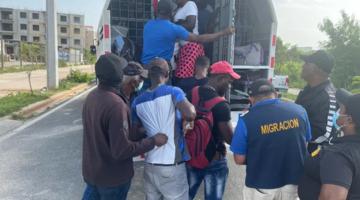 As the Dominican Republic escalates its brutal crackdown on Haitian migrants and Dominicans of Haitian descent, Red Malunga condemns the racist policies fueling systemic violence and human rights…
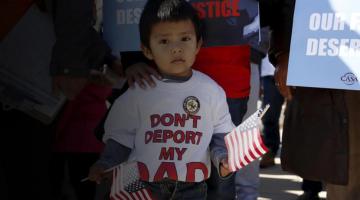 For two decades, draconian 1996 immigration laws have torn families apart—jailing long-term residents over minor offenses, fast-tracking deportations of asylum seekers, and fueling the cruel machine…
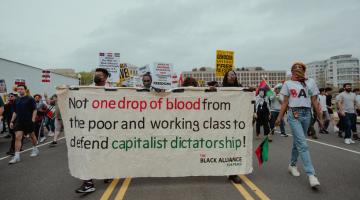 Trump’s brutality is just the latest flare-up of a bipartisan imperial evil—one that funds genocide in Gaza, war in Ukraine, and repression at home while both parties serve the same billionaire class…
 In this week’s segment, we hear about police propaganda designed to make the public fearful and ready to exact severe punishment, regardless of any facts about crime.
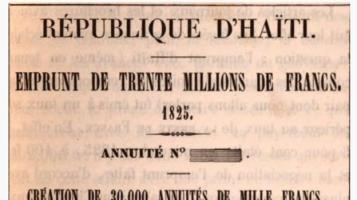 Dr. Jemima Pierre is a Black Agenda Report editor and contributor.


