A Black Agenda Radio commentary by Glen Ford
“For Wall Street, every disaster is an opportunity to make debt slaves of the victims.” Federal disaster policy is built on “credit-worthiness” rather than need. Moreover, “federal policy has the effect of widening already existing racial disparities.”
Sandy, the Storm from Hell – Unless You’re a Banker
A Black Agenda Radio commentary by Glen Ford
“The unwritten rule of government under capitalism is never to compete with private business – even in disasters.”
When the bankers take over a nation and its economy they don’t build factories, and they don’t make investments in people or infrastructure. What finance capitalists do, when given the power, is put everyone in debt.
For Wall Street, every disaster is an opportunity to make debt slaves of the victims – if the victims have enough resources to pay back the banks. If those struck by natural calamity are too poor to become assets on the bankers’ books, they’re pretty much on their own – even when a public agency is in charge of disaster relief.
A new report Strike Debt
To the average citizen, this seems illogical. Why place a hurricane-struck small businessperson in deeper financial trouble by forcing her to take on even more debt? What kind of disaster relief is that? Very good logic, if the intention is the serve the banks. The unwritten rule of government under capitalism is never to compete with private business – even in disasters. Therefore, the first job of government is to withhold low interest federal loans from victims with good credit, in order to protect corporations’ chances to profit from the disaster. Only if the private banks reject you will the Small Business Administration offer “direct loans” at lower rates.
“The storm's impact on Blacks and browns is magnified by federal disaster relief policies.”
After a victim qualifies for consideration for a federal loan, her “credit-worthiness” remains key. About half the applicants are rejected. Since Blacks and other racial minorities tend to have worse credit ratings than whites, the federal policy has the effect of widening already existing racial disparities. The storm's impact on Blacks and browns is magnified by federal disaster relief policies.
The Occupy-related activists say FEMA and the Small Business Administration steer homeowners to loan programs, rather than grants. However, many homeowners in the impacted areas were already underwater in terms of their mortgages, and the storm has further devalued their neighborhoods and, therefore, their property. “By only offering loans to already struggling homeowners,” says the report, “FEMA and the SBA shift the burden of disaster to individuals and send profit to the loan servicers…. Homeowners have no way out of these properties other than foreclosure. The only practical option is to take the chance on taking on more debt.”
Although capitalists rant and rail against public sector, the reality is that the United States government is their loyal servant, always careful to let corporations cherry-pick every possible bit of profit before using public funds to help the people in times of disaster. And even then, the banks will always get their cut.
For Black Agenda Radio, I’m Glen Ford. On the web, go to BlackAgendaReport.com.
BAR executive editor Glen Ford can be contacted at Glen.Ford@BlackAgendaReport.com .

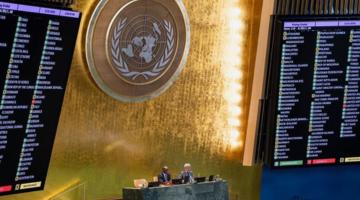 The UN has adopted a landmark declaration, introduced by Ghana, recognizing the transatlantic slave trade as the “gravest crime against humanity,” in a move that has intensified calls for reparations…
 The UN panel’s reports on Nicaragua recycle claims from U.S.-backed opposition groups, serving as a propaganda arm for Washington’s regime change agenda.
 In this week’s segment, we hear about an effort to build community-based power and self-determination for a Black working-class Washington, DC community. But we begin with a report on conditions in…
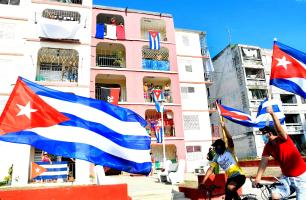 We're joined by Suzanne Adely of the National Lawyers Guild and the International Association of Democratic Lawyers and Corinna Mullin of the US Peace Council and Anti-Imperialist Scholars Collective…
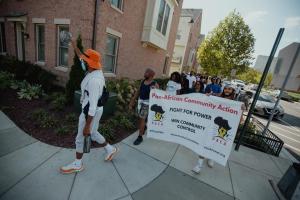 Pan African Community Action (PACA) recently released a plan for political empowerment in Washington DC, "Community Control DC, A People’s Platform for Collective Self-Determination." Oliver Robinson…


