by BAR executive editor Glen Ford
Left writers have been reporting for years that U.S. allies Rwanda and Uganda bear primary responsibility for the deaths of as many as six million Congolese. Now a leaked United Nations report has confirmed that Rwanda’s crimes in Congo may rise to the level of genocide, since President Paul Kagame’s forces killed Hutu elderly, children and women without regard to nationality. Rwandan President Paul Kagame’s “mentors and funders in the U.S. government…must be held equally accountable.”
Rwanda Crisis Could Expose U.S. Role in Congo Genocide
by BAR executive editor Glen Ford
“Millions died while Washington’s allies occupied and looted the eastern regions of the Democratic Republic of Congo.”
A leaked United Nations report documenting Rwandan atrocities that “could be classified as crimes of genocide” in the eastern Congo has created a political crisis that threatens to disrupt Washington’s plans to dominate the continent. Rwanda’s minority Tutsi regime – a close American client that acts as a mercenary for U.S. interests in Africa, along with Uganda – threatens to withdraw its soldiers from United Nations “peace-keeping” missions if the report is not suppressed. The UN missions in Chad, Haiti, Liberia and Sudan are actually extensions of United States foreign policy, just as Ugandan and Burundian troops prop up the U.S.-backed “government” in Somalia under the guise of “African Union” forces.
The Rwanda crisis threatens to reveal the United States’ role as enabler in the deaths of as many as six million people while Washington’s allies occupied and looted the eastern regions of the Democratic Republic of Congo. At stake is not only the reputation of Rwandan President Paul Kagame, an alumnus of the U.S. Army Command and General Staff College, in Fort Leavenworth, Kansas, but the larger American strategy for militarization of Africa and exploitation of her riches.
The 545-page report details crimes committed in Congo by the Rwandan military and its allies between March, 1993, and June, 2003, and reinforces long-standing charges that Kagame’s forces were also aggressors and mass murderers during the Rwandan mass killings of 1994. When Kagame’s Tutsi rebels – previously based in Uganda – gained control of Rwanda after 100 days of fighting and ethnic cleansing, they pursued more than a million Hutu refugees into neighboring Congo. There, they hunted down and killed untold thousands of old men, women and children in 600 documented incidents that are, at the least, war crimes and crimes against humanity. The report’s authors clearly believe the Tutsis engaged in outright genocide – the purposeful eradication of a people – since Kagame’s men made no distinction between Rwandan Hutu refugees and Congolese Hutus; they killed them all. Congolese Tutsis and kinsmen from Burundi joined Kagame’s Rwandan Tutsis in the mass murder – confirming the racial or ethnic nature of the slaughter.
“Kagame’s men made no distinction between Rwandan Hutu refugees and Congolese Hutus; they killed them all.”
The Tutsi Rwandan military stayed in eastern Congo to exploit the rare minerals of the region, employing slave labor and selling the booty to multinational corporations. They were joined by the Ugandan military, who also set themselves up as soldier/entrepreneurs on Congolese soil. The Rwandans and Ugandans remain in the region, uniformed African gangsters in league with Euro-American corporations in a killing ground that has swallowed up possibly six million Congolese. Some estimate Congolese “excess deaths” in areas controlled by Rwanda, alone, at three and a half million. Their blood and stolen heritage has made Kigali, the Rwandan capital, a bustling beacon of capitalist enterprise – a “free market” success story.
Carnage on such a scale could not have occurred were it not for the connivance of the United States, which has nurtured Kagame at every juncture. After training him for major operational command, the U.S. funded Kagame’s rebels through its Ugandan client, President Yoweri Museveni. When Kagame’s rebels invaded Rwanda, some of them still dressed in Ugandan uniforms, the Americans dismissed the Hutu president’s complaints. When the plane carrying the Hutu president and his Burundian counterpart was shot down by a missile – almost certainly by Kagame’s men – and mass killing broke out, the US. forced the United Nations to withdraw from the country – a move that could only have been of advantage to Kagame’s well-trained and armed forces, which quickly conquered all of Rwanda. When United Nations reports showed Kagame was killing 10,000 Hutus a month inside Rwanda, even after the opposition had collapsed or fled, the United States halted an investigation. Then Kagame’s men swarmed into Congo, and the larger genocide began.
“Carnage on such a scale could not have occurred were it not for the connivance of the United States, which has nurtured Kagame at every juncture.”
The leaked UN report cannot be put back in the bottle. Kagame, who labels all critics “genocidaires” or apologists for genocide, is exposed as “the greatest mass killer on the face of the earth, today,” as described by Edward S. Herman, co-author of The Politics of Genocide. Kagame’s mentors and funders in the U.S. government, who aided and abetted his genocide in Congo, must be held equally accountable – if not more so, since United States corporations derive the greatest benefit from Congo’s blood minerals, and the U.S. military gains the most advantage from Rwandan and Ugandan services as mercenaries at America's beck and call in Africa.
It would be great if Kagame pitched a pathological fit and made good on his threat to withdraw his soldiers from Haiti, Chad, Liberia and Sudan. But that would seriously inconvenience the United States, whose interests the UN “peacekeeping” missions serve. Kagame has no problem killing Hutus by the millions in Congo, but he will not dare upset the superpower to which he owes his bloody career.
BAR executive editor Glen Ford can be contacted at Glen.Ford@BlackAgendaReport.com.

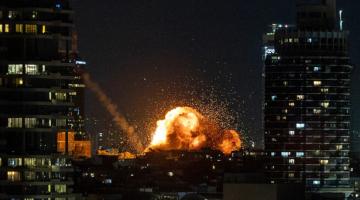 The difference between the responses to the U.S. and Israeli bombings of Iran by grassroots Chavista organizations and the Venezuelan government demonstrates the importance of people's movements,…
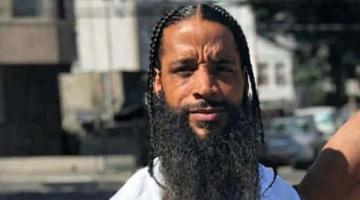 The media cycle has moved on, but the family of Wali ‘Grillz’ Bey is still waiting for answers after his murder by Newark Police.
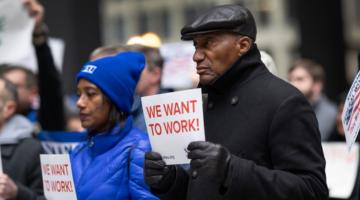 Black workers built a strong U.S. labor movement. They now endure plant closings, deindustrialization, and low-wage work as a result of neo-liberal policies.
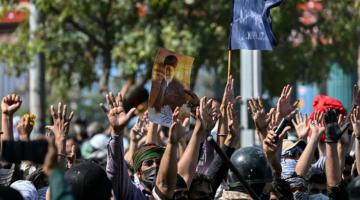 Anger erupted across the country, which is home to a large Shia population that viewed Khamenei as their spiritual leader.
 In this statement, the Cuban Institute for Friendship of the Peoples (ICAP) expresses solidarity with Iran and condemns the United States and Israel's attack on that country and clearly states that…


