A Black Agenda Radio commentary by Glen Ford
Believing the Libya assault to have been a shining success, the United States will feel confident in launching new aggressions under the insidious rubric of R2P – Responsibility to Protect. The 2004 invasion and of Haiti was the precedent, “when the United Nations Secretary General lent his seal of approval to the occupation and endorsed Washington’s interpretation of the Responsibility to Protect.” Washington has turned international law on its head.
Obama’s Responsibility to Protect is a License to Kill
A Black Agenda Radio commentary by Glen Ford
“Obama assured the Pentagon he would be more effective in getting U.S. allies to go along with Washington’s wars, as willing accomplices.”
If the NATO aggressors finally do seize effective control of Libya, after five months of heroic resistance by the Libyan army, the world will enter an even more dangerous period. The Obama administration now believes it has found the formula that will allow it to pick up where George Bush was interrupted in the unconstrained use of American force in the world. This is the mission Barack Obama auditioned for as a candidate, when he vowed to build international coalitions that would endorse U.S. war policies, rather than go it alone. Obama did not promise to be a more peaceful president. Rather, he assured the Pentagon he would be more effective in getting U.S. allies to go along with Washington’s wars, as willing accomplices.
This is why we at Black Agenda Report predicted more than two years ago that the emerging Obama war doctrine would rely heavily on the insidious, illegal construct called Responsibility to Protect, or R2P. Responsibility to Protect turns international law on its head, allowing militarily powerful countries to claim a moral and legal responsibility to interfere in weaker nations’ internal affairs in order to protect the people from their own government. Short of well-founded and broadly accepted evidence of genocide, there is no place for R2P in international law. But, with the U.S. invasion and occupation of Haiti, in 2004, the U.S., France and Canada sought to justify effectively stripping Haiti of its sovereignty on the grounds of Responsibility to Protect its people – first, from their elected president, whom the Americans deposed and exiled, and then, apparently, from the Haitian people, themselves.
From the U.S. perspective, the R2P scam worked like a charm. The United Nations Secretary General lent his seal of approval to the occupation and endorsed Washington’s interpretation of the Responsibility to Protect. The newly minted International Criminal Court became an arm of U.S. foreign policy, concocting rationales for the U.S. to take out foreign leaders that might harm their own citizens. The U.S. succeeded in getting Brazil and other countries that should have known better, to join in the occupation of Haiti – all under the rubric of R2P.
“The R2P scam worked like a charm.”
When Barack Obama was elected, much of the world hoped he would seek to lessen world tensions by working with other nations for peaceful resolutions of conflict. But Obama’s intentions were just the opposite: to build coalitions that would make it easier for the United States to justify aggression, using Responsibility to Protect as a cover. If it worked in Haiti, why not anywhere else?
When the Arab Spring struck terror in the hearts of Europe and the U.S., Obama quickly created a coalition between NATO and the Saudi Arabians and other royal Arab theives, to show who was really boss in the region. Although there was never the slightest threat of Moammar Gaddafi committing anything remotely resembling genocide in Libya, the U.S., Europe and the scum of the Persian Gulf successfully invoked Responsibility to Protect. International law was made into its opposite. The Haitian precedent had now become a war-making doctrine with its own, built-in rationale. Obama has become Bush, only with more allies and a more civilized-sounding justification. The only question is: Who’s the next alleged enemy of the people?
For Black Agenda Radio, I’m Glen Ford. On the web, go to www.BlackAgendaReport.com
BAR executive editor Glen Ford can be contacted at Glen.Ford@BlackAgendaReport.com .

 Zora Neale Hurston’s sermon on the “Pet Negro” system provides devastating and timely insight into the psychology of Black folk working in the service of white power. Preach, Sister Zora!
 Dan Kovalik’s new book makes a case for Palestine.
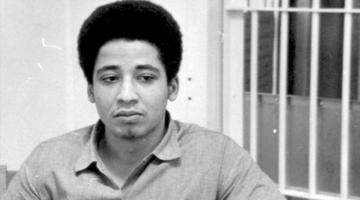 The struggle to defeat the war on African people can be understood through an analysis of the ongoing relationship between African people and the state.
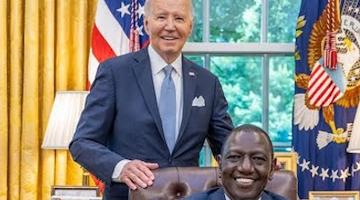
 Kenyan President William Ruto, despite his posturing as a strong leader for the people, has betrayed the masses time and time again. His neoliberal policies and allegiance to the imerperialist west…
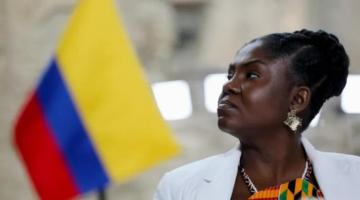 Francia Marquez's rise to Colombia's vice presidency has put a target on her back, but she also brings with her hope for a real change in Colombian politics. As in the U.S., Black political…


