by Mark P. Fancher
Is the International Criminal Court guilty of “international racial profiling”? The ICC has managed to indict only Africans for crimes against humanity, “while ignoring numerous civilian deaths caused by U.S. air strikes in Afghanistan and other crimes committed by non-Africans.”
Memo to the International Criminal Court: Put Up or Shut Up About Not Targeting Africans
by Mark P. Fancher
“It is important to determine the U.S. role, if any, in the commission of these crimes.”
The U.S. military has been blamed for training Congolese soldiers who raped scores of civilians in the little village of Minova. As a consequence the prosecutor for the International Criminal Court (ICC) now has a new opportunity to dispel the widely-held belief that the court’s mission is to target only Africans and to ignore the crimes of imperialists. Many would likely be shocked if the ICC prosecutor were to investigate and interrogate any U.S. military personnel who trained the soldiers who committed the rapes.
The ICC was presumably established to pierce the sovereign shields that have historically protected soldiers and government officials – including heads of state – from efforts to hold them individually responsible for genocide, crimes against humanity, war crimes and criminal aggression. The fantasy of a U.S. president standing before the court having to answer for imperialist crimes may never become reality. That’s because unless a country has signed on to the “Rome Statute” (the treaty that created the International Criminal Court) that country is usually beyond the court’s reach.
President Clinton had reservations about the court, but he nevertheless took the first step toward signing on. President Bush later withdrew from the court altogether. Since then, the International Criminal Court has indicted a substantial number of African government officials while ignoring numerous civilian deaths caused by U.S. air strikes in Afghanistan and other crimes committed by non-Africans. Some have characterized this as international racial profiling, and it has caused considerable resentment throughout Africa.
“It has been reported that the soldiers were drunk and openly planning to engage in mass rape.”
Acknowledgment that the U.S. provided training to soldiers involved in the wanton, mass rapes adds another dimension to these crimes. A special United Nations human rights report says that at least 135 women were sexually assaulted by members of Congo’s army as troops fled from a battle with the M23 rebel group. Reuters news service quoted a U.N. official as saying: “We do know in the U.N. which are the two battalions [involved in the rapes]. Interestingly, one of them was trained by the Americans – that’s what the American ambassador himself told me.” It has been reported that U.S. Africa Command (AFRICOM) also acknowledged that the U.S. trained a Congolese light infantry battalion in 2010.
The UN report says: “Some of the human rights violations documented in this report may, as a result of their type and nature constitute war crimes and crimes against humanity as defined by Articles 7 and 8 of the Rome Statute…” It remains to be seen whether there will be an ICC investigation of these crimes, and if so whether it will delve into the U.S. connection.
If Congolese soldiers are prosecuted, it is important to determine the U.S. role, if any, in the commission of these crimes, even if the prosecutor concludes that in this case the U.S. is not subject to ICC jurisdiction. This is because Article 28 of the Rome Statute provides in relevant part that a military commander “or person effectively acting as a military commander shall be criminally responsible for crimes…committed by forces under his or her effective command and control…as a result of his or her failure to exercise control properly over such forces…”
“An honest criminal investigation demands at a minimum that AFRICOM answer questions about a battalion that it trained.”
The court’s perspective on these crimes could be significantly affected by evidence of what these soldiers were ordered to do – or not do. It has been reported that the soldiers were drunk and openly planning to engage in mass rape. Were AFRICOM advisors on the ground with the troops, and did they know any of this? If so, did soldiers infer from the conduct of these advisors or other commanders that there was a green light to commit the crimes?
It may well be that AFRICOM personnel were nowhere near the scene of the crimes, and they had no direct knowledge of what happened. But an honest criminal investigation demands at a minimum that AFRICOM answer questions about a battalion that it trained. If AFRICOM personnel were not on the ground monitoring these troops, given past experiences with trainees and client soldiers who have gone rogue in Mali, Libya and elsewhere, U.S. military advisors should have known the risks of leaving such soldiers unattended. An impartial prosecutor should be willing to ask these hard questions without fear or hesitation. The Obama administration, which claims that it has moved the U.S. from hostility to “positive engagement” with the ICC should be willing to allow military personnel to answer the prosecutor’s questions.
In response to the pointed assertion that the ICC will not try British prime ministers or U.S. presidents, ICC prosecutor Fatou Bensouda said: “…our job is not to violate the due processes of law or to pick on individuals, as to who to prosecute or who not to prosecute. The office of the prosecutor is there for all the 121 States Parties, acting in full independence and impartiality.” If that is true, it’s time to put up or shut up. Even if in the end there is a determination in this case that an indictment of U.S. military personnel is not legally permissible, there are many Africans who would find it gratifying to – for at least one time – see AFRICOM confronted, interrogated, publicly exposed and made to squirm.
Mark P. Fancher is an attorney who writes frequently about armed conflicts in Africa. He can be contacted at mfancher@comcast.net.

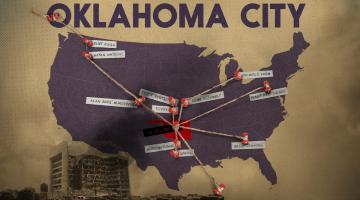 Thirty years after Timothy McVeigh’s Oklahoma City bombing, his legacy lives on in the racist mass shooters, anti-government extremists, and MAGA reactionaries who continue to target Black…
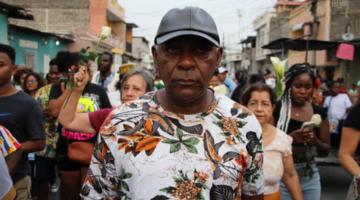 Defying Ecuador’s attempt to bar international monitors, election observers documented how Daniel Noboa’s contested victory, secured amid militarized polling stations and state violence, escalates…
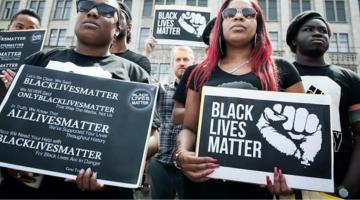 DEI isn’t dead—it was never alive to begin with. A corporate pacification project dressed as progress, it launders Black rage into diversity statements while police budgets grow and material…
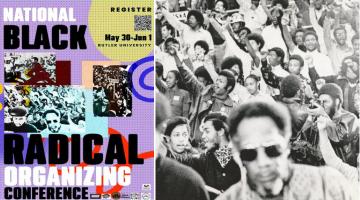 The Second National Black Radical Organizing Conference (NBROC) continues the legacy of Black radical resistance, uniting organizers to confront imperialism, capitalism, and white supremacy while…
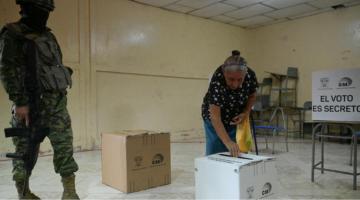 Despite Ecuador's attempts to block international observers, the Black Alliance for Peace (BAP) and Movimiento Afrodescendiente Nacional Ecuatoriano (MANE) documented the violent realities of Daniel…


