A Black Agenda Radio commentary by Glen Ford
A long-planned U.S. escalation of its military presence in Africa will soon get underway, with the permanent deployment of a 3,500-strong brigade. The heavy combat team will make itself at home in African bases in 35 countries. “This is a very different kind of invasion – more like an infiltration-in-force.”
The Master as “Guest”: The U.S. Military Swarms Over Africa
A Black Agenda Radio commentary by Glen Ford
“The 2 nd Brigade’s deployment is a much larger assignment, aimed at making all of Africa a theater of U.S. military operations.”
2013 is the year the U.S. kicks off its wholesale military occupation of Africa. The escalation should come as no surprise, since the Army Times newspaper st Infantry Division’s 2nd Brigade, in Fort Riley, Kansas, will be sent to Africa, supposedly to confront a threat from al-Qaida in Mali, where Islamists have seized the northern part of the country. But the 2nd Brigade is scheduled to hold more than 100 military exercises in 35 countries nd Brigade’s deployment is a much larger assignment, aimed at making all of Africa a theater of U.S. military operations. The situation in Mali is simply a convenient, after-the-fact rationale for a long-planned expansion of the U.S. military footprint in Africa.
The Pentagon’s larger purpose in placing an army brigade on roving duty all across the continent is to acclimate African commanders to hosting a permanent, large scale U.S. presence. This is a very different kind of invasion – more like an infiltration-in-force. The Pentagon’s strategy is designed to reinforce relationships that the U.S. Africa Command has been cultivating with African militaries since the establishment of AFRICOM
“Militarily, the West Africans are totally dependent.”
Militarily speaking, the African Union has become an annex of the Pentagon . The AU’s biggest operation, in Somalia, is armed, financed and directed by the U.S. military and CIA. The 17,000 African troops on so-called peace-keeping duty in Somalia are, for all practical purposes, mercenaries for the Americans – although poorly paid ones. Ethiopian and Kenyan forces act as extensions of U.S. power in the East Africa. U.S. Special Forces roam the Democratic Republic of Congo, Uganda, South Sudan, and the Central African Republic – ostensibly looking for the fugitive warlord Joseph Kony but, in reality, establishing a web of U.S. military infrastructures
In northwest Africa, the 16 nations of the region’s economic community await the intervention of the United Nations expel the Islamist forces
The creeping, continental U.S. expeditionary force, soon to be spearheaded by the 1st Infantry Division’s 2nd Brigade, will bunk down in African military bases throughout the continent, not as invaders, but as guests. Guests who pay the bills and provide the weapons for African armies whose mission has nothing to do with national independence and self-determination. Three generations after the beginnings of decolonization, the African soldier is once again bowing to the foreign master.
For Black Agenda Radio, I’m Glen Ford. On the web, go to BlackAgendaReport.com.
BAR executive editor Glen Ford can be contacted at Glen.Ford@BlackAgendaReport.com .

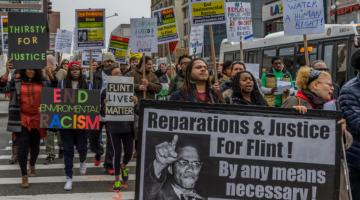 The climate movement will never be effective as long as it refuses to confront white supremacy within its own organizations and as a belief system which is unconcerned about Black and brown death.
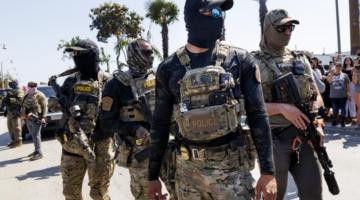 "They Wear The Masks" is the latest from BAR's Poet-in-Residence.
 Fisk University, an HBCU, is presenting a $400 million A.I. data center as progress for the North Nashville community. In truth, it means more pollution, more surveillance, and another chapter in a…
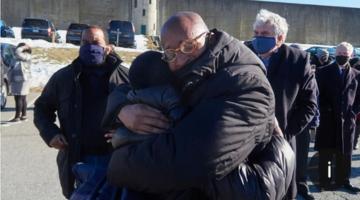 The mass incarceration system demands thousands of Black bodies behind bars. That system is maintained by prosecutorial misconduct which goes unpunished. That impunity is integral to keeping the…
 Arday was killed by the contradiction at the heart of white elite institutions: they want the appearance of racial progress without structural change, and they readily discard Black people, even…


