A Black Agenda Radio commentary by Glen Ford
Rwanda’s crimes against Congo are the subject of another United Nations report. The U.S., Rwanda’s ally and protector, “is also liable for the genocide in Congo.” Washington has placed its guns and money in the hands of an aggressive, minority regime – which is not surprising. “U.S. policy in Africa has almost always been to choose chaos in those places where it cannot rule directly.”
The Genocidal Fruits of U.S. Africa Policy
A Black Agenda Radio commentary by Glen Ford
“Why does the United States place its strategic interests in the hands of the elite of a warlike minority in the heart of Central Africa?”
The United Nations has finally released a report
Apologists for U.S. policy in Central Africa are fond of using the word “strategic.” The United States, they say, arms and protects Rwanda because America has “strategic” business and defense interests in the Congo’s vast mineral deposits. The infinitely corrupt Congolese strongman Mobutu Sese Seko
“A formula for endless war.”
Why would the United States choose such allies to protect its so-called “strategic interests.” On the face of it, this would seem like a formula for endless war in the region. Even before the mass killings of Tutsis in 1994, they never comprised more than 15 percent of the population in Rwanda or in Burundi, where Hutu people make up the vast majority. Having lorded it over the Hutus during and prior to the arrival of European colonialism, and having massacred both nations
The answer is: Yes, they do understand. Since independence, U.S. policy in Africa has almost always been to choose chaos in those places where it cannot rule directly. And chaos brings genocide. The U.S. reasons that, at any given moment, chaos contains many options, an infinity of possibilities for superpower action – whereas stable regimes with broad popular support provide less room for the foreigner to maneuver, less possibilities for a quick change of policy or regime.
Which is one reason that China looks good to Africa and to much of the rest of the formerly colonized world. The Chinese do not foment coups, or encourage whole regions to become saturated in arms. They just want to do business in a stable environment. That’s why China has surpassed the U.S. as Africa’s trading partner, and why U.S. imperialism will ultimately be defeated. Because nobody wants someone around who spreads chaos and mass death everywhere he goes.
For Black Agenda Radio, I’m Glen Ford. On the web, go to BlackAgendaReport.com.
BAR executive editor Glen Ford can be contacted at Glen.Ford@BlackAgendaReport.com .

 In this series, we ask acclaimed authors to answer five questions about their book. This week’s featured author is Crystal Eddins. Eddins is Assistant Professor of Africana Studies at UNC Charlotte.…
 Genuine peoples holidays are hard to come by in the U.S. But in Nicaragua the ongoing revolutionary process is widely celebrated.
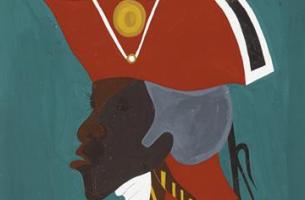 In 1929, Black radical Cyril Briggs penned an essay on Toussaint L’Ouverture and the Haitian Revolution. For Briggs, both provided inspiration for the fight against the U.S. occupation of Haiti. We…
 This week’s featured author is Steven W. Thrasher. Thrasher holds the inaugural Daniel H. Renberg chair at Northwestern University’s Medill School, the first journalism professorship in the world…
 The ineffective and unpopular UN Mission to Haiti must end.


