by BAR editor and senior columnist Margaret Kimberley
“Like ACORN, Sherrod was victimized by a Democratic administration which revels in its willingness to assist the right in throwing its own people under the proverbial bus.” Yet, even when the media narrative shifts to sympathy for Sherrod, it trivializes her heroism, just as it diminished Dr. Martin Luther King, Jr. to a “dreaming preacher whose fondest wish was to see black and white children join hands and sing ‘Kumbayah.’”
Freedom Rider: Shirley Sherrod’s Righteous Anger
by BAR editor and senior columnist Margaret Kimberley
“The trivialization of Shirley Sherrod is a trivialization not only of her history, but the history of all black people in this country and of their collective experience.”
Shirley Sherrod, an official at the United States Department of Agriculture, was the latest intended victim of Andrew Breitbart, the right wing agent provocateur responsible for the assassination and ultimate demise of ACORN. Like ACORN, Sherrod was victimized by a Democratic administration which revels in its willingness to assist the right in throwing its own people under the proverbial bus. It is tragic but obvious that if John McCain and Sarah Palin were governing the country, Shirley Sherrod, ACORN and the rest of the Democratic party base could hardly be worse off than they are under the Obama administration.
Shirley Sherrod escaped outright character assassination only because a white Georgia farmer and his wife came to her defense and told the story of how she saved their family farm in 1986 when she worked for the Federation of Southern Cooperatives/Land Assistance Fund. In a selectively edited video of a Sherrod speech at a NAACP event, she stated that she was initially unenthusiastic about assisting Roger Spooner. She correctly pointed out that as a white man, he might have a greater likelihood of receiving needed aid without her help. Her initial reaction to him was caused in part by her knowledge that black farmers were losing money and sometimes their very farms because of discriminatory practices carried out at by the USDA. She was also angry because Spooner, even in his time of need, approached her with an attitude indicative of white skin privilege and feelings of superiority.
Unfortunately, very few people have pointed out that there was nothing wrong with Sherrod’s appraisal of her situation. As a black person born and raised in rural Georgia, she had first hand experience with the oppression wrought against her people on a daily basis and of the privileges granted to whites. In 1965, her father Hosie Miller was murdered by a white farmer after a dispute over who owned cows located on Miller’s property. The killer was never brought to justice.
“If John McCain and Sarah Palin were governing the country, Shirley Sherrod, ACORN and the rest of the Democratic party base could hardly be worse off than they are under the Obama administration.”
Shirley Sherrod is the wife of the Rev. Charles Sherrod, the first field secretary of the Student Non-Violent Coordinating Committee (SNCC). Charles Sherrod is a name that ought to be familiar to students of history. In a meeting with Attorney General Robert Kennedy, Sherrod stood firm in the face of efforts to stop the Freedom Rides that had galvanized thousands to take direct action against segregation. The Kennedy administration was at best lukewarm in its support of civil rights legislation and Sherrod gave Robert Kennedy a needed reminder about his responsibilities. "You are a public official, sir! It is not your job, before God or under the law, to tell us how to honor our constitutional rights. It's your job to protect us when we do."
After years of struggle on behalf of the civil rights movement and for themselves, the Sherrods turned out to be less fortunate than the Spooner family. A farming cooperative founded by the Sherrods, The New Communities Land Trust, went under after the denial of USDA loans. In addition, the Sherrod’s own farm was lost for the very same reason. They were among the plaintiffs in the Pigford v. Glickman class action lawsuit which resulted in a $1 billion settlement to black farmers who had suffered financial losses because of the USDA’s long practice of denying financial assistance to black farmers.
Most of Sherrod’s public defenders reach their worthy conclusion for the absolutely wrong reasons. Her story has been perversely twisted, as if the right wing provocateurs had any merits to their arguments. It is rare to hear anyone say that Shirley Sherrod had every right to be angry when she met Roger Spooner. The trivialization of Shirley Sherrod is a trivialization not only of her history, but the history of all black people in this country and of their collective experience.
“Shirley Sherrod is the latest in a pantheon of black heroes whose true heroism has been either minimized or completely denied.”
Black anger is justified and borne out of centuries of atrocities ranging from enslavement, lynch law, Jim Crow segregation, mass incarceration and now increased attacks by a political world bought off by ever increasing corporate power. Shirley Sherrod is the latest in a pantheon of black heroes whose true heroism has been either minimized or completely denied. The activist Rosa Parks has been erased in favor of the “seamstress with tired feet” story. Martin Luther King is rarely depicted as the man who publicly challenged a sitting president, but instead as a dreaming preacher whose fondest wish was to see black and white children join hands and sing “Kumbayah.”
Now Shirley Sherrod emerges from her years of valiant struggle as the woman who chose some sort of vague “racial reconciliation.” It is a comfortable and cozy narrative, but it misses any real discussion of reconciliation, which never comes about unless injustices are acknowledged and redressed. The fact that her advice and advocacy saved the Spooner’s farm is not terribly note worthy. She discovered that white people are sometimes among the “have nots” and she chose to do her duty and fulfill her work responsibilities.
Also ignored in the corporate media’s endlessly useless reporting is that the suffering of black farmers continues. An additional $1.15 billion was added to the original Pigford v. Glickman settlement, but the Obama administration and Congress have yet to act, and plaintiffs are dying without seeing a penny. Shirley Sherrod still has every reason to be mad.
Margaret Kimberley's Freedom Rider column appears weekly in BAR. Ms. Kimberley lives in New York City, and can be reached via e-Mail at Margaret.Kimberley(at)BlackAgandaReport.com.

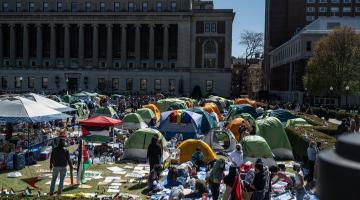 Danny Shaw and Jalsa join us to discuss the ongoing protest at Columbia University, where students are protesting the institution’s involvement with Israel and mobilizing in solidarity with the…
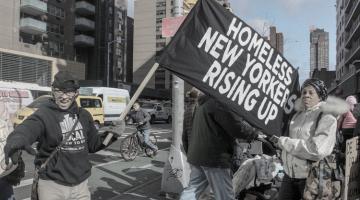 Adolfo Abreu joins us from New York City to discuss the Housing Access Voucher Program and why it is important to meet the housing needs of New Yorkers.
 Margaret Kimberley joined Revolutionary Blackout Network to talk about the lack of international enforcement for the ICJ ruling calling on Israel to end its war crimes.
 The contradictions and embarrassing antics of the fascist war-mongering United States appear with stark clarity when viewed from an outside perspective. Especially within nations like China, where…
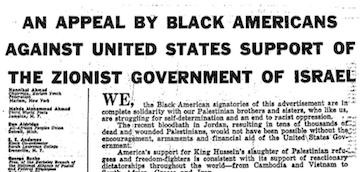 After 200 days of genocide, Black solidarity with Palestine is needed more than ever. A 1970 appeal provides a blueprint.


