by BAR editor and senior columnist Margaret Kimberley
New U.S. Census data show “black Americans are at the absolute bottom of the economic heap in a county still teetering from the effects of a seemingly endless recession.” With the median household income at $50,000, African American households earn only $32,000 – $5,000 per year less than Latinos. Insanely, however, Black Americans are more optimistic about the economy than all other groups. Obama twists Black minds. “Most black people still love the president who looks like them but who goes out of his way to ignore them and their needs.”
Freedom Rider: Black America at the Bottom
by BAR editor and senior columnist Margaret Kimberley
“The fate of people already on the bottom grows more precarious by the day.”
The nation’s economic news is grim indeed, and is the grimmest of all for black Americans. Recently released census data shows that while the median yearly income in this country is $50,000, it is only $32,000 for black people, the lowest of any other racial group in the country. Hispanics had a median income of $37,000, whites $49,000 and Asians $64,000.
Simply put, black Americans are at the absolute bottom of the economic heap in a county still teetering from the effects of a seemingly endless recession. The term recession is something of a misnomer because it does not adequately describe the worldwide crises endemic to capitalism. As western nations take their citizens on a dizzying race to the bottom with various austerity measures, the fate of people already on the bottom grows more precarious by the day.
It is not coincidental that the dismal economic prospects for black people has occurred at the same moment that black politics limps along on life support. Black politics traditionally affirmed a right, indeed an obligation, to speak directly to the needs and aspirations of the masses of people. It has been substituted with feelings of vicarious joy when a black person reaches a high office.
Enter Barack Obama, the beneficiary of both black loyalty and a system which he assessed astutely as being ready for the right black man to come along. He fills the duel roles perfectly, giving good feelings about his presence in the White House but this presence is a result of promising to do nothing that the 1% would find inconvenient.
“The dismal economic prospects for black people has occurred at the same moment that black politics limps along on life support.”
Sadly, the bloom is not yet off of the Obama rose, with a continuation of bizarre poll results indicating that the group doing the worst has the greatest degree of optimism. But the income and other indicators don’t lie and don’t change because most black people still love the president who looks like them but who goes out of his way to ignore them and their needs.
While phony government figures claim that employment numbers are improving, more than 46 million Americans are now receiving food stamps, a record. As the leaders of European countries struggle to keep the crises of Greece, Italy and Spain from spinning out of control, it is tempting to anticipate the post capitalist world. The thought experiment is interesting, but one thing is clear. When the dust eventually settles, black people will be at the bottom of a destroyed system.
If Barack Obama is re-elected, it is likely that black support for him will also continue, and the downward spiral will continue too. What is the future of a group always living on the cusp of disaster when a huge disaster takes place? No one can predict if the world economy will collapse Armageddon-like, or whether it too will limp along, under performing and slowly putting millions of people in ever more dire conditions.
It is difficult to imagine a worse scenario, but imagine it we must. The Obama phenomenon has silenced a people who were once the most likely to speak out against inequality and injustice. The death of movement politics has made black people the perfect victims of the descent of their nation’s and the world’s economies.
“The Obama phenomenon has silenced a people who were once the most likely to speak out against inequality and injustice.”
Barack Obama’s role in exacerbating the crisis goes unnoticed while tangential characters are given needless attention. Every hateful statement from the mouth of Newt Gingrich is dissected and railed against but Gingrich has not been in power in this country for a long time. He played no role in the bank bailout and he did not declare that Social Security would be placed on the budget cutting table. Obama did those things and put an already suffering group further and further behind.
There has been a ray of hope lately provided by the Occupy Wall Street movement.
The group condemned for a lack of focus has focused on neighborhoods with high housing foreclosure rates and acted to put people back into their houses. The Occupy Our Homes actions are doing what movements have always done, forcing the powerful to respond to popular demands.
Black Americans do not have to continue acting like sheep going to the slaughterhouse. They can remember their history of bold action. They do not have to continue being last on the income list, and the political list. If movement politics can be resurrected the group at the bottom now does not have to stay there. There is hope for a different future, if people are unafraid to remember how great changes came about in the past.
Margaret Kimberley's Freedom Rider column appears weekly in BAR, and is widely reprinted elsewhere. She maintains a frequently updated blog as well as at http://freedomrider.blogspot.com. Ms. Kimberley lives in New York City, and can be reached via e-Mail at Margaret.Kimberley(at)BlackAgandaReport.com.

 Is cruelty Governor Woke Smoke’s superpower?
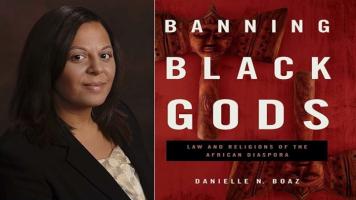 This week’s featured author is Danielle N. Boaz. Boaz is Associate Professor in the Department of Africana Studies at the University of North Carolina at Charlotte. Her book is Banning Black Gods:…
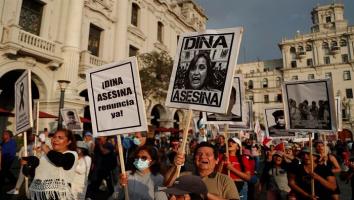 Peru's coup government and its president Dina Boluarte remain in power despite the deaths of protesters and planned mobilizations for the Third Takeover of Lima.
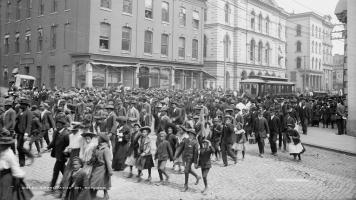 The Juneteenth holiday is an opportunity to delve into Black history in a serious way. Unfortunately, the designation of a federal holiday has trivialized Juneteenth's meaning and given license to…
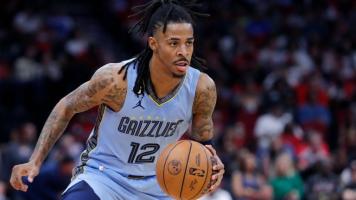 Ja Morant plays basketball in Tennessee, an "open carry" state with lose firearm regulations. But the issue of Black people carrying guns is not one of strict legality. Racism is also the issue.


