By BAR managing editor Bruce A. Dixon
News has surfaced that powerful members of the Congressional Black Caucus are asking for a bailout of minority broadcasters, specifically black radio. But black radio, like the rest of commercial media, has long dodged any hint of the public service obligations to which it is legally bound. Is the crisis of black radio a chance to finally impose real public service obligations upon broadcasters?
Our thanks to Davey D for this video...
A Federal Bailout For Black Radio? Under What Conditions?
By BAR managing editor Bruce A. Dixon
There's a hilarious Direct TV commercial which takes place in the boardroom of a giant cable TV corporation. The not-too-bright suits at the table acknowledge that Direct TV is killing them, but one has a solution. “Two words,” he says. “Federal. Bailout. Read a paper. Everybody's doing it.” They all concur and nod in unison. A May 19 article in The Hill by Silla Brush confirms that reality has overtaken satire.
High-ranking House Democrats are urging the Treasury Department to prop up minority-owned broadcasters suffering from a lack of capital and lost advertising revenue amid the economic slump.
House Majority Whip James Clyburn (D-S.C.) is leading an effort to convince Treasury Secretary Timothy Geithner to take “decisive action” by extending credit to this sector of the broadcasting industry.
Clyburn and other senior members, including House Financial Services Committee Chairman Barney Frank (D-Mass.) and Ways and Means Committee Chairman Charles Rangel (D-N.Y.), argue that minority-owned broadcasters are sound businesses, but that the recession could undermine the government’s efforts to diversify the airwaves.
A number of members from the Congressional Black Caucus signed the letter, too.
So nobody is laughing. One of the most powerful congressmen on Capitol Hill wants bailout money allocated to black radio. Why? To start with, Radio One and the other leading African American owned broadcasters are pitifully small compared to Clear Channel, CBS and the big boys. Black radio is indeed suffering, and the reasons have nothing to do with the so-called “free market.”
“Free markets,” in fact, have never had anything to do with how the U.S. broadcast industry operates. The broadcast airwaves were not invented by some smart engineer or clever entrepreneur, they are part of the electromagnetic spectrum, along with gamma radiation and sunshine. The radio-TV broadcast spectrum is thus a limited public resource. Broadcast licenses are monopoly licenses awarded by the government to a select few wealthy individuals and corporations from which those wealthy few reap tens of billions in annual profits. Though licenses are supposedly awarded on the condition that broadcasters operate in the public interest, no broadcaster in U.S. history has ever had a license revoked for flunking this test.
If a public interest test for broadcast licensees were ever administered, few if any commercial broadcasters would pass. That certainly includes black radio. Where a generation ago black radio deployed local news gathering organizations in dozens of cities across the country, with black journalists ferreting out local news, there is not a single urban radio station standing with a news gathering operation. Journalism on black radio has been dead so long that no adults under 45 can recall what it looked or sounded like. The premiere black-owned radio chain, Radio One pioneered the cutting of newsrooms and their replacement with cheaper and more profitable talk shows, mostly about celebrities and relationships.
It's not as if black owned radio stations manage to serve the public on the artistic end either. As Davey D points out on Jared Ball's Jazz And Justice, the playlists for white owned stations aiming their programming at black audiences are the same as Radio One's. The corrupt regime of payola rules the airwaves on black owned stations, just as it does on white ones, depriving audiences of the opportunity to hear newer and local artists. A recent study by the Future of Music Coalition indicated that up to half the songs played on the top four radio chains are oldies. Radio One was not among the chains audited, but their playlists differ in no other discernible ways from their white owned competitors.
HR 848, the so-called performance rights legislation will doubtless further disadvantage black radio station owners because it will, in effect, legalize payola, and give the biggest chains more leverage in dealing with labels than smaller ones. Under HR 848 as presently written major chains like Clear Channel will be able, as Davey D points out, to cut deals with labels that ban airplay on competing stations. Radio One founder Cathy Hughes may not be entirely wrong when she predicts the end of commercial black radio.
Still it is impossible to justify a federal bailout of any commercial broadcaster when none of the commercial broadcasters are honoring their public service obligations. News departments on black and white radio, and on TV for that matter were dumped because, as Dr. Robet McChesney has pointed out for about a decade, entertainment is more profitable than news.
The crisis of black radio is an opportunity for African American communities, and for all Americans. It's one of our best, and maybe one of our last chances to impose stiff news and public service requirements upon broadcasters, requirements that they have successfully evaded since the FCC was founded more than seventy years ago. If leading House Democrats and the Congressional Black Caucus are really interested in reviving and revitalizing the institution of black radio, they need to lead and participate in a public discussion of how news coverage affects communities, how payola shuts down the careers of local artists, and what the public service obligations of broadcasters really should be.
Since radio broadcasting has never been and never will be a “free market” and the principle is well established in law that broadcasters hold their licenses on the condition of public service, the arguments about government “not picking winners” are just nonsense designed to protect the ill-gotten and irresponsible gains of those who run our airwaves for their private profit today. If a bailout of broadcasters is contemplated, there must be congressional hearings that explore what the public service obligations of broadcasters are, and stiff measures instituted to strip the licenses of those who fail to meet them. Should every station with gross revenue of say, $1.2 million annually be required to field a news department covering school boards, local issues and local politics? Should stations be required to play new and local artists in every market? What rights will the public have to police and enforce the service requirements of broadcasters?
If members of the Congressional Black Caucus are serious about saving black radio, they will need public support. They won't get and don't deserve it without a public discussion, without hearings in cities like Detroit, Chicago, Atlanta, Philadelphia. Before any bailout of broadcasters, black or otherwise is contemplated, we have to have this conversation. BAR reached out to the office of Congressman Clyburn early this week and received no response. We will continue to call Rep. Clyburn's office on this subject.

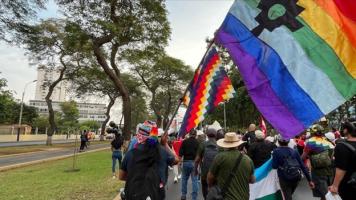 The people of Peru continue to protest the coup which ousted President Pedro Castillo Terrones. Clau O'Brien Moscoso reports from Peru.
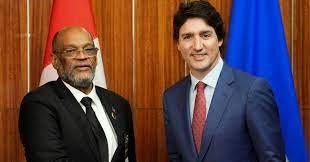 The U.S. and Canada are using Caribbean and Latin nations to act as fronts, willing dupes, in their plans for the next occupation of Haiti. Travis Ross explains in the second of a three-part report.
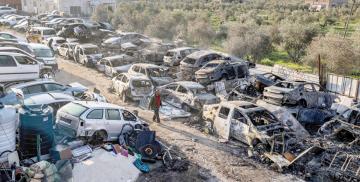 The attack by Israeli settlers on the town of Hawwara was no aberration. It was just one example of the violence inherent in an apartheid state.
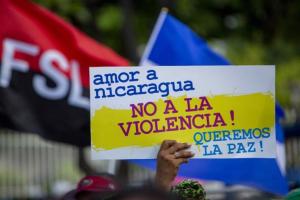 It is important to understand the truth about the 222 people recently released to the US who were convicted of treason in Nicaragua for savage acts of violence against their people.
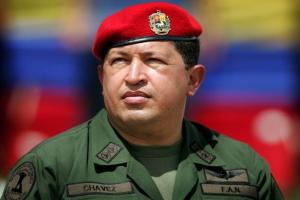 The tenth anniversary of the death of Venezuelan president Hugo Chavez reminds us of his commitment to serve the people of his country, and to fighting for sovereignty for his nation and all the…


