Commerce is Killing the Spirit of Hip-Hop
by Davey D
This article originally appeared in the San Jose Mercury News, where Davey D publishes a biweekly column.
"Commercial hip-hop has become the ultimate minstrel show, and rap artists are pushed by the industry to remain perpetual adolescents."
Hip-hop icon Nas made the provocative statement, "Hip-hop is dead," in September and set off a firestorm of controversy. It was intensified by the January release of his album bearing the same title.
Many questioned why Nas would say hip-hop - a worldwide phenomenon that has generated billions of dollars - could be "dead." After all, more hip-hop albums are being released then ever before, and the music's influence extends to movies, corporate marketing and theater. That it's dead seems absurd - until you realize Nas was looking beneath the surface.
He was speaking of the corporate side of the music and the mentality of executives more interested in turning a quick buck than nurturing rap culture. Nas realized sex, violence and bling, as themes for the music, had pretty much run their course. Album sales had plummeted, and ratings at hip-hop radio stations in New York, Los Angeles and elsewhere had hit all-time lows.
A number of people, including this writer, also had spoken out about mediocre product coming from some of the genre's biggest stars. Yet such talk was rebuffed by so-called industry experts, who blamed digital downloading and satellite radio.
We critics, however, were vindicated by a study published earlier this year by the University of Chicago. Data from the "Black Youth Project" indicated that while 58 percent of blacks between ages 15 and 25 listen to hip-hop daily, most are dissatisfied with it. They find the subject matter is too violent, and women too often portrayed in offensive ways.
Such feelings hint at a dirty little secret of the music business: Blacks are used largely to validate musical themes being marketed to the white mainstream. In other words, while 90 percent of commercial rap artists on TV and radio are black, the target audience lies outside the black community.
"While 58 percent of blacks between ages 15 and 25 listen to hip-hop daily, most are dissatisfied with it."
Paul Porter, a longtime industry veteran and former music programmer at BET and Radio One, is now with the watchdog organization Industryears.com. He says the University of Chicago findings offer proof positive that commercial hip-hop has become the ultimate minstrel show, and rap artists are pushed by the industry to remain perpetual adolescents.
As a result, we watch Diddy, Cam'ron, DMX and others brag about wealth and throw bills at a camera while bikini-clad women gyrate in the background. Should these artists attempt to break out of the mold, they'd risk having their work questioned by record and radio executives.
In our conversation, Porter also pointed to something more sinister: payola. He claimed hip-hop is dead only because payola is rampant at labels intent on investing in songs with sexual and violent themes.
During a separate conversation, Questlove of the Roots supported Porter's allegation with his own story about the process behind the group's Grammy-winning hit with Erykah Badu, "You Got Me." He said the Roots had to pony up close to "a million dollars" to a middle man who "worked his magic" at radio stations.
Initially, the overtly positive song had been rejected, he explained, so palms were greased with the promise that key stations countrywide would get hot "summer jam" concert acts in exchange for airplay. According to Questlove, more than $1 million in cash and resources were eventually laid out for the success of that single song.
In the documentary "Hip Hop: Beyond Beats and Rhymes," shown recently on the PBS series "Independent Lens," filmmaker Byron Hurt confronts Stephen Hill, BET's senior vice president for programming, to ask why the cable network plays so many videos with misogynist and otherwise degrading themes. The forty-something Hill walks away without answering. This is the same
executive who refused to broadcast videos by the group Little Brother, because he considered their material "too intelligent" for the BET audience.
With thinking like that, no wonder commercial hip-hop appears dead. It's the ideas of the gatekeepers that are dead.
DaveyD is a Hip Hop historian, journalist, deejay and community activist. Contact him at MrDaveyD@aol.com.

 The authors argue that the theory of Afropessism is antithetical to the development of political movements.
 October 2021 is the 13th anniversary of the founding of the U.S. Africa Command, AFRICOM.
 The newly created AUKUS alliance is the latest futile effort to end China's rise as an economic super power and competitor for global influence.
 The US Congress invited neoconservative regime-change strategists to discuss the next stage of hybrid warfare on Nicaragua’s Sandinista government.
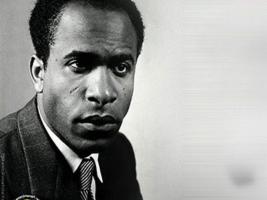 BAR Book Forum: David Marriott’s “Whither Fanon?” David Marriott


