A Black Agenda Radio commentary by Glen Ford
President Obama would have you believe that 100 elite U.S. Special Forces soldiers are running around in the African Bush looking for what’s left of the Lord’s Resistance Army. “The real target is South Sudan, where the United States is setting the stage for an African proxy oil war with China.” The Green Berets are in central Africa to coordinate military operations by Washington’s African clients. “The United States and Europe can no longer compete economically with China in Africa, and must now resort to raw force, through African puppet armies.”
Coming Soon: Obama’s Big Move in Central Africa
A Black Agenda Radio commentary by Glen Ford
“The U.S. needs its own Special Forces units in place to coordinate its puppet African armies.”
It’s now becoming apparent why President Obama sent 100 U.S. Special Forces troops to central Africa, back in October of last year. The president’s official explanation was that the Green Berets would be helping Uganda, the Central African Republic, the Democratic Republic of Congo, and the new nation of South Sudan to hunt for remnants of the Lord’s Resistance Army. The L.R.A., which has a reputation for killing civilians, was driven from its home in Uganda and now numbers only a few hundred scattered fighters. It poses no threat to any government in the region, and is not a plausible cause to dispatch significant numbers of U.S. Special Forces. Obama is using the L.R.A. to give his military mission a humanitarian cloak – that he’s going after rogue bad guys in the bush who threaten African civilians. The actual mission has to be something much larger.
It looks like the real target is South Sudan, where the United States is setting the stage for an African proxy oil war with China. Last July, South Sudan won independence from northern Sudan, a country that has been targeted for regime change by presidents Bush and Obama. Sudan’s oil lies right at the border between North and South, and the fields are under production by Chinese companies. The South Sudanese fought a decades long war against the north, during which they were heavily armed and financed by the U.S., Europeans and Israel. The newly independent nation is among poorest and least developed in the world – and broke. South Sudan is also already engaged ethnic civil wars of its own that have killed or displaced many tens of thousands. But chaos is precisely the environment that Washington prefers, in Africa – so that it can establish a new order that is to U.S. advantage.
“Obama is using the L.R.A. to give his military mission a humanitarian cloak.”
Reporter Thomas C. Mountain, who calls himself the only independent western journalist in the Horn of Africa, points out in a recent article
Now, in the heart of central Africa where South Sudan, Ethiopia, Uganda, Kenya, Congo, and the Central African Republic meet – all of them U.S. client states – the U.S. needs its own Special Forces units in place to coordinate its puppet African armies, and to keep all of them focused on the larger mission. Reporter Thomas C. Mountain says that mission is to destabilize northern Sudan and China's oil operations, there.
That makes perfect imperial sense. The United States and Europe can no longer compete economically with China in Africa, and must now resort to raw force, through African puppet armies. The U.S. has mobilized all its proxies in East and Central Africa for a big push that will need close coordination on the ground. Obama's Green Berets aren't hunting for the rag-tag Lord’s Resistance Army; they're out to control the resources of half the continent.
For Black Agenda Radio, I'm Glen Ford. On the web, go to BlackAgendaReport.com.
BAR executive editor Glen Ford can be contacted at Glen.Ford@BlackAgendaReport.com .

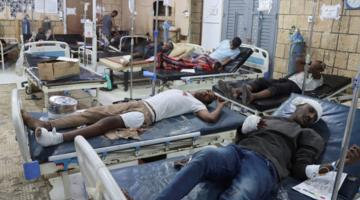 The detention facility appears to be the one that was previously targeted by the US-backed Saudi-led coalition in Yemen.
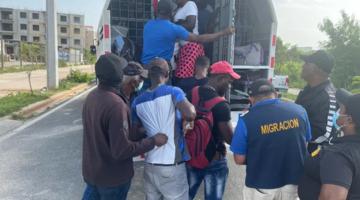 As the Dominican Republic escalates its brutal crackdown on Haitian migrants and Dominicans of Haitian descent, Red Malunga condemns the racist policies fueling systemic violence and human rights…
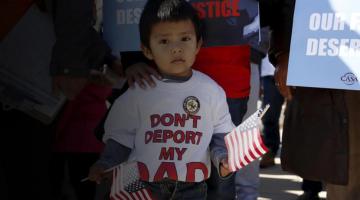 For two decades, draconian 1996 immigration laws have torn families apart—jailing long-term residents over minor offenses, fast-tracking deportations of asylum seekers, and fueling the cruel machine…
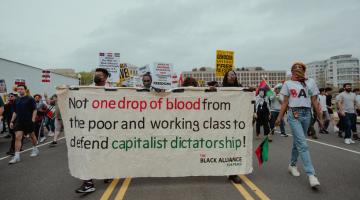 Trump’s brutality is just the latest flare-up of a bipartisan imperial evil—one that funds genocide in Gaza, war in Ukraine, and repression at home while both parties serve the same billionaire class…
 In this week’s segment, we hear about police propaganda designed to make the public fearful and ready to exact severe punishment, regardless of any facts about crime.


