A Black Agenda Radio commentary by executive editor Glen Ford
The ghost of Nat Turner did not descend on LA over the past week, although lots of Black folks imagined as much. Christopher Dorner’s fans “embraced his death-throe defection from the LAPD, and imbued him with qualities they wish were reliably available to the struggle: a Nat Turner, or a Spook Who Sat By the Door.”
Christopher Dorner: The Defector Who Went Out With A Bang
A Black Agenda Radio commentary by executive editor Glen Ford
“Dorner is best described as a disaffected soldier in the ranks of the U.S. global and local Los Angeles occupation armies.”
Although his fans will argue otherwise, Christopher Jordan Dorner was neither a Nat Turner nor a Spook Who Sat by the Door .
Nat Turner was a leader of men, who inspired approximately 70 enslaved and free Black men in a glorious attempt to overthrow the slave system in Virginia, in 1831. The rebellion that goes by his name was a collective struggle that shook the slavocracy to its core, and one of the few U.S. slave revolts that was not betrayed by informers. Christopher Dorner enlisted no one in his fatal and solitary vendetta against those he felt had done him personal harm. He died alone trying to hide his huge Black self in a mostly white mountain recreation area, leaving behind a “manifesto
Chris Dorner was no Dan Freeman, the protagonist “Spook” of the 1973 movie about an urban Black rebellion in the United States. Freeman is a Black nationalist who joins – infiltrates – the CIA, learns all he can about their evil arts, then returns to the Black community to train a cadre of urban guerilla fighters. The war of liberation catches fire. Christopher Dorner’s manifesto reveals a man who – until the unraveling – had been wholly captured by the myth and mystic of superpower America, a proud reserve lieutenant in the imperial Navy and officer in the LAPD who wanted only to serve with personal honor as a man-at-arms.
Dorner is best described as a disaffected soldier in the ranks of the U.S. global and local Los Angeles occupation armies, who made his psychological break with the forces of racial oppression – or, was broken by them – only after having first been ejected. He transformed his ejection into a bloody defection, and flamed out – effectively, a suicide-by-cop (and, almost certainly, a victim of execution by white phosphorous-like incendiary).
“He transformed his ejection into a bloody defection, and flamed out.”
His self-definition could not survive separation from the institution that became his personal nemesis. In the end, he was as lonely as Rambo in First Blood
A public death belongs to the public. Dorner’s fans, his African American public, whom he did not serve but who would inevitably embrace his weeklong death-throe defection from the LAPD, imbue him with qualities they wish were reliably available to the struggle: a Nat Turner, a Spook Who Sat by the Door. The Bronx, New York dope dealer, Larry Davis, who in1986 succeeded in shooting six of seven
The enduring lesson of Dorner’s saga is that the transformation of the LAPD into a majority-minority police force does not change its nature as an army of occupation whose mission is racist to the core, regardless of its ethnic composition. That fact finally dawned on Christopher Dorner – and it killed him.
For Black Agenda Radio, I’m Glen Ford. On the web, go to BlackAgendaReport.com.
BAR executive editor Glen Ford can be contacted at Glen.Ford@BlackAgendaReport.com .

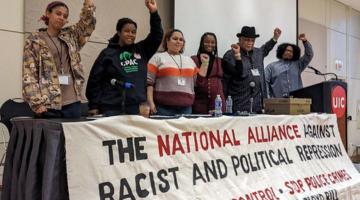 We hear from a Black and Brown coalition in Chicago about their meeting with minister Naledi Pandor of South Africa and their mobilizations for solidarity with Palestine.
 This week we hear about how the latest round of sanctions are harming the people of Cuba, and how they are responding. But first we talk to members of a Chicago Black and Brown coalition about…
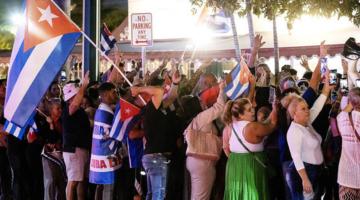 Isaac Saney discusses recent events in Cuba, where shortages of food and electricity caused by U.S. sanctions have resulted in popular discontent, but also a continued commitment to resist.
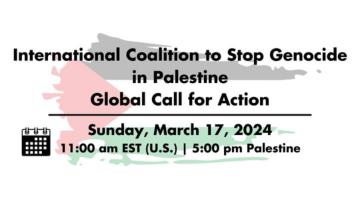 The International Coalition to Stop Genocide in Palestine invited all signatory organizations to join a global call on Sunday, March 17, 2024 to share the ways groups are working to build public…
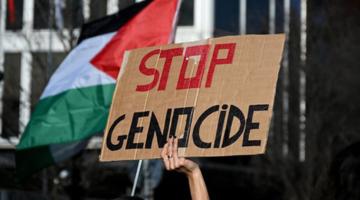 The United States relented and abstained from voting on a UN Security Council resolution requiring Israel to abide by a two-week ceasefire. Popular pressure forced this small step. Organized…


