by Wangui Kimari
Multinational capital and its superpower enforcer, the United States, treated the recent Kenyan election like their own property. As it turns out, “Our new president is the biggest land owner in Kenya and our almost president has the support of American imperialism.”
Capital: The Only Winner in Kenya’s 2013 Elections
by Wangui Kimari
“They are embedded in a global capitalist framework that does not offer any break from a system that still treats the majority of our people like chattel.”
Does it even matter who won the Kenyan elections? Many of our people waited in unending lines. Woke up long before the sun, on the voting “holiday,” walked much longer than the food they had within could sustain them. They turned out in their millions, mothers and babies, sons and grandparents proud of the ink that stained their finger and that indicated that they had indeed voted. Yes, it is their right 50 years after (flag) independence, and many could still remember the first time that this became their right, and when they watched the Union Jack come down and the ascension of a flag that, in commemoration of the struggle, sacrifice and blood of the Uhuru movement and people power, is Red, Black and Green.
Yet, does it even matter who won the Kenyan election?
While I recognize, and do not want to trivialize, what this right symbolizes to many, our situation(s) still begs the questions about whether it actually matters who we selected to become our 4th president. For the moment, as a comrade said, “Bread is still 50 shillings and milk is still 50 shillings”, a price that is beyond the pockets of the majority of Kenyans. Not even the short term relief that should come when elections are over (as the MP’s/Politicians don’t need to over-tax basic commodities to fund their campaigns) has occurred. And, while the new president and his party have made promises that may offer some form of short term respite from our (dying) conditions, they are embedded in a global capitalist framework (reliant on getting “foreign investment”, dismal salaries and working conditions and increasing the surveillance and policing of citizens) that does not offer any break from a system that still treats the majority of our people like chattel.
“They won’t change our involvement in proxy wars in Somalia, capitulation to AFRICOM, racist capital and its manifestations in the extractive industry and land-grabbing on the continent.”
A brief survey of the “manifestos” of the presidential candidates and their promises in public indicate that they are also still complicit in, and won’t change our involvement in proxy wars in Somalia, capitulation to AFRICOM, racist capital and its manifestations in the extractive industry and land-grabbing on the continent. I have also not heard of any bid, from any candidate, to move towards a real Afrikan unity. More locally, injustice persists such as the killings and torture by state machinery, stealing of land by, primarily, white folk for “conservation” and other sinister violences that are never fully revealed or recognized.
While there was a fight, expressed in the way our people voted, to shame and stick it to the neo-imperialists (read Obama and the other European governments) who want to control our elections and, towards these ends, saturated our lives with their messages of “concern” and threats of “far-reaching sanctions,” the election of this president (facing trial in the court for Afrikan heads of states also known as the International Criminal Court) does not mean that our fights against neo-imperialism and white supremacy are over, or that they are, in any way, subdued by the results.
That our real vote is often between majority land-owner one and majority land owner two and comprador bourgeoisie one and comprador bourgeoisie two, can now not be disputed (if it ever was). They all still buy into ideals, encapsulated by Obama’s message to Kenya, of continuing on a path of an “emerging democracy,” a “path of progress” in order to “have a strong friend and partner in the United States of America.”
“The election of this president does not mean that our fights against neo-imperialism and white supremacy are over, or that they are, in any way, subdued by the results.”
At the same time, there were “surprises” in this election. While the usual white media suspects were surprised to see that Afrikans didn’t collectively smash each other’s heads and (and believe me they looked for this in every crevice and canton) fall into the “anarchy,” “tribalism and bad governance” that Afrikans know best (I say this remembering, and not in a bid to trivialize, the deaths that did occur), we were surprised, to an extent, by the vibrant emergence (and sometimes the success and support) of the candidates who expressed the views of the ma-sufferers; the long exploited majority of Kenyans.
And it is through them, and with them, that we still harbor an inkling of hope that food prices will go down, and that we will have, one day, a leadership who is more accountable to Kenyans then to imperialism.
And we will, don’t you doubt it.
For the time being, however, each of the main parties contains a wide distribution of recycled comprador patriarchs who emerge in a new face every election year and with old unfulfilled promises and new denials. Our new president is the biggest land owner in Kenya and our almost president has the support of American imperialism. Does it even matter who won?
Still, in mixed sentiments, our actions show that we believe in the power of our votes and, even if just an inkling, the hopes of those who voted in our very first election fifty years ago. We are proud of ourselves, especially now that we (almost two weeks after votes were cast!) have a president. Yet our struggle for land, dignity, unga and freedom continues unabated, and with no respite this ballot round, for once again, the only winner in this election is capital.
Wangui Kimari is a native of Kenya living in Toronto, Canada. He is an organizer with the Bunge la Mwananchi/ the Peoples Parliament, in Kenya and with the Network for Pan-Afrikan Solidarity, in Canada. He can be contacted at wanguiwathuo@yahoo.com.

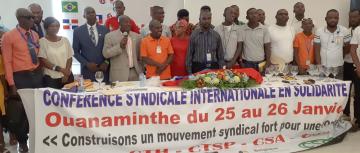 Haitian trade unions and civil society groups are united in demanding sovereignty for their nation and an end to foreign interference.
 The late Eddie Conway was a young member of the Black Panther Party who was framed for the killing of a police officer and spent more than 40 years in jail. His experience as a political…
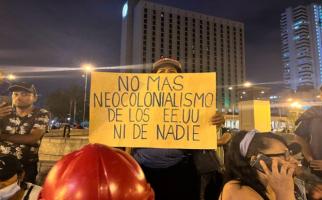 The people of Peru continue to protest the coup which ousted President Pedro Castillo Terrones. The 200-year-old Monroe Doctrine is a discredited relic, but Washington still considers the…
 The perfect storm of austerity policies and US imperialism sends billions of dollars to Ukraine but ends pandemic era emergency Supplemental Nutrition Assistance Program (SNAP) benefits.
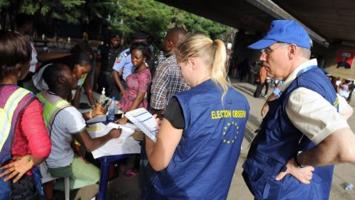 The practice of accepting observers to oversee elections is quite problematic. This practice leads to interference from entities with ulterior motives and legacies of colonial control.


