by BAR editor and columnist Jemima Pierre
When there’s a need to gain national prestige, curry favor with imperial power, or seize the opportunity to train your soldiers to occupy other people’s countries, why not try Haiti. To prove it can play with the big imperial boys, the United States and France, Brazil took on a major role in imprisoning the Haitian nation. “Brazil is participating in the usurpation of Haitian sovereignty – and the usurpation of Haitian sovereignty is an affront to the sovereignty of all Black People.”
Brazil’s Haitian Training Ground
by BAR editor and columnist Jemima Pierre
“Under Brazil’s leadership, MINUSTAH has been linked to a number of atrocities against the Haitian people.”
The Federative Republic of Brazil has the largest Black population in the world after Nigeria and, of late, has claimed a leftist politics. Yet neither appeals to Black cultural affinity nor purportedly progressive affiliation can mask the fact that Brazil is using Haiti for its imperialist ambitions throughout the hemisphere. As the leader of MINUSTAH, the United Nations Stabilizing Mission in Haiti, Brazil is participating in the usurpation of Haitian sovereignty – and the usurpation of Haitian sovereignty is an affront to the sovereignty of all Black People.
MINUSTAH was established by UN Resolution 1542 on April 30th, 2004 after the February 29, U.S.-led coup d’état against President Jean Bertrand Aristide. By June 1st of the same year, a multinational military force led by Brazil and composed largely of soldiers from Latin American countries was stationed in Haiti. Over the years, it has become the 6th largest UN “peacekeeping” force in the world. At last count, MINUSTAH’s force in Haiti boasted 12,055 military troops and police, 510 international civilian personnel, 1, 214 local civilian staff, and 209 UN volunteers. Its budget for the 2010 – 2011 fiscal year is $853,827,400. And with its mandate repeatedly renewed and extended over the past 7 years, MINUSTAH is considered a permanent military occupation force.
The civilian leadership of MINUSTAH is made up of a team of three white men, “counsels” of the UN Secretary General, from Guatemala, U.S., and Canada—Edmond Mulet, Kevin Kennedy, Nigel Fisher. It is the force commander, the Brazilian Major General Luiz Eduardo Ramos Pereira, who is responsible for maintaining the mission’s primary mandate of enforcing “security” in Haiti. Brazil’s former president, leftist Lula da Silva, was initially against MINUSTAH’s mission, arguing that it could not support a resolution based on UN chapter VII resolution. Unlike a chapter VI resolution, which refers to peacekeeping missions where the parties in conflict give their consent to the presence of foreign forces, a chapter VII resolution demands no such consent. But Brazil soon saw its leadership of the UN military occupation in Haiti as an opportunity and quickly re-interpreted the resolution to its convenience.
“But Brazil soon saw its leadership of the UN military occupation in Haiti as an opportunity.”
Haiti is Brazil’s imperial ground zero. By leading its first modern international military venture, Brazil has the opportunity to establish its leadership role both as a regional power and internationally. Already it is emerging as an economic powerhouse, as one of fast growing BRIC nations. But it is also no secret that Brazil has been trying for some time to get a permanent seat on the UN Security Council. This was a foreign policy priority for Brazil’s da Silva, and has continued under the government of Dilma Rousseff. A Business Insider report recently intimated that Brazil is attempting to make a move similar to the U.S. when it adopted the Monroe Doctrine: “If Brazil maintains command, the rising power can claim military leadership of all Latin America.” In recent years, Brazil has gone on a “spending spree” to reinvigorate the infrastructure and the equipment of its defense forces. In purchasing arms from European suppliers and modernizing its defense capabilities, Brazil is sending a message that it intends to be the region’s central player. The mission in Haiti allows Brazil to enhance its defense capacity while providing its military necessary training. This is the same for the other Latin American countries involved in this so-called peace-keeping operation: some in governments of Chile and Argentina, for example, claim that Haiti provides an avenue of professionalization for its military.
This is all on the back of Black Haitians and, to an increasing extent, on the back of poor Black Brazilians. According to the UN, the military force was to maintain “rule of law,” protect civilians from violence, support “constitutional and political processes,” and to “protect United Nations personnel, facilities, installations and equipment.” Since 2004 the streets of Haiti have been pregnant with the constant and terrorizing presence of heavily armed troops in tanks and pick up trucks. Under Brazil’s leadership, MINUSTAH has been linked to a number of atrocities against the Haitian people, demonstrating that is often incapable of communicating with Haitians in any other language than that of brute force. In fact, former Brazilian MINUSTAH force commander, Augusto Heleno Ribeiro Pereira complained in 2005 that his soldiers were “under extreme pressure from the international community to use violence.” The most egregious were the massacres in the poor neighborhood of Cite Soleil. Haitians have responded accordingly—consistently protesting MINUSTAH’S presence and, most recently, initiating a grassroots movement to end the occupation.
“If Brazil’s role in MINUSTAH is any indication of what’s to come, Black people need to be on alert.”
Brazil does not treat its own poor Black population in the favelas any better. According to Human Rights Watch, Brazil has one of the highest incidences of police brutality. In 1998 alone, police in Rio killed an estimated 720 people. The siege against these favelas is only going to get worse. The Brazilian government has laid out plans for massive “slum clearance” as it prepares to host the 2014 World Cup. Some of the soldiers involved have even claimed their training in MINUSTAH as important experience for their domestic assault on the favelas.
Meanwhile, many are hailing Brazil as a left-leaning emerging superpower that stands to challenge U.S. and European hegemony. But if Brazil’s role in MINUSTAH is any indication of what’s to come, Black people need to be on alert. We will be shouldering the burden of inter-imperial competition and conflict. In a bid to win over Haitian support for its military operations in the country, Lula led the Brazilian national football team to Haiti for an international friendly. Lula used the opportunity to indirectly challenge the U.S. wars in Iraq and Afghanistan, saying: “We want to show the world that not everything demands cannons, machine guns, and weapons of mass destruction. Sometimes affectionate gestures are worth more than certain wars.” He said this as the heavily armed MINUSTAH forces, led by his country, surrounded the soccer stadium in Port-Au-Prince.
Lula would later compare the UN mission in Haiti to "a soccer game that has only reached halftime," adding that "the second half is a time to take the initiative.”
Brazil cannot win this game on Haitian turf.
Jemima Pierre can be reached at BAR1804@gmail.com.

 The United States uses its power within the United Nations and the concept of human rights to cover its plans for regime change.
 The deaths of the six Latino immigrant workers in the Baltimore bridge collapse encapsulates the injustice inherent in the U.S. capitalist system.
 This week, BAR's poet-in-residence discusses his work, we learn why Bill Clinton, the CIA director and Tony Blair recently visited Guyana. First, the Black vote and election year politics in Michigan.
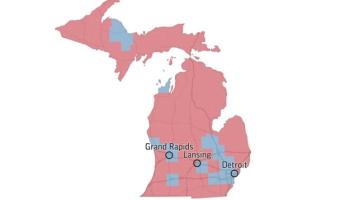 Abayomi Azikiwe, editor of Pan-African News Wire joins to discuss Michigan's Black voters, the Abandon Biden campaign, and the prospects for the swing state in the 2024 presidential election.
 BAR Poet-in-Residence, Raymond Nat Turner, joins us from New York City to talk about his work and an upcoming performance with his group, Upsurge New York City.


