Click the flash player below to listen to or the mic to download an mp3 copy of this BA Radio commentary.
On health care, Barack Obama “has become a heavy burden for even the Black Caucus to bear, as he searches constantly for allies on the Right.” As Obama threatens to jettison the issue of racial disparities from his “reform” proposals, Black lawmakers must reassess their loyalties.
The Black Caucus and Obama: One-Way Loyalty
A Black Agenda Radio commentary by Glen Ford
“Obama has left the Black Caucus with little ground to stand on as they try to prop up his presidency.”
Nobody wants President Obama to succeed more than the 42-member Congressional Black Caucus. History, itself, made it inevitable that masses of African Americans would feel a profoundly vested interest in the fortunes of any Black person that made it into the Oval Office, especially one who garnered about 19 of every 20 Black votes. Back in October of last year, it was Barack Obama’s lobbying of individual Black members of Congress that caused the Caucus to shift from 21 to 18 opposed to the first bank bailout, to 31 to 8 in favor – and Obama hadn’t even been elected yet. Despite Obama’s dismissal of progressives on issues of peace and social justice – issues still dear to a core of Caucus members – Black lawmakers still feel that history demands their allegiance to this president.
Obama, however, takes such loyalties for granted, and has left the Black Caucus with little ground to stand on as they try to prop up his presidency. On health care, he has become a heavy burden for even the Black Caucus to bear, as he searches constantly for allies on the Right. Among the 64 progressives that vowed in August to vote against any health care bill that does not include a strong public option, 25 are Black. Under the leadership of California Congresswoman Barbara Lee, the Black Caucus issued a letter last week expressing “deep concern” that “a robust public option and myriad health disparity elimination provisions…may be stricken” in order to cut the cost of the legislation. Lee emerged from a conference call with the White House still insisting on a public option and emphasizing the need for measures to eliminate disparities in health care, through better data collection, greater diversity in the health care workforce, and more community health care workers. Yet the White House seems prepared to jettison health equity, to appease the Right. If that happens, the Congressional Black Caucus will utterly lose face. “The Caucus has dedicated resources and prestige to documenting the huge racial disparities in health outcomes.”
The Black Caucus has made the health equity issue its own. In recent years the Caucus has dedicated resources and prestige to documenting the huge racial disparities in health outcomes, and exploring ways to confront the problem. This April, the Caucus held a health equity forum, at which Georgia Congressman John Lewis spoke of the need to launch a “health equity movement” to ensure that the issue is “an integral component of health care reform.” But the Caucus will be in no position to lead a “health equity movement” or anything else if it allows Obama to discard the equity issue without a fight.
As an institution, the Congressional Black Caucus has no choice but to resist the first Black president, or submit to voluntary irrelevance on an issue they have told their own constituents is vital to the community.
In their letter to the president, the Black lawmakers assured him they are “committed allies and partners in the fight to reform America's broken health care system.” It is Obama's commitment that is so very much in question.
BAR executive editor Glen Ford can be contacted at Glen.Ford@BlackAgendaReport.com .

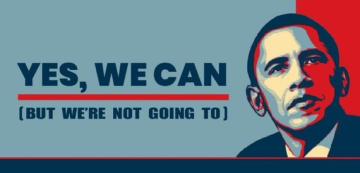 The full extent of Democratic Party treachery was exposed when the Roe v. Wade decision was overturned. Only right wing Americans have any expectation of getting what they want from the electoral…
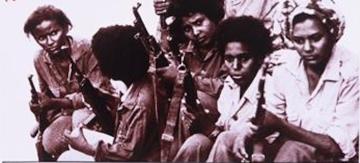 A 1980 speech by Black lesbian poet and activist Pat Parker provides a feminist, anti-imperialist blueprint for the present.
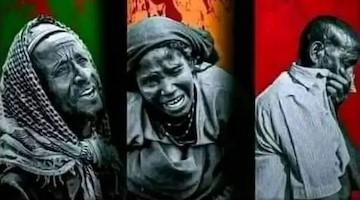 Conflict in Ethiopia continues to claim the lives of many civilians, as recently happened in the Wellega region.
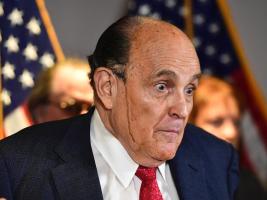 Drunken Count Ghouliani/low Barr-Boss Tweet revealing irreparable rot of capitalism…
 This week’s featured author is Robtel Neajai Pailey. Pailey is Assistant Professor in International Social and Public Policy at the London School of Economics and Political Science. Her book is…


